

Wednesday, July 29, 2026
Science
No Result
View All Result
  • Login
  • HOME
  • SCIENCE NEWS
  • CONTACT US
  • HOME
  • SCIENCE NEWS
  • CONTACT US
No Result
View All Result
Scienmag
No Result
View All Result
Home Science News Social Science

UH receives $2.8 million NIH grant to test remote parenting program’s impact on premature infant mental health

July 29, 2026
in Social Science
Reading Time: 4 mins read
0
UH receives $2.8 million NIH grant to test remote parenting program’s impact on premature infant mental health

UH receives $2.8 million NIH grant to test remote parenting program’s impact on premature infant mental health

65
SHARES
587
VIEWS
Share on FacebookShare on Twitter
ADVERTISEMENT
Johanna Bick, University of Houston associate professor of psychology and director of the Laboratory of Early Experience and Development
image: Johanna Bick, University of Houston associate professor of psychology and director of the Laboratory of Early Experience and Development, will lead the trial of a remotely delivered version of Play and Learning Strategies (PALS), a parenting program that has been adapted for parents of prematurely born infants.

view more 

Credit: University of Houston

Key Takeaways:  

  • National Institute of Child Health and Human Development awards $2.8 million to the University of Houston to lead the first clinical trial evaluating the remotely delivered PALS parenting program to support healthy brain development in infants born preterm.  
  • Researchers will examine whether online support after NICU discharge strengthens brain development linked to emotional and mental health.  
  • Research advances UH Health’s mission to improve lifelong health through interdisciplinary research and innovative care. 


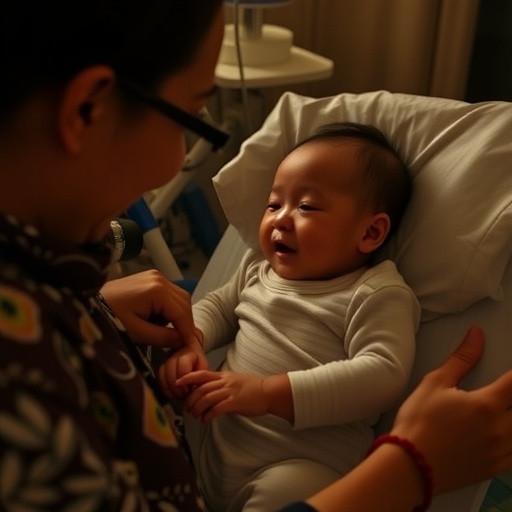
HOUSTON, July 29, 2026 — A University of Houston psychologist has received a $2.8 million grant from the National Institute of Child Health and Human Development to lead the first randomized clinical trial testing whether a remotely delivered parenting program can improve healthy infant brain development to support long-term mental health outcomes for babies born prematurely.  

Researchers will examine whether providing parents with web-based support during the critical weeks and months after premature infants leave the hospital strengthens early brain development linked to emotional and mental health. 

In the United States, more than one in 10 babies are born prematurely each year and the rate of mental health disorders among youth and adults born preterm is rising, posing substantial burden to individuals, families and society. Texas has some of the highest rates of preterm birth in the country.  

While advances in neonatal medicine have dramatically improved survival rates, babies born prematurely remain at greater risk for developmental and mental health disorders.  

The scalable intervention could transform how families receive support after discharge from the neonatal intensive care unit, bringing evidence-based support into the home. The research aligns with UH Health’s mission to advance innovative, accessible solutions that improve health outcomes and reduce disparities for vulnerable populations. 

Johanna Bick, associate professor of psychology and director of the Laboratory of Early Experience and Development at UH, will lead the trial of a remotely delivered version of Play and Learning Strategies (PALS), a parenting program that has been adapted for parents of prematurely born infants. PALS is an evidence-based parenting intervention program designed to strengthen parent-child bonds and stimulate early cognitive, language and social-emotional development. 

“The field is beginning to understand how preterm birth can alter the development of neural circuits that underlie long-term mental health,” said Bick. “This study will allow us to test whether increased support during one of the most sensitive periods of brain development can help place infants on a more typical developmental trajectory.” 

Many effective parenting programs end when babies leave the NICU, missing a critical period when parents need support most and babies’ brains are developing rapidly. Because the program is delivered online, it has the potential to reach families regardless of where they live while engaging multiple caregivers during this critical period. 

Parents or caretakers of prematurely born infants will be randomly assigned to either the remotely delivered PALS program or a comparison program. Researchers will evaluate how the intervention affects parental responsiveness, infant social and emotional development, emotion regulation and brain development using behavioral assessments and advanced neuroimaging and neurophysiological measures. 


Media Contact

Laurie Fickman

University of Houston

lafickman@uh.edu

Office: 713-743-8454

Tags


  • /Health and medicine/Medical specialties/Obstetrics/Childbirth/Premature birth

  • /Health and medicine/Medical specialties/Obstetrics/Childbirth/Multiple births

  • /Health and medicine/Medical specialties/Obstetrics

  • /Health and medicine/Medical specialties/Neonatology

  • /Health and medicine/Medical specialties/Immunology

  • /Health and medicine/Medical specialties/Internal medicine

  • /Social sciences

  • /Social sciences/Psychological science

  • /Social sciences/Psychological science/Clinical psychology

  • /Social sciences/Psychological science/Cognitive psychology

  • /Social sciences/Psychological science/Personality psychology

  • /Social sciences/Psychological science/Social psychology

  • /Life sciences/Organismal biology/Anatomy/Nervous system

  • /Life sciences/Organismal biology/Anatomy/Nervous system/Central nervous system/Brain

  • /Life sciences/Organismal biology/Anatomy/Nervous system/Central nervous system/Gray matter

  • /Life sciences/Organismal biology/Anatomy/Nervous system/Central nervous system/Central amygdala

  • /Life sciences/Organismal biology/Anatomy/Nervous system/Central nervous system/Human brain

  • /Life sciences/Organismal biology/Anatomy/Nervous system/Central nervous system/Brain/Brain structure

  • /Life sciences/Organismal biology/Anatomy/Nervous system/Central nervous system/Brain/Limbic system
Tags: brain development in preterm infantsclinical trial for preterm infant outcomesearly intervention in neonatal careLaboratory of Early Experience and DevelopmentNIH grant for early childhood developmentPALS parenting program adaptationparental support for preterm birthplay-based strategies for infant mental healthremote delivery of parenting supportremote parenting program for premature infantstelehealth intervention for preterm infantsUniversity of Houston early development research
Share26Tweet16
Previous Post

Support from animals may feel stronger for women and those spending more time with them

Next Post

Fine-flavour cacao: high yields and income for smallholder farmers

Related Posts

What Godzilla can teach us about Donald Trump
Social Science

What Godzilla can teach us about Donald Trump

July 29, 2026
Acute Pancreatitis Increasing in South Australia as Risk Shifts
Social Science

Acute Pancreatitis Increasing in South Australia as Risk Shifts

July 29, 2026
Psychosocial Stress Increases Opioid Self-Administration in Healthy People, Trial Finds
Social Science

Psychosocial Stress Increases Opioid Self-Administration in Healthy People, Trial Finds

July 29, 2026
Study reveals when conspiracy beliefs may prompt real-world actions
Social Science

Study reveals when conspiracy beliefs may prompt real-world actions

July 29, 2026
Fractured and Fed Up, Teams Fully Competitive After Major Breakthrough
Social Science

Fractured and Fed Up, Teams Fully Competitive After Major Breakthrough

July 29, 2026
Early psychosis shows reduced low-frequency sensorimotor fluctuations tied to dexterity
Social Science

Early psychosis shows reduced low-frequency sensorimotor fluctuations tied to dexterity

July 29, 2026
Next Post
Fine-flavour cacao: high yields and income for smallholder farmers

Fine-flavour cacao: high yields and income for smallholder farmers

  • Mothers who receive childcare support from maternal grandparents show more

    Mothers who receive childcare support from maternal grandparents show more parental warmth, finds NTU Singapore study

    27656 shares
    Share 11059 Tweet 6912
  • University of Seville Breaks 120-Year-Old Mystery, Revises a Key Einstein Concept

    1061 shares
    Share 424 Tweet 265
  • Bee body mass, pathogens and local climate influence heat tolerance

    682 shares
    Share 273 Tweet 171
  • Researchers record first-ever images and data of a shark experiencing a boat strike

    546 shares
    Share 218 Tweet 137
  • Groundbreaking Clinical Trial Reveals Lubiprostone Enhances Kidney Function

    531 shares
    Share 212 Tweet 133
Science

Embark on a thrilling journey of discovery with Scienmag.com—your ultimate source for cutting-edge breakthroughs. Immerse yourself in a world where curiosity knows no limits and tomorrow’s possibilities become today’s reality!

RECENT NEWS

  • Accelerating solid-state battery research and innovation: new open-access database
  • Cardiovascular health across the life course for individuals with breast cancer
  • Flexible DNA transforms protein crystallization
  • Research study investigates how maternal viral infections shape lifelong immune health in offspring

Categories

  • Agriculture
  • Anthropology
  • Archaeology
  • Athmospheric
  • Biology
  • Biotechnology
  • Blog
  • Bussines
  • Cancer
  • Chemistry
  • Climate
  • Earth Science
  • Editorial Policy
  • Marine
  • Mathematics
  • Medicine
  • Pediatry
  • Policy
  • Psychology & Psychiatry
  • Science Education
  • Social Science
  • Space
  • Technology and Engineering

Subscribe to Blog via Email

Enter your email address to subscribe to this blog and receive notifications of new posts by email.

Join 5,147 other subscribers

© 2025 Scienmag - Science Magazine

Welcome Back!

Login to your account below

Forgotten Password?

Retrieve your password

Please enter your username or email address to reset your password.

Log In
No Result
View All Result
  • HOME
  • SCIENCE NEWS
  • CONTACT US

© 2025 Scienmag - Science Magazine

Discover more from Science

Subscribe now to keep reading and get access to the full archive.

Continue reading
