


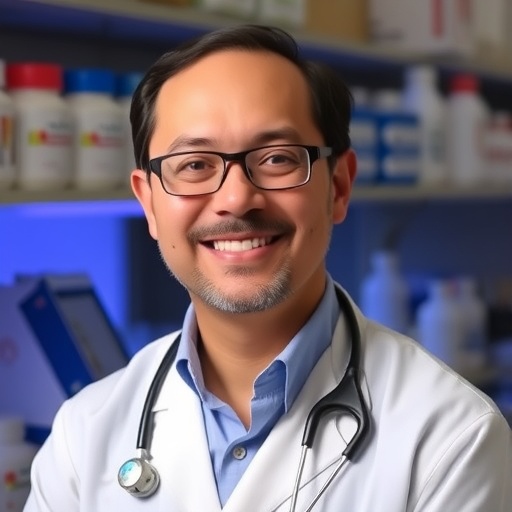
Natasha Martin, DPhil, a distinguished professor and vice chief of Global Public Health in the Division of Infectious Diseases and Global Public Health at UC San Diego School of Medicine, has been awarded a highly competitive five-year, $5.6 million Avant-Garde Award by the National Institute on Drug Abuse (NIDA). This prestigious grant supports trailblazing research with transformative potential in HIV and substance use disorder fields. Dr. Martin’s project harnesses cutting-edge artificial intelligence (AI) technologies to revolutionize public health strategies aimed at combating Human Immunodeficiency Virus (HIV), hepatitis C virus (HCV), and drug overdose crises among people who use drugs in the United States.
The core of Martin’s endeavor lies in addressing a fundamental gap long overlooked in public health surveillance: the nuanced and evolving intervention preferences of people who use drugs. Historically, data guiding health responses have lacked localized insight into community priorities and behaviors, an absence that has hindered the tailoring of effective programs at the local level. By integrating community perspectives into an AI framework, the initiative—named AMPLIFY—seeks to “amplify” the voices of people who use drugs, ensuring their lived experiences and preferences directly inform the design and deployment of prevention and treatment interventions.
NIDA’s Avant-Garde Award is selectively granted each year to only a few exceptional scientists demonstrating creative boldness and possessing visionary ideas capable of opening wholly new frontiers in research. Dr. Martin’s project epitomizes this spirit, pioneering the use of AI to create dynamic, personalized digital twins. These are AI-generated simulations that embody the intervention decision-making patterns and preferences of individuals who use drugs, grounded in extensive cohort data and community engaged methodologies. This novel application of AI stands poised to significantly advance epidemic modeling by incorporating behavioral variables that have previously been difficult to quantify.
At present, despite substantial advances in biomedical prevention and long-acting antiretroviral therapies for HIV, the United States faces ongoing challenges in curbing HIV, HCV, and overdose among drug-using populations. A major barrier has been the lack of timely, granular data on the behaviors and needs of communities, especially in under-resourced areas with limited surveillance infrastructure. Dr. Martin’s approach aims to fill this gap by training large language models on comprehensive datasets, enabling the construction of realistic “digital twins” reflective of diverse demographic and geographic contexts. These digital twins then feed into sophisticated epidemiological models simulating transmission dynamics and health outcomes.
This integration of AI-powered digital simulations with traditional infectious disease models allows researchers to virtually test various prevention and treatment strategies in silico before real-world application. By modeling intervention impact and resource allocation at the community-specific level, public health officials can identify the most effective and cost-efficient strategies tailored to local needs. The capacity to experiment with diverse scenarios on a virtual platform represents a paradigm shift toward precision public health, focusing resources where they can yield the highest public health benefit.
Beyond immediate epidemic modeling, the use of AI to predict preferences and barriers among people who use drugs holds transformative potential for designing novel health service delivery models. It enables the identification of previously unrecognized obstacles to care, informs culturally and contextually competent intervention frameworks, and fosters adaptive health systems responsive to the evolving landscape of substance use disorders. Dr. Martin highlights that these advances could ultimately improve engagement and retention in care, reduce health disparities, and promote more equitable access to life-saving treatments.
The foundation for this innovative project rests on years of intensive collaboration between UC San Diego researchers and public health departments, particularly through the Resilient Shield initiative — a Centers for Disease Control-supported outbreak analytics center co-led by Martin. This partnership has provided practical insights revealing that interventions successful in one locale often do not translate well elsewhere due to variations in local social norms, intervention acceptance, and underlying epidemiology. Such findings underscore the imperative for flexible, data-driven strategies tailored to the unique contexts of individual communities.
A pioneering feature of AMPLIFY is its deep commitment to community engagement and participatory research. People with lived experience of substance use will be integral collaborators, shaping the development, validation, and deployment of the AI-generated digital twins. This inclusive approach ensures that ethical considerations, trust-building, and safeguarding practices are incorporated from the outset. It counters skepticism about AI in public health by emphasizing transparency and responsiveness to community priorities, cultivating a model of co-created health innovation.
The deliverable outcome includes an interactive decision-support dashboard designed for use by public health officials. This real-time platform will visualize scenario analyses, prevention strategy evaluations, and resource allocation simulations. By leveraging this tool, health departments across the country will acquire unprecedented agility and precision in responding to rapidly evolving health threats among vulnerable populations. The dashboard’s predictive analytics will also facilitate proactive rather than reactive responses, optimizing the impact of constrained public health budgets.
Key collaborators on the project encompass a multidisciplinary team of experts from UC San Diego, featuring specialists in infectious diseases, epidemiology, computational modeling, and public health: Ravi Goyal, PhD; Eli Aronoff-Spencer, MD, PhD; Steffanie Strathdee, PhD; Annick Bórquez, PhD; Laramie Smith, PhD; Britt Skaathun, PhD; John Ayers, PhD; alongside Angela Bazzi, PhD, from the Herbert Wertheim School of Public Health and Human Longevity Science. This collective expertise converges to advance the ambitious vision of embedding AI-informed decision-making at the heart of public health strategies aimed at mitigating HIV, HCV, and overdose epidemics.
In summary, Dr. Natasha Martin’s Avant-Garde Award-winning project exemplifies a forward-thinking fusion of artificial intelligence, community engagement, and infectious disease modeling to transform public health interventions. By creating AI-driven digital twins that encapsulate the lived realities and intervention preferences of people who use drugs, this approach promises to deliver finely tuned, locally relevant solutions capable of saving lives and promoting health equity across the United States. The AMPLIFY initiative represents a powerful leap toward harnessing technology and human insight to combat some of the nation’s most persistent public health challenges.
News Publication Date: Not specified
Web References: https://mediasvc.eurekalert.org/Api/v1/Multimedia/5cc2d79e-6c40-46e0-a713-75eaef7246c9/Rendition/low-res/Content/Public
Cite Scienmag News
Kristina Jarvis. (June 23, 2026). UC San Diego Scientist Secures $5.6M NIH Avant-Garde Award to Advance Prevention of HIV, Hepatitis C, and Overdose. Scienmag. https://scienmag.com/uc-san-diego-scientist-secures-5-6m-nih-avant-garde-award-to-advance-prevention-of-hiv-hepatitis-c-and-overdose/
Kristina Jarvis. "UC San Diego Scientist Secures $5.6M NIH Avant-Garde Award to Advance Prevention of HIV, Hepatitis C, and Overdose." Scienmag, 23 June 2026, https://scienmag.com/uc-san-diego-scientist-secures-5-6m-nih-avant-garde-award-to-advance-prevention-of-hiv-hepatitis-c-and-overdose/. Accessed 5 September 2026.
Kristina Jarvis. "UC San Diego Scientist Secures $5.6M NIH Avant-Garde Award to Advance Prevention of HIV, Hepatitis C, and Overdose." Scienmag. June 23, 2026. https://scienmag.com/uc-san-diego-scientist-secures-5-6m-nih-avant-garde-award-to-advance-prevention-of-hiv-hepatitis-c-and-overdose/


