
Sunday, March 22, 2026
Science
No Result
View All Result
  • Login
  • HOME
  • SCIENCE NEWS
  • CONTACT US
  • HOME
  • SCIENCE NEWS
  • CONTACT US
No Result
View All Result
Scienmag
No Result
View All Result
Home Science News Medicine

UBC-developed oral insulin drops offer relief for diabetes patients

June 5, 2024
in Medicine
Reading Time: 3 mins read
0
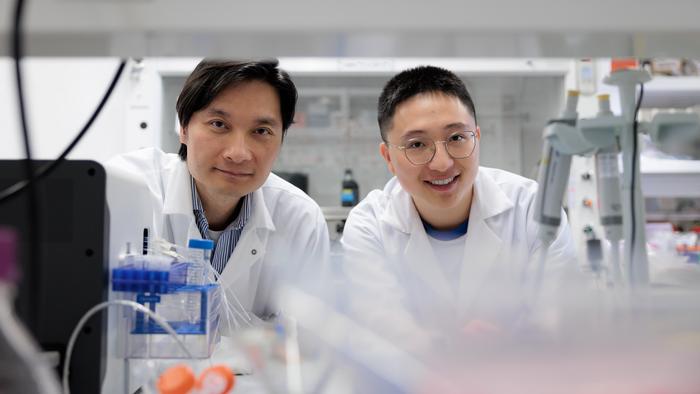
Dr. Shyh-Dar Li and Dr. Jiamin Wu
65
SHARES
593
VIEWS
Share on FacebookShare on Twitter
ADVERTISEMENT

Diabetes rates continue to rise, with 11.7 million Canadians living with diabetes or pre-diabetes. At UBC, scientists have created a pain-free drug delivery method to help people with diabetes manage the disease and maintain their health more easily.

Dr. Shyh-Dar Li and Dr. Jiamin Wu

Credit: UBC Pharmaceutical Sciences/Justin Ohata

Diabetes rates continue to rise, with 11.7 million Canadians living with diabetes or pre-diabetes. At UBC, scientists have created a pain-free drug delivery method to help people with diabetes manage the disease and maintain their health more easily.

Researchers at the Li Lab have developed oral insulin drops that when placed under the tongue are quickly and efficiently absorbed by the body, potentially replacing the need for insulin injections.

The drops contain a mixture of insulin and a unique cell-penetrating peptide (CPP) developed by Dr. Shyh-Dar Li and colleagues.

A little help from a peptide guide

“Insulin is a complicated molecule,” explains lead researcher Dr. Li, a professor in the faculty of pharmaceutical sciences. “In pill form, it’s easily destroyed in the stomach. Insulin also needs to be rapidly available in the blood, but as a large molecule, it cannot get through cells easily on its own.” The peptide, sourced from fish byproducts, opens a pathway for insulin to cross over.

Pre-clinical tests showed that insulin with the peptide effectively reaches the bloodstream whereas without the peptide, insulin remains stuck in the inside lining of the mouth.

“Think of it as a guide that helps insulin navigate through a maze to reach the bloodstream quickly. This guide finds the best routes, making it easier for insulin to get where it needs to go,” said Dr. Jiamin Wu, a postdoctoral researcher in the Li Lab.

Two versions of the peptide are described in recent articles in the Journal of Controlled Release (here and here). The UBC team is working to license the technology to a commercial partner.

Keeping medications on track

Healthy people get their insulin naturally from the pancreas to regulate glucose after a meal. Diabetes patients cannot produce sufficient insulin and need to get it from an outside source.

Unregulated glucose can be very dangerous, so diabetes patients must monitor their glucose levels and take insulin to lower it when necessary. While injections are the fastest way to get insulin into the blood, patients typically need at least three to four injections per day, which can affect their quality of life. Adherence to this regimen is challenging, and over time this can cause severe complications such as eye, kidney and nerve damage, potentially leading to limb amputations.

“My lab has been working on needle-free insulin alternatives these past three years,” said Dr. Li. “We tried nasal sprays before landing on oral drops, which are easy and convenient. Hopefully, the oral drops open up a new possibility for diabetes patients – making it easier to take their medications and regulate their blood glucose to maintain their health in the long run.”

Two inhalable insulin products (Exubera, Afrezza) were approved earlier but the effects were suboptimal and shown to increase the risk of lung cancer development. These products have been withdrawn. Dr. Li aims to achieve rapid, pain-free delivery of insulin without significant side effects. The new needle-free technology is expected to reduce the risk of cross-contamination, needle pricks, accidental infections and unsafe disposal of contaminated needles.


Journal

Journal of Controlled Release

DOI

10.1016/j.jconrel.2024.02.042

Method of Research

Experimental study

Subject of Research

Not applicable

Article Title

Systemic delivery of proteins using novel peptides via the sublingual route

Article Publication Date

1-Apr-2024

Share26Tweet16
Previous Post

Nationally known pediatric infectious disease researcher named vice chancellor for research at the University of Tennessee Health Science Center

Next Post

Study reveals how ‘forever chemicals’ may impact heart health in older women

Related Posts

blank
Medicine

UK Study Reveals No Additional Advantage of Surfactant Therapy in Severe Bronchiolitis Cases in Infants

March 22, 2026
blank
Medicine

Social Isolation Lessons from Nursing Home COVID-19 Relatives

March 22, 2026
blank
Medicine

Bridging Generations: Talking Advance Care Planning Together

March 21, 2026
blank
Medicine

Metformin vs Dapagliflozin: Heart Protection in Diabetic Rats

March 21, 2026
blank
Medicine

Digital Health Boosts Cognitive Care in Seniors

March 21, 2026
blank
Medicine

Sublethal DNA Damage Halts B Cell Effector Functions

March 21, 2026
Next Post

Study reveals how 'forever chemicals' may impact heart health in older women

  • Mothers who receive childcare support from maternal grandparents show more parental warmth, finds NTU Singapore study

    Mothers who receive childcare support from maternal grandparents show more parental warmth, finds NTU Singapore study

    27627 shares
    Share 11047 Tweet 6905
  • University of Seville Breaks 120-Year-Old Mystery, Revises a Key Einstein Concept

    1029 shares
    Share 412 Tweet 257
  • Bee body mass, pathogens and local climate influence heat tolerance

    671 shares
    Share 268 Tweet 168
  • Researchers record first-ever images and data of a shark experiencing a boat strike

    535 shares
    Share 214 Tweet 134
  • Groundbreaking Clinical Trial Reveals Lubiprostone Enhances Kidney Function

    520 shares
    Share 208 Tweet 130
Science

Embark on a thrilling journey of discovery with Scienmag.com—your ultimate source for cutting-edge breakthroughs. Immerse yourself in a world where curiosity knows no limits and tomorrow’s possibilities become today’s reality!

RECENT NEWS

  • Total Thoracoscopic vs. Small-Incision Surgery: Rib Fracture Study
  • UK Study Reveals No Additional Advantage of Surfactant Therapy in Severe Bronchiolitis Cases in Infants
  • Social Isolation Lessons from Nursing Home COVID-19 Relatives
  • Pseudoexfoliation Syndrome in Northwest Ethiopia Cataract Patients

Categories

  • Agriculture
  • Anthropology
  • Archaeology
  • Athmospheric
  • Biology
  • Biotechnology
  • Blog
  • Bussines
  • Cancer
  • Chemistry
  • Climate
  • Earth Science
  • Editorial Policy
  • Marine
  • Mathematics
  • Medicine
  • Pediatry
  • Policy
  • Psychology & Psychiatry
  • Science Education
  • Social Science
  • Space
  • Technology and Engineering

Subscribe to Blog via Email

Success! An email was just sent to confirm your subscription. Please find the email now and click 'Confirm Follow' to start subscribing.

Join 5,191 other subscribers

© 2025 Scienmag - Science Magazine

Welcome Back!

Login to your account below

Forgotten Password?

Retrieve your password

Please enter your username or email address to reset your password.

Log In
No Result
View All Result
  • HOME
  • SCIENCE NEWS
  • CONTACT US

© 2025 Scienmag - Science Magazine