

Monday, October 26, 2026
Science
No Result
View All Result
  • Login
  • HOME
  • SCIENCE NEWS
  • CONTACT US
  • HOME
  • SCIENCE NEWS
  • CONTACT US
No Result
View All Result
Scienmag
No Result
View All Result
Home Science News Social Science

U.S. adults interpret “plant-based” diets differently, survey finds

October 26, 2026
in Social Science
Daisy Hatcher
By Daisy Hatcher Scienmag Editorial Profile - Food Safety and Toxicology
Reading Time: 2 mins read
0
U.S. adults interpret “plant-based” diets differently, survey finds

U.S. adults interpret “plant-based” diets differently, survey finds

65
SHARES
587
VIEWS
Share on FacebookShare on Twitter
ADVERTISEMENT

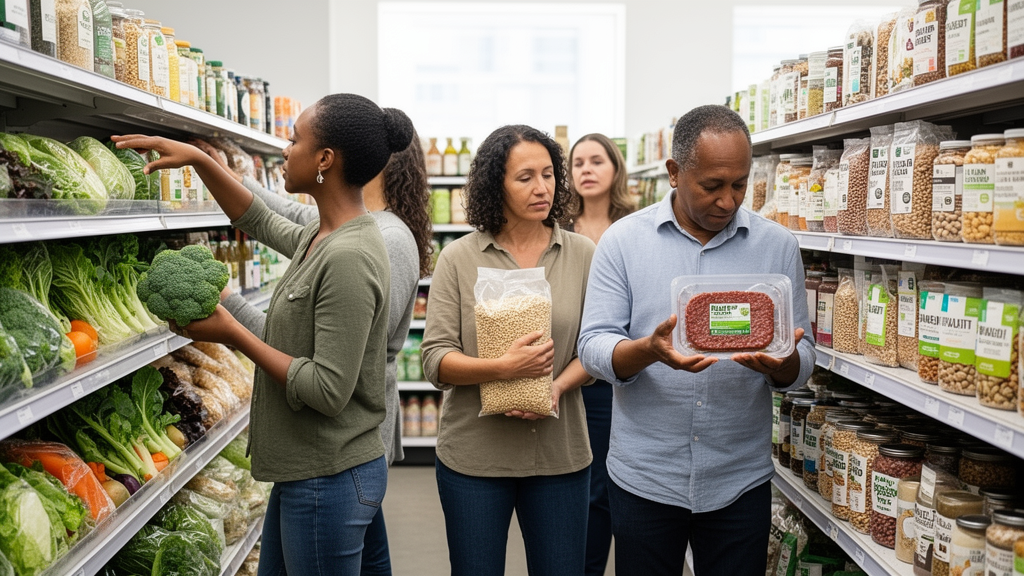
Americans do not share a single meaning for the term “plant-based” diet, according to a peer-reviewed analysis of a July 2025 survey involving 2,202 U.S. adults. Fifty-six percent of respondents said the term means vegan, or avoiding all animal products, while 35% interpreted it as eating abundant plant foods while continuing to eat some meat, dairy and eggs. Another 7% said they did not know what the phrase meant, and 2% offered a different response.

The findings, published in the American Journal of Lifestyle Medicine, show that interpretation differed across age groups. Among adults ages 65 to 94, 63% equated “plant-based” with vegan, compared with 51% of respondents ages 18 to 34. The survey was designed and conducted by Morning Consult using the Best Practices for Survey Research of the American Association of Public Opinion Research, and the researchers then analyzed the responses by demographic characteristics.

The terminology has become widely used in nutrition without an unambiguous definition, according to Anna Herby, a nutrition education specialist at the Physicians Committee for Responsible Medicine and a co-author of the study. She said the lack of clarity could affect how consumers evaluate foods and how health professionals communicate about dietary patterns. “Plant-based” was interpreted in two notably different ways in the survey: complete exclusion of animal products and a plant-forward diet that may still include animal-derived foods.

Shannon Menhardt, a registered dietitian at Barnard Medical Center and the study’s other co-author, said defining “plant-based” as excluding all animal products could help consumers make more confident decisions when choosing food products. A consistent definition could also make research findings and dietary recommendations easier to interpret, she said, supporting clearer communication among health professionals, patients and the media. These proposed uses of a standard definition were presented as potential communication benefits rather than as tested outcomes from the survey.

The study addresses terminology and public interpretation, not the nutritional quality of either dietary pattern, and its results are limited to the population and questions included in the survey. The analysis does not establish which interpretation produces better health outcomes, nor does it assess respondents’ actual eating habits. The findings instead indicate that the label alone may not reliably communicate whether a diet is vegan or includes meat, dairy or eggs. The results therefore point to a practical problem for food labeling, dietary research and public-health messaging: the same term can describe substantially different dietary practices depending on the person using or hearing it.

Subject of Research: U.S. adults’ differing interpretations of the term “plant-based” diet

Article Title: The term ‘plant-based’ diet is ambiguous among U.S. adults; its interpretation differs significantly between older and younger adults, new study finds

Article References: The term ‘plant-based’ diet is ambiguous among U.S. adults; its interpretation differs significantly between older and younger adults, new study finds. Original publication (Bibliographic details unavailable.)

Image Credits: AI Generated

DOI: Not provided

Keywords: plant-based diet, veganism, consumer interpretation, diet terminology, food labeling, nutrition communication, demographic differences, U.S. survey, term, plant-based, diet, ambiguous

Cite Scienmag News

Daisy Hatcher. (October 26, 2026). U.S. adults interpret “plant-based” diets differently, survey finds. Scienmag. https://scienmag.com/u-s-adults-interpret-plant-based-diets-differently-survey-finds/

Daisy Hatcher. "U.S. adults interpret “plant-based” diets differently, survey finds." Scienmag, 26 October 2026, https://scienmag.com/u-s-adults-interpret-plant-based-diets-differently-survey-finds/. Accessed 26 October 2026.

Daisy Hatcher. "U.S. adults interpret “plant-based” diets differently, survey finds." Scienmag. October 26, 2026. https://scienmag.com/u-s-adults-interpret-plant-based-diets-differently-survey-finds/


Tags: ambiguousconsumer interpretationdemographic differencesdietdiet terminologyfood labelingnutrition communicationplant-basedplant-based dietTermU.S. surveyveganism
Share26Tweet16
Previous Post

Rare Disseminated M. xenopi Infection Reported in Child With Cancer

Next Post

Quercetin reduces placental injury in experimental gestational diabetes models

Related Posts

Grammar of urgency: linguistics study dissects phishing texts to sharpen scam advisories
Social Science

Grammar of urgency: linguistics study dissects phishing texts to sharpen scam advisories

October 25, 2026
California study links social heat posts to local conditions
Social Science

California study links social heat posts to local conditions

October 25, 2026
Network efficiency analysis ranks 117 countries on sustainable tourism performance
Social Science

Network efficiency analysis ranks 117 countries on sustainable tourism performance

October 25, 2026
Textual analysis maps death metaphors in Paul Kalanithi’s medical memoir
Social Science

Textual analysis maps death metaphors in Paul Kalanithi’s medical memoir

October 25, 2026
Tokaj noble rot wines command price premiums in Hungarian online retail study
Social Science

Tokaj noble rot wines command price premiums in Hungarian online retail study

October 25, 2026
Fish Schools Emerge from Precisely Timed Copying Interactions
Social Science

Fish Schools Emerge from Precisely Timed Copying Interactions

October 25, 2026
Next Post
Quercetin reduces placental injury in experimental gestational diabetes models

Quercetin reduces placental injury in experimental gestational diabetes models

  • Mothers who receive childcare support from maternal grandparents show more optimized

    Mothers who receive childcare support from maternal grandparents show more parental warmth, finds NTU Singapore study

    27656 shares
    Share 11059 Tweet 6912
  • University of Seville Breaks 120-Year-Old Mystery, Revises a Key Einstein Concept

    1061 shares
    Share 424 Tweet 265
  • Bee body mass, pathogens and local climate influence heat tolerance

    682 shares
    Share 273 Tweet 171
  • Researchers record first-ever images and data of a shark experiencing a boat strike

    546 shares
    Share 218 Tweet 137
  • Groundbreaking Clinical Trial Reveals Lubiprostone Enhances Kidney Function

    531 shares
    Share 212 Tweet 133
Science

Embark on a thrilling journey of discovery with Scienmag.com—your ultimate source for cutting-edge breakthroughs. Immerse yourself in a world where curiosity knows no limits and tomorrow’s possibilities become today’s reality!

RECENT NEWS

  • Quercetin reduces placental injury in experimental gestational diabetes models
  • U.S. adults interpret “plant-based” diets differently, survey finds
  • Rare Disseminated M. xenopi Infection Reported in Child With Cancer
  • Laboratory study reports vacuum-deposited Ni–Cr alloy foam properties

Categories

  • Agriculture
  • Anthropology
  • Archaeology
  • Athmospheric
  • Biology
  • Biotechnology
  • Blog
  • Bussines
  • Cancer
  • Chemistry
  • Climate
  • Earth Science
  • Editorial Policy
  • Marine
  • Mathematics
  • Medicine
  • Pediatry
  • Policy
  • Psychology & Psychiatry
  • Science Education
  • Science News
  • Social Science
  • Space
  • Technology and Engineering

Subscribe to Blog via Email

Enter your email address to subscribe to this blog and receive notifications of new posts by email.

Join 5,151 other subscribers

© 2025 Scienmag - Science Magazine

Welcome Back!

Login to your account below

Forgotten Password?

Retrieve your password

Please enter your username or email address to reset your password.

Log In
No Result
View All Result
  • HOME
  • SCIENCE NEWS
  • CONTACT US

© 2025 Scienmag - Science Magazine

Discover more from Science

Subscribe now to keep reading and get access to the full archive.

Continue reading