

Wednesday, August 5, 2026
Science
No Result
View All Result
  • Login
  • HOME
  • SCIENCE NEWS
  • CONTACT US
  • HOME
  • SCIENCE NEWS
  • CONTACT US
No Result
View All Result
Scienmag
No Result
View All Result
Home Science News Technology and Engineering

Two-Photon Interference Links Independent Atomic and Quantum Dot Single-Photon Sources for Hybrid Networks

July 15, 2026
in Technology and Engineering
Reading Time: 2 mins read
0
Two-Photon Interference Links Independent Atomic and Quantum Dot Single-Photon Sources for Hybrid Networks

Two-Photon Interference Links Independent Atomic and Quantum Dot Single-Photon Sources for Hybrid Networks

65
SHARES
587
VIEWS
Share on FacebookShare on Twitter
ADVERTISEMENT

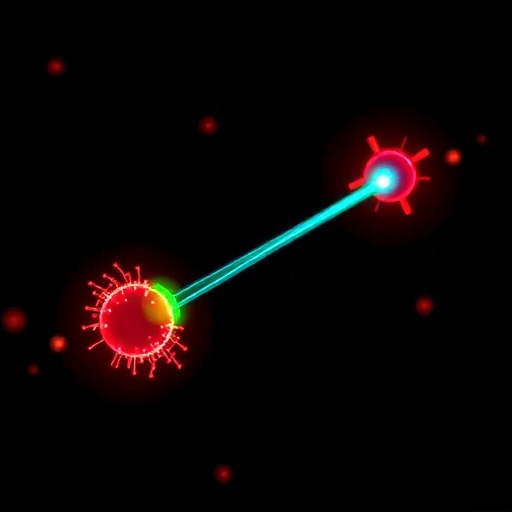
A new study hints at a practical route to building hybrid quantum networks that connect different kinds of single-photon emitters—specifically, independent atomic and quantum dot sources—using the delicate physics of two-photon interference. In the race to scale quantum communication, the ability of separate hardware components to “agree” on the same quantum wave pattern is essential. The reported results focus on how reliably photons produced by distinct platforms can interfere, a key requirement for entanglement generation and reliable network links.

The work, published in Light: Science & Applications, demonstrates interference effects between photons emitted from an atomic source and photons from a quantum dot, both operating independently. Two-photon interference occurs when indistinguishable photons become effectively indistinguishable at the detection stage, producing characteristic changes in coincidence counts. When the photons match in all relevant quantum properties—such as temporal profile, frequency, and polarization—interference can suppress or enhance simultaneous detection events, signaling coherence between remote or separate quantum systems.

By analyzing interference visibility and timing constraints, the researchers show how hybridization can be engineered rather than avoided. This matters because atomic and solid-state emitters each bring strengths: atomic systems can offer controllable transitions, while quantum dots can provide compact, chip-integrated photon generation. Combining them could enable networks that leverage the best traits of both technologies instead of forcing a single platform throughout an entire architecture.

Importantly, the study treats the two sources as independent, which raises practical challenges not present when photons originate from the same device. Maintaining photon indistinguishability across separate systems requires careful matching of emission linewidths and synchronization of detection windows. The findings suggest that, with appropriate tuning and characterization, the quantum interference needed for network protocols is achievable.

Hybrid quantum networks also face the broader issue of interfacing different frequency channels and coherence times. Interference-based verification offers a direct, experimentally grounded way to test whether photons from different physical origins can participate in the same quantum interference process. That capability can streamline experimental designs for future quantum repeaters and photonic routing schemes.

The paper’s results therefore act as a benchmark for hybrid connectivity: they quantify the degree to which atomic and quantum dot photons can interfere under conditions relevant to quantum networking. If replicated and extended, such demonstrations could accelerate the development of scalable photonic links that are not tied to a single emitter technology.

In the viral-science context, the message is clear: even when photons are born from fundamentally different quantum hardware, they can still be made to behave as twins—at least as far as interference demands. That “twin-photon” behavior is a cornerstone for building quantum networks that work reliably beyond laboratory demonstrations.

Subject of Research: Hybrid quantum networks using two-photon interference between independent atomic and quantum dot single-photon sources.

Article Title: Two-photon interference between independent atomic and quantum dot single-photon sources for hybrid quantum network.

Article References: Kim, KY., Kim, H., Park, D.H. et al. Two-photon interference between independent atomic and quantum dot single-photon sources for hybrid quantum network. Light Sci Appl 15, 320 (2026). https://doi.org/10.1038/s41377-026-02399-y

Image Credits: AI Generated

DOI: 10.1038/s41377-026-02399-y

Keywords:

Tags: entanglement generation in hybrid systemshybrid quantum networksindependent atomic and quantum dot photon sourcesindistinguishable photon interferencephoton coherence and indistinguishabilityphoton interference measurement techniquesquantum information transferquantum network scalabilityremote quantum system linkingscalable quantum communication architecturessolid-state and atomic emitter integrationtwo-photon interference in quantum communication
Share26Tweet16
Previous Post

COVID-19 fatigue linked to hippocampal immune and metabolic changes

Next Post

Accelerometer Study Compares 24-H Movement Patterns Across Prediabetes and Diabetes

Related Posts

Han Wins Travel Grant Supporting Student Attendance at ACM MobiCom
Technology and Engineering

Han Wins Travel Grant Supporting Student Attendance at ACM MobiCom

August 5, 2026
Yao Earns Prestigious NSF CAREER Award
Technology and Engineering

Yao Earns Prestigious NSF CAREER Award

August 5, 2026
Oxygen nanobubbles transform biochar into cadmium defense for flooded rice soils
Technology and Engineering

Oxygen nanobubbles transform biochar into cadmium defense for flooded rice soils

August 4, 2026
India’s Nitrogen Crop Restructuring Could Deliver Environmental Benefits and Reshape Interstate Trade
Technology and Engineering

India’s Nitrogen Crop Restructuring Could Deliver Environmental Benefits and Reshape Interstate Trade

August 4, 2026
Rice to lead $15 million Army center advancing next-generation sensing, communications
Technology and Engineering

Rice to lead $15 million Army center advancing next-generation sensing, communications

August 4, 2026
New intelligence tracks solid-state batteries across their entire life cycle
Technology and Engineering

New intelligence tracks solid-state batteries across their entire life cycle

August 4, 2026
Next Post
Accelerometer Study Compares 24-H Movement Patterns Across Prediabetes and Diabetes

Accelerometer Study Compares 24-H Movement Patterns Across Prediabetes and Diabetes

  • Mothers who receive childcare support from maternal grandparents show more

    Mothers who receive childcare support from maternal grandparents show more parental warmth, finds NTU Singapore study

    27656 shares
    Share 11059 Tweet 6912
  • University of Seville Breaks 120-Year-Old Mystery, Revises a Key Einstein Concept

    1061 shares
    Share 424 Tweet 265
  • Bee body mass, pathogens and local climate influence heat tolerance

    682 shares
    Share 273 Tweet 171
  • Researchers record first-ever images and data of a shark experiencing a boat strike

    546 shares
    Share 218 Tweet 137
  • Groundbreaking Clinical Trial Reveals Lubiprostone Enhances Kidney Function

    531 shares
    Share 212 Tweet 133
Science

Embark on a thrilling journey of discovery with Scienmag.com—your ultimate source for cutting-edge breakthroughs. Immerse yourself in a world where curiosity knows no limits and tomorrow’s possibilities become today’s reality!

RECENT NEWS

  • MicroRNAs identified as biomarkers to triage cervical lesions in high-risk HPV-positive women
  • NF-κB-Active Tumors, Matrix CAFs, and Immunosuppression Drive Chemoradiation Resistance in Rectal Cancer
  • Han Wins Travel Grant Supporting Student Attendance at ACM MobiCom
  • MD Anderson named nation’s No. 1 cancer center for 12th consecutive year

Categories

  • Agriculture
  • Anthropology
  • Archaeology
  • Athmospheric
  • Biology
  • Biotechnology
  • Blog
  • Bussines
  • Cancer
  • Chemistry
  • Climate
  • Earth Science
  • Editorial Policy
  • Marine
  • Mathematics
  • Medicine
  • Pediatry
  • Policy
  • Psychology & Psychiatry
  • Science Education
  • Social Science
  • Space
  • Technology and Engineering

Subscribe to Blog via Email

Enter your email address to subscribe to this blog and receive notifications of new posts by email.

Join 5,148 other subscribers

© 2025 Scienmag - Science Magazine

Welcome Back!

Login to your account below

Forgotten Password?

Retrieve your password

Please enter your username or email address to reset your password.

Log In
No Result
View All Result
  • HOME
  • SCIENCE NEWS
  • CONTACT US

© 2025 Scienmag - Science Magazine

Discover more from Science

Subscribe now to keep reading and get access to the full archive.

Continue reading
