


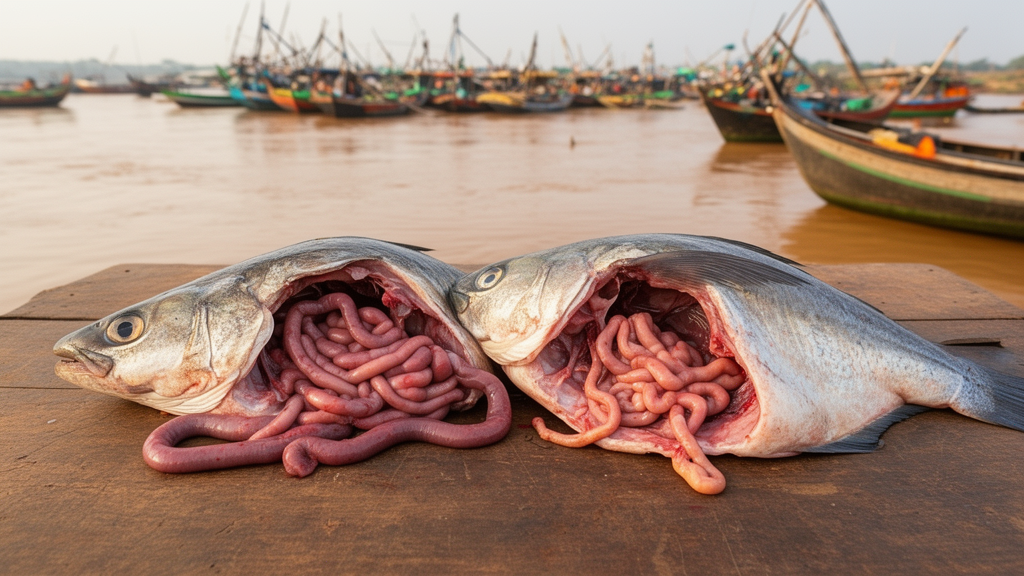
Along the Lower River Benue in Nigeria, two of the region’s most commercially valuable fish species carry radically different digestive equipment inside bodies of broadly similar size. A new morphological study of the Nile catfish Eutropius niloticus and the Nile tilapia Oreochromis niloticus has documented just how sharply their gastrointestinal tracts diverge, and how both systems flex with the seasonal rhythms of the river. The findings, published in Innovations in Agriculture, offer a detailed anatomical portrait of two fish whose gut architecture encodes their diets, their ecological roles, and their capacity to weather the dry-season fluctuations that define life in the Benue.
The research team sampled fish from the Wadata landing site, obtaining specimens from local fishermen and measuring them across three months, from November 2022 through January 2023. Fifty specimens of each species were examined monthly, with standard length, total length, and gut length measured using a meter board, while body and gut weights were recorded on a precision Mettler Toledo weighing scale. The measurements were then subjected to one-way analysis of variance to detect variations across the sampling months, and simple linear regression was used to test the relationship between body weight and gut length in each species.
The results revealed a digestive contrast as stark as any in comparative fish anatomy. Eutropius niloticus, a carnivorous catfish, carried a short, relatively linear intestine suited to rapid transit of protein-rich prey. In November, the species showed a mean total length of 24.15±1.90 cm, a gut length of 18.00±1.32 cm, and a gut weight of 6.09±0.95 g, indicating a digestive system enhanced for rapid processing during a period of peak feeding. Oreochromis niloticus, by contrast, displayed a highly coiled intestine with a mean gut length of 79.75±9.59 cm and a gut weight of 3.99±1.19 g in the same month, an architecture adapted to prolonged digestion of plant material, algae, and detritus.
That coiled intestinal structure is not merely longer; it is functionally different. By increasing the residence time of food within the digestive tract, the tilapia’s convoluted gut facilitates the breakdown of complex carbohydrates and fibers that a carnivore would pass through quickly. The catfish’s simpler, straighter intestine, paired with a well-developed stomach and pyloric ceca, is optimized instead for the rapid enzymatic dismantling of complex protein structures, maximizing nutrient uptake from high-protein diets. These anatomical differences align with a well-established pattern in fish biology: carnivorous species tend toward shorter intestines to expedite food transit, while herbivorous and omnivorous species evolve longer, more coiled tracts to accommodate plant-based diets.
Seasonal variation added a second layer of complexity to the picture. In Eutropius niloticus, November marked the peak of both body weight (91.60±12.70 g) and gut length, suggesting heightened digestive capacity to handle increased food intake during the early dry season. By December, however, gut weight had collapsed to 1.05 g and body weight to 12.28 g, a dramatic decline the researchers attribute to seasonal changes impacting food availability. By January, body and gut parameters began to recover, with a mean total length of 24.84 cm and a gut weight of 5.95 g, hinting at a rebound in feeding activity as conditions shifted.
Oreochromis niloticus followed its own seasonal trajectory. The species recorded its highest mean body weight in December (115.10 g), with gut weight peaking at 7.52±3.26 g in the same month, coinciding with the highest recorded body weight and suggesting the fish optimized digestion and nutrient absorption during this period. Gut length was longest in November (79.75 cm), indicating that gut development increased with feeding activity. The tilapia’s pattern of growth and gut development thus peaked at a different point in the dry season than the catfish’s, a divergence that may reflect differences in how each species exploits the river’s shifting food resources.
Regression analysis revealed a significant relationship between body weight and gut length in both species, but with telling differences in strength. In Eutropius niloticus, the r² value reached 81.67%, indicating that digestive morphology is tightly coupled to growth performance and that the species relies heavily on digestive capacity to support growth. In Oreochromis niloticus, the r² value was 69.65%, slightly lower and suggesting a more complex digestive demand, with the tilapia potentially employing additional physiological mechanisms to maintain growth under varying environmental conditions.
The seasonal peaks in gut length and weight observed in November for both species point to increased food availability during the post-rainy season, when receding water levels in the River Benue concentrate food resources and drive heightened feeding activity. As the dry season progressed into December and January, food availability declined due to resource depletion and unfavourable water conditions occasioned by lower water volume, causing reduced gut weight and body size parameters that reflect shifts in feeding activity and energy allocation. The researchers note that water quality parameters, such as dissolved oxygen and nutrient concentrations, are critical during the dry season, influencing the overall health and growth of fish and other aquatic species.
The Lower River Benue has undergone significant ecological alterations due to climate change and anthropogenic activities, changes expected to impact the availability of prey and other food resources and potentially cause dietary shifts among fish populations. Understanding the morphological differences documented in this study is crucial for managing fish populations in natural habitats and optimizing their nutrition in aquaculture systems, particularly as aquaculture continues to expand in sub-Saharan Africa. While Nile tilapia has been extensively studied due to its widespread use in aquaculture, research on the digestive morphology of Eutropius niloticus remains limited, making this comparative portrait a valuable baseline for a species whose capacity to adapt to dietary change is now better understood.
The study concludes that the gastrointestinal morphology of these two species reflects their respective feeding strategies and ecological roles: Eutropius niloticus is adapted for rapid digestion of carnivorous diets, while Oreochromis niloticus has developed a coiled intestine suited for plant-based diets. These morphological adaptations are further influenced by seasonal changes in food availability, emphasizing the importance of environmentally informed management practices in aquaculture. As the Benue’s dry seasons grow more erratic, the digestive blueprints of these two fish may prove to be sensitive indicators of the river’s ecological health, and of the adaptive capacity of African freshwater fisheries facing an uncertain future.
Subject of Research: Fish gastrointestinal morphology and seasonal adaptation in the Lower River Benue
Article Title: Comparative morphological study of the gastrointestinal tract of Eutropius niloticus and Oreochromis niloticus from lower river Benue, Nigeria
Article References: Madan, A., Gbaaondo, S. T., Nenge, J., & Akange, E. T. (2025). Comparative morphological study of the gastrointestinal tract of Eutropius niloticus and Oreochromis niloticus from lower river Benue, Nigeria. Innovations in Agriculture, 8, 1-4. https://doi.org/10.3897/ia.2025.140594
Image Credits: AI Generated
Keywords: Eutropius niloticus, Oreochromis niloticus, gastrointestinal tract, Lower River Benue, fish morphology, dry season, aquaculture, Nigeria, carnivorous fish, herbivorous fish, Comparative, morphological
Cite Scienmag News
Daisy Hatcher. (October 16, 2026). Two Nile fish, two digestive blueprints: gut anatomy tracks diet and dry-season scarcity in the Lower River Benue. Scienmag. https://scienmag.com/two-nile-fish-two-digestive-blueprints-gut-anatomy-tracks-diet-and-dry-season-scarcity-in-the-lower-river-benue/
Daisy Hatcher. "Two Nile fish, two digestive blueprints: gut anatomy tracks diet and dry-season scarcity in the Lower River Benue." Scienmag, 16 October 2026, https://scienmag.com/two-nile-fish-two-digestive-blueprints-gut-anatomy-tracks-diet-and-dry-season-scarcity-in-the-lower-river-benue/. Accessed 16 October 2026.
Daisy Hatcher. "Two Nile fish, two digestive blueprints: gut anatomy tracks diet and dry-season scarcity in the Lower River Benue." Scienmag. October 16, 2026. https://scienmag.com/two-nile-fish-two-digestive-blueprints-gut-anatomy-tracks-diet-and-dry-season-scarcity-in-the-lower-river-benue/


