


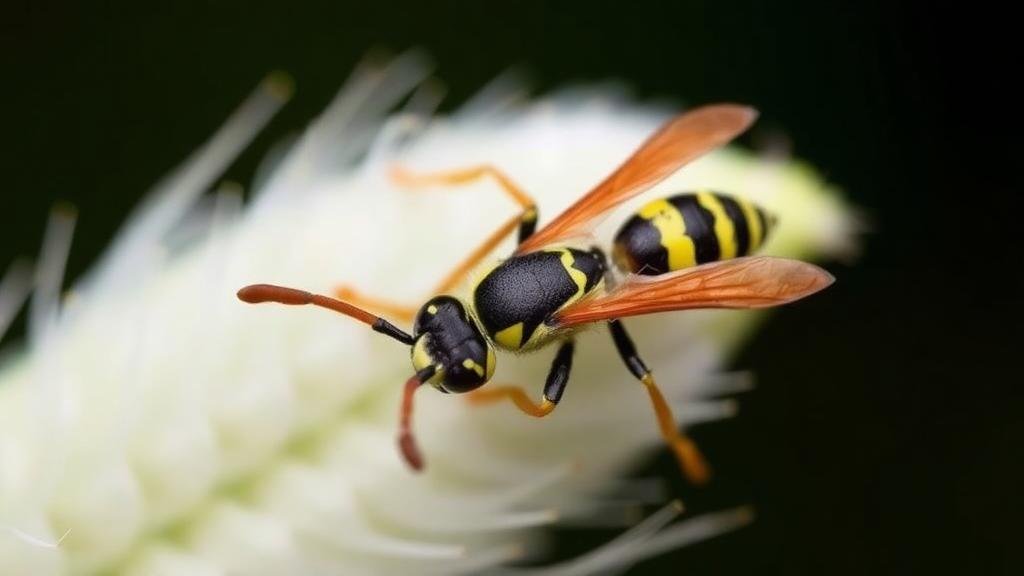
In the dense oak woodlands of the Pacific Northwest and the suburban parks of New York, two species of tiny parasitic wasps from Europe have been quietly establishing themselves among native insect communities, almost entirely unnoticed by science. A new study published in the Journal of Hymenoptera Research documents these two separate introductions of parasitoid wasps in the genus Bootanomyia, marking a rare and striking case of detected invasions in one of the most species-rich yet poorly monitored groups of animals on Earth. The discovery was made possible only because a dedicated team of researchers has been systematically collecting and rearing insects from oak galls across North America, a labor-intensive approach that few other parasitoid communities receive.
Parasitoid wasps, which lay their eggs inside or on other insects and ultimately kill their hosts, may represent the most species-rich group of all animals. Despite their enormous ecological importance in regulating populations of other insects, they are small, have brief adult stages, and are so inconspicuous that many species remain undescribed even in their native ranges. This combination of high diversity with challenging detection has long suggested that parasitoid introductions could be going undetected at alarming rates. The new study provides some of the strongest evidence yet that this is indeed happening, revealing two distinct European species that have crossed the Atlantic and are now attacking native North American gall wasps.
The research team, which has long studied the diversity and evolution of oak gall wasps in North America, collects galls induced on oak trees by cynipid wasps and rears out whatever insects emerge. Oak gall wasps lay eggs into the meristematic tissue of oak trees and manipulate the tree into forming galls, which are growths of plant tissue that provide food and shelter to the developing wasp larvae. These galls harbor rich communities of parasites, and the team’s surveys have revealed extensive previously undocumented parasitic wasp diversity associated with oak galls. Among the surprising associates collected in recent years were wasps fitting the description of the Palearctic species Bootanomyia dorsalis, reared from native North American oak galls on the Pacific coast and, more recently, from two independent collections in New York State.
Bootanomyia dorsalis was previously known only as a parasite of oak gall wasps in the Palearctic realm, where genetic data from Europe suggest it actually comprises two distinct species, referred to as B. dorsalis sp. 1 and B. dorsalis sp. 2. The North American specimens all keyed morphologically to B. dorsalis, but the researchers suspected that the Pacific coast and New York wasps might represent separate introductions of these two European species rather than previously undetected natives. To test this hypothesis, the team sequenced the mitochondrial Cytochrome Oxidase Subunit I gene from 19 Pacific coast specimens and four New York specimens, comparing the sequences to previously published genetic data from Palearctic Bootanomyia associated with oak galls.
The genetic results were unambiguous. Sequences from the New York specimens were 98.4 to 99.4 percent similar to sequences from B. dorsalis sp. 1 collected in Portugal, Iran, and Italy, while sequences from the Pacific coast specimens were 97.9 to 98.1 percent similar to sequences from B. dorsalis sp. 2 from Spain, Hungary, and Iran. The two clades differ from each other by 5.3 to 6.6 percent at this locus, well beyond the range of intraspecific variation. The phylogenetic tree sorted the North American Bootanomyia into two clades, each also containing sequences from Palearctic relatives, confirming two separate introductions of two distinct European species to North America.
Perhaps the most striking genetic finding concerns the Pacific coast population. All 19 sequenced wasps from the Pacific coast were 100 percent identical at the mtCOI locus, despite being collected from three different oak gall hosts across six sites in both the United States and Canada. In their native Palearctic range, B. dorsalis sp. 2 shows considerable genetic variation. The complete absence of variation in the introduced population is a strong indicator of a population bottleneck, consistent with a founder effect upon introduction. This suggests that the Pacific coast invasion may have been started by only a small number of founder individuals, perhaps even a single fertilized female. In contrast, the New York introduction appears to be less bottlenecked, with at least three distinct mtCOI haplotypes present among the four sequenced specimens.
The ecological implications of these introductions are potentially significant. In their native ranges, both Bootanomyia species attack several different gall wasp hosts, and the team likewise reared both from galls of multiple North American gall wasp hosts. On the Pacific coast, B. dorsalis sp. 2 was reared from four different host gall species on Oregon white oak, totaling 2,431 individual wasps. In New York, B. dorsalis sp. 1 emerged from two host gall species on swamp white oak and bur oak. This broad host range suggests a potential for widespread impact on North American gall insect communities, which include many native species whose ecological relationships remain poorly understood.
The pathway of introduction remains uncertain, but the researchers consider several possibilities. Because B. dorsalis has only been recorded as a parasite of oak galls, one possibility is that the wasps were introduced along with Palearctic oak trees infested with galls. English oak has been widely planted in North America since the seventeenth century and is documented across numerous states and provinces, while Turkey oak has been observed on the east coast within thirteen kilometers of a location where a B. dorsalis was collected. Alternatively, the wasps may have been introduced separately from their hosts. Adult females of related megastigmid species can live up to 27 days, ample time for an inconspicuous insect to hitchhike in cargo or on a passenger plane across the Atlantic.
Whether these introductions will prove invasive in the full ecological sense remains to be seen, but the signs are concerning. The Pacific coast introduction is already geographically widespread, and a report of what appears to be B. dorsalis from Massachusetts suggests the east coast introduction also has a wider distribution than the New York discovery alone indicates. Historical precedents for parasitoid introductions show that ecological effects can be substantial, ranging from threats to endemic butterflies in the Canary Islands to disruption of native parasitoid interactions in biological control systems. The primary relevance of documenting these introductions lies in what they portend for the myriad other parasitoid communities that are not well studied or regularly sampled. This finding of multiple introductions into the North American oak gall system makes it reasonable to presume that the portcullis has been raised for parasitic wasp invasions, as it has been for so many other insect groups, and that detection efforts should invest in methods and resources inclusive of parasitic wasps.
}
Subject of Research: Biology
Article Title: Discovery of two Palearctic Bootanomyia Girault ( Hymenoptera , Megastigmidae ) parasitic wasp species introduced to North America
Article References: Brown, G. E., Lewis, C. J., Fridrich, K., Jones, D. G., Goodwin, E. A., Weinrich, C. L., Steffensen, M. J., Prior, K. M., & Forbes, A. A. (2025). Discovery of two Palearctic Bootanomyia Girault (Hymenoptera, Megastigmidae) parasitic wasp species introduced to North America. Journal of Hymenoptera Research, 98, 653-665. https://doi.org/10.3897/jhr.98.152867
Image Credits: AI Generated
Keywords: parasitoid wasps, invasive species, oak galls, Bootanomyia, Hymenoptera, ecology, genetics, Discovery, Palearctic, Girault, Megastigmidae, parasitic
Cite Scienmag News
Gavin Prescott. (October 18, 2026). Two European Parasitic Wasp Species Quietly Invaded North America. Scienmag. https://scienmag.com/two-european-parasitic-wasp-species-quietly-invaded-north-america/
Gavin Prescott. "Two European Parasitic Wasp Species Quietly Invaded North America." Scienmag, 18 October 2026, https://scienmag.com/two-european-parasitic-wasp-species-quietly-invaded-north-america/. Accessed 18 October 2026.
Gavin Prescott. "Two European Parasitic Wasp Species Quietly Invaded North America." Scienmag. October 18, 2026. https://scienmag.com/two-european-parasitic-wasp-species-quietly-invaded-north-america/


