


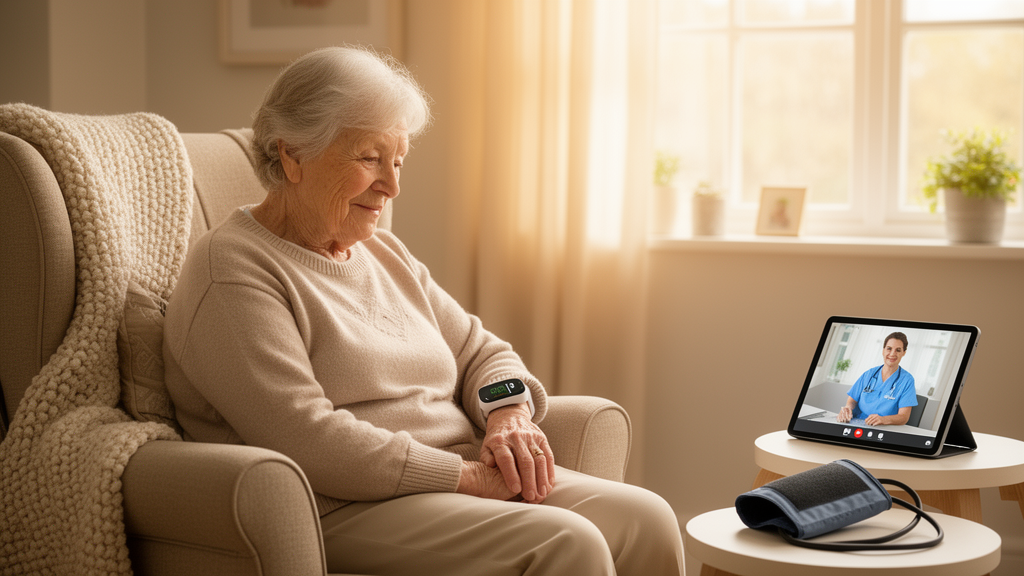
A large randomized controlled trial is being launched to determine whether a personalized digital remote monitoring system can keep frail older adults out of the hospital. The EPOCARE trial, described in a study protocol published in BMC Geriatrics, will enroll 700 participants aged 75 and older and test whether the EPOCA Remote Monitoring System reduces unplanned hospital use compared with usual care over a 12-month follow-up period. Because the publication is a trial protocol, no effectiveness results are available yet; the article lays out the design, outcomes and evaluation framework that the investigators will follow.
The trial responds to mounting pressure on health systems: population ageing combined with a growing prevalence of multimorbidity is driving frequent emergency department visits and unplanned hospitalizations among older adults. Remote patient monitoring has emerged as a promising care model for the follow-up of complex older patients, built around early detection of clinical deterioration and proactive care coordination. According to the protocol’s authors, however, evidence from randomized controlled trials evaluating multidimensional and integrated remote monitoring interventions in geriatric care remains limited, which is the gap EPOCARE is designed to fill.
The EPOCA Remote Monitoring System is an integrated telemonitoring intervention that combines automated monitoring of patients at home, alert prioritization, and human clinical oversight delivered through Nurse Navigators. The protocol describes it as a personalized care model for older adults with multimorbidity who are at high risk of hospitalization. The accompanying qualitative process evaluation will examine how these personalized care pathways are implemented and managed in practice, alongside the trial’s clinical endpoints.
EPOCARE is designed as a multicenter, prospective, parallel-group randomized controlled trial with individual 1:1 randomization within a superiority framework. Eligible participants are adults aged 75 years or older who have at least three chronic conditions, at least one hospitalization or a fall in the previous year, and a recent discharge from an emergency department. A total of 700 participants, 350 in each arm, will be randomized to either the EPOCA Remote Monitoring System or usual care, and both groups will be followed for 12 months.
The primary outcome is the total number of unplanned hospitalization days over the 12-month follow-up. Secondary outcomes include the number of unplanned hospitalizations, total hospital days for acute decompensation, quality of life, patient experience, and all-cause mortality. Beyond the clinical measures, the trial will include a budget impact analysis to estimate healthcare resource use and associated costs in both arms, giving decision-makers an economic picture to set alongside the effectiveness data.
The trial is registered as NCT06845917, with registration dated 20 February 2025. The published version is an open-access, peer-reviewed accepted article carrying a permanent DOI, shared early so that it is citable while the final Version of Record is being prepared.
If the EPOCA system proves effective, the investigators write that the findings will inform healthcare decision-makers on the design, implementation and scaling of remote patient monitoring care models for complex chronic care pathways. The protocol combines a hard utilization endpoint with patient-reported measures, mortality tracking and economic analysis, and the trial’s results will show whether these elements translate into measurable benefits for complex older patients.
For now, the trial’s contribution is its design: a multicenter superiority trial testing whether automated monitoring, prioritized alerts and Nurse Navigator oversight can reduce unplanned hospital utilization compared with usual care in multimorbid older adults recently discharged from the emergency department. The EPOCARE protocol sets out how the intervention will be delivered and evaluated, and its results will provide rigorous evidence on the effectiveness of this integrated remote monitoring model for older adults at high risk of hospitalization.
Subject of Research: Study protocol for a multicenter randomized controlled trial of personalized digital remote monitoring in older patients with multimorbidity at high risk of hospitalization
Article Title: Personalized digital remote monitoring for older patients: multicentric RCT study protocol–EPOCARE
Article References: Salma, I., Testa, D., Mpoy, J.-V., Annweiler, C., Cabanes, E., Leleu, H., & Milnvielle, E. (2026). Personalized digital remote monitoring for older patients: multicentric RCT study protocol–EPOCARE. BMC Geriatrics. https://doi.org/10.1186/s12877-026-08395-6
Image Credits: AI Generated
DOI: 10.1186/s12877-026-08395-6
Keywords: EPOCARE trial, remote patient monitoring, telemonitoring, geriatrics, multimorbidity, randomized controlled trial, unplanned hospitalization, older adults, BMC Geriatrics, Nurse Navigators, study protocol, digital health
Cite Scienmag News
Ophelia Keating. (October 26, 2026). Trial to Test Remote Monitoring for Older Patients at High Hospitalization Risk. Scienmag. https://scienmag.com/trial-to-test-remote-monitoring-for-older-patients-at-high-hospitalization-risk/
Ophelia Keating. "Trial to Test Remote Monitoring for Older Patients at High Hospitalization Risk." Scienmag, 26 October 2026, https://scienmag.com/trial-to-test-remote-monitoring-for-older-patients-at-high-hospitalization-risk/. Accessed 26 October 2026.
Ophelia Keating. "Trial to Test Remote Monitoring for Older Patients at High Hospitalization Risk." Scienmag. October 26, 2026. https://scienmag.com/trial-to-test-remote-monitoring-for-older-patients-at-high-hospitalization-risk/


