


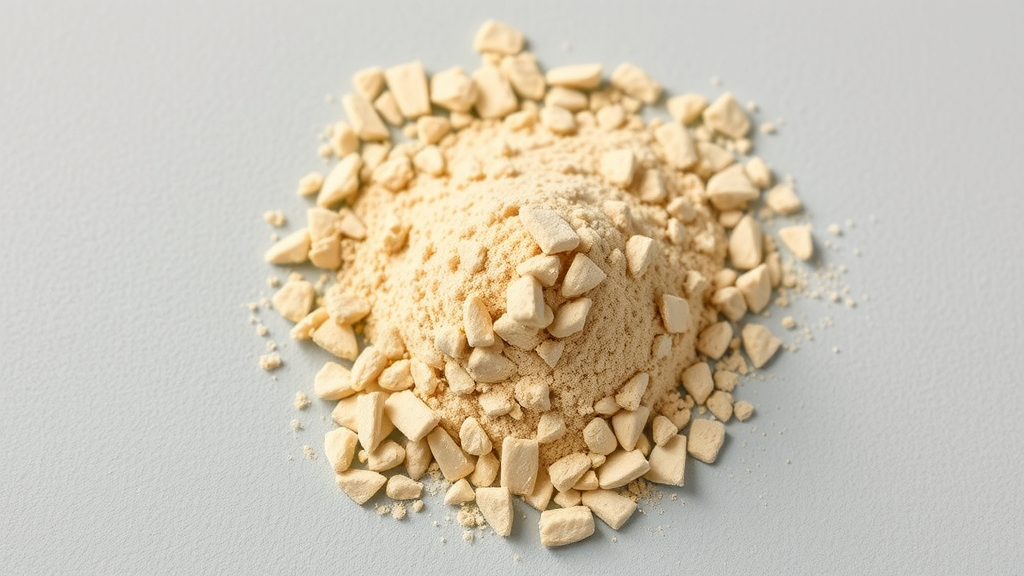
Scientists in India have shown that a simple powder made from the dried leaves of the Albizia amara tree can dramatically improve the performance of water-based drilling fluids, offering an affordable and biodegradable alternative to the synthetic polymers and engineered nanoparticles that dominate the industry today. The research, published in Environmental Science and Pollution Research, demonstrates that adding as little as 1.5 weight percent of the plant-derived powder to a conventional water-based mud increases its viscosity by up to 95 percent and its shear stress by 58 percent at room temperature, while also helping the fluid hold its structure at temperatures as high as 110 degrees Celsius. The finding arrives at a moment when drilling operators face mounting pressure to reduce the environmental and occupational health footprint of the chemically complex fluids they pump downhole.
Water-based drilling fluids, often called muds, are the workhorses of modern well construction. They cool and lubricate the drill bit, carry rock cuttings back to the surface, maintain pressure against the borehole wall, and form a thin, low-permeability filter cake that limits the loss of fluid into the surrounding rock. Achieving all of these functions at once requires careful control of rheology, the way the fluid flows and deforms under stress, and of filtration behavior. Historically, operators have turned to synthetic polymers and, more recently, to nanoparticles of materials such as silica, copper oxide, zinc oxide, and titanium dioxide to push performance limits. But those additives raise concerns. Nanoparticles can be costly to produce, difficult to disperse consistently, and their long-term fate in the environment and their potential effects on human health remain only partially understood.
The research team, led by Thenpandiyan Elumalai of the Academy of Maritime Education and Training in Chennai and including collaborators from the University of Petroleum and Energy Studies in Dehradun and Presidency University in Bengaluru, turned instead to a plant with a long history in traditional medicine. Albizia amara, a member of the legume family found across South Asia and Africa, produces leaves rich in natural polysaccharides, flavonoids, and other organic compounds. Earlier studies had documented the tree’s wound-healing and antimicrobial properties, and related work had explored gum exudates from Albizia species as thickening agents. What sets the new study apart is the systematic effort to characterize the leaf powder at the structural level and then to quantify exactly how it transforms the behavior of a drilling mud under realistic temperature conditions.
The characterization work relied on a battery of standard materials-science techniques. X-ray diffraction confirmed that the powder has a well-defined crystalline structure, which the authors link to its structural integrity when dispersed in fluid. Scanning electron microscopy revealed the morphology of the ground leaf material, while Fourier-transform infrared spectroscopy identified the functional groups, including hydroxyl-rich organic moieties, that allow the particles to interact with water molecules and clay platelets in the mud. Perhaps most striking was the thermogravimetric analysis: the powder retained 92 percent of its mass up to 225 degrees Celsius, an unusually high threshold for a plant-derived material and a critical property for any additive intended for high-pressure, high-temperature drilling environments.
With the material characterized, the team formulated water-based drilling fluids containing the powder at 0.5, 1.0, and 1.5 weight percent and measured their performance at 30, 70, and 110 degrees Celsius using rotational, oscillatory, and thixotropic rheometry alongside standard API filtration tests. The 1.5 percent formulation emerged as the clear winner. At ambient temperature it nearly doubled the viscosity of the base mud, a change that translates directly into improved carrying capacity for lifting cuttings out of the wellbore. Shear stress increased 58 percent, reflecting a stronger internal structure that resists sedimentation of dense particles when circulation stops.
Temperature is where most additives fail, and this is where the leaf powder delivered its most consequential results. Conventional water-based fluids typically lose nearly half of their viscosity when heated to 110 degrees Celsius, a collapse that threatens cuttings transport and wellbore stability in deep or hot wells. The optimized formulation lost only 20 to 28 percent of its viscosity at the same temperature, a level of thermal resilience the authors attribute to the heat-stable organic network formed by the powder within the mud. Oscillatory measurements reinforced this picture: the storage modulus, a measure of the fluid’s elastic character, rose from 21.54 pascals in the untreated base mud to 40.7 pascals in the treated formulation, indicating improved elasticity and anti-sagging behavior that keeps weighting materials evenly suspended during static periods.
Thixotropy, the ability of a fluid to rebuild its structure after being sheared, is another make-or-break property for drilling muds. When pumps stop, the fluid must quickly gel to hold cuttings and weighting agents in place; when pumps restart, it must thin again to avoid excessive pressure. In the team’s thixotropic experiments, the treated mud achieved full structural recovery of its viscosity within 118 seconds at elevated temperatures, whereas the base mud managed to recover only 74.9 percent of its original viscosity. Complete and rapid recovery means the fluid can cycle reliably between flowing and gelled states throughout the drilling operation, a behavior usually demanded of expensive synthetic polymers.
The filtration results may prove equally important for field adoption. In the standard API fluid-loss test, the optimized formulation reduced filtrate volume from 7.45 milliliters to 5.45 milliliters compared with the untreated mud, and filter-cake thickness fell from 4.5 to 2.0 millimeters. A thinner, tighter filter cake is a hallmark of a well-behaved drilling fluid: it means less fluid invading the formation, a lower risk of differential sticking, and less damage to the productive zones the well is designed to tap. The researchers suggest that the fine, irregular particles of leaf powder lodge within the clay-based cake, plugging pores and creating a more compact barrier. Because the material is biodegradable, any residual cake left in the formation is also far less likely to cause persistent environmental harm than synthetic alternatives.
The authors position Albizia amara powder as a candidate additive for high-pressure, high-temperature drilling applications, where the combined demands of rheological stability, cuttings suspension, thermal resistance, and filtration control typically require a cocktail of multiple chemicals. A single, low-cost, plant-derived material that addresses all four at once would simplify fluid design and cut both cost and environmental liability. The work also fits within a broader trend of bio-based drilling-fluid research, from tannin extracts and corn starch to aloe vera and litchi leaf powders, that seeks to replace problematic synthetics with materials drawn from agricultural and forestry residues. Challenges remain before field trials: the powder must be sourced and ground consistently, its long-term behavior in brines and in the presence of contaminants such as shale cuttings must be verified, and its interaction with other common additives needs mapping. But the core message of the study is difficult to ignore. A tree whose leaves have been used for centuries in traditional remedies may now help the energy industry drill deeper, hotter, and cleaner, converting an abundant natural resource into a functional material for one of the most demanding engineering environments on Earth.
Subject of Research: Albizia amara leaf powder as a biodegradable rheology and filtration additive for water-based drilling fluids
Article Title: Albizia amara leaf powder as a next-generation biodegradable additive for advanced drilling fluid applications
Article References: Elumalai, T., Panneerselvam, I., Devarapu, S. R., Kesavan, S., & Swaminathan, P. (2026). Albizia amara leaf powder as a next-generation biodegradable additive for advanced drilling fluid applications. Environmental Science and Pollution Research. https://doi.org/10.1007/s11356-026-38217-6
Image Credits: AI Generated
DOI: 10.1007/s11356-026-38217-6
Keywords: Albizia amara, drilling fluid, biodegradable additive, water-based mud, rheology, fluid loss, HPHT drilling, thermal stability, filter cake, green additives, nanoparticle alternatives, petroleum engineering
Cite Scienmag News
Violet Maxwell. (September 12, 2026). Tree Leaf Powder from Albizia amara Boosts Drilling Fluid Performance Under Extreme Heat. Scienmag. https://scienmag.com/tree-leaf-powder-from-albizia-amara-boosts-drilling-fluid-performance-under-extreme-heat/
Violet Maxwell. "Tree Leaf Powder from Albizia amara Boosts Drilling Fluid Performance Under Extreme Heat." Scienmag, 12 September 2026, https://scienmag.com/tree-leaf-powder-from-albizia-amara-boosts-drilling-fluid-performance-under-extreme-heat/. Accessed 5 October 2026.
Violet Maxwell. "Tree Leaf Powder from Albizia amara Boosts Drilling Fluid Performance Under Extreme Heat." Scienmag. September 12, 2026. https://scienmag.com/tree-leaf-powder-from-albizia-amara-boosts-drilling-fluid-performance-under-extreme-heat/


