


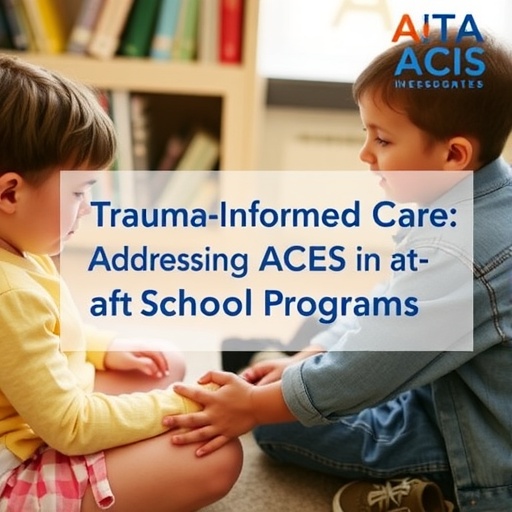
In a compelling exploration of trauma-informed care, researchers Zeh, Thomas, and Gunderman, along with their colleagues, delve into a crucial and often overlooked aspect of child development: the impact of Adverse Childhood Experiences (ACEs) on youth in out-of-school time programs. Their extensive study, detailed in the upcoming Journal of Child and Adolescent Trauma, outlines the pressing need for strategic responses that directly address these experiences in the educational settings outside traditional classroom environments. This innovative approach is set to establish a framework for enhancing emotional resilience among children, potentially transforming the dynamics of after-school programs nationwide.
Central to their groundbreaking research is the understanding that ACEs encompass a range of traumatic experiences that can significantly impact child development. With an increasing number of children exposed to such adversities, the authors argue that educators and program leaders must incorporate trauma-informed strategies into their curricula. This approach not only addresses immediate emotional needs but also promotes long-term wellbeing and academic success, thereby crafting a more supportive atmosphere for vulnerable populations.
The authors meticulously detail how trauma can manifest in various behaviors and responses among children. For instance, those who have experienced ACEs may exhibit heightened anxiety, disrupted interpersonal relationships, or difficulties in managing emotions. By acknowledging these symptoms, after-school programs can tailor their approaches, providing necessary support and understanding. The proactive identification of such behaviors is vital in creating a safe and nurturing environment where children can thrive despite their challenges.
Furthermore, the research emphasizes the importance of training staff within out-of-school programs to recognize and respond effectively to trauma-related issues. Equipping educators with the tools to understand and manage trauma can create a ripple effect, enhancing not only the learning experience for children but also fostering a culture of empathy and understanding among peers. This reinforces the idea that an informed staff is a critical component in the successful implementation of trauma-informed care strategies.
One significant outcome highlighted in the study is the role of community partnerships in bolstering these initiatives. By collaborating with mental health professionals and local organizations, out-of-school programs can enhance their resources and support systems. This collaborative model ensures that children have access to comprehensive care, creating a network of support that extends beyond the confines of the classroom.
The integration of trauma-informed care also involves understanding the socio-emotional learning (SEL) framework. Research indicates that SEL programs can significantly mitigate the adverse effects of trauma by teaching children critical skills such as emotional regulation, empathy, and conflict resolution. By embedding these principles into after-school activities, programs can foster a more cohesive and resilient community, promoting a holistic approach to child development.
In a society grappling with the repercussions of childhood trauma, the call for systemic change is louder than ever. The authors argue for policies that support trauma-informed practices at all levels, from governing bodies to individual program structures. Advocacy for increased funding and resources is essential, ensuring that programs are equipped to implement these crucial interventions effectively. The profound implications of such widespread changes could redefine how society approaches child welfare and education.
Additionally, the research underscores the need for ongoing assessment and evaluation of trauma-informed practices. By employing robust data collection methods, programs can continuously refine their approaches, ensuring that they meet the evolving needs of children and their communities. This commitment to adaptability and growth can position out-of-school programs as leaders in the movement toward comprehensive trauma-informed care.
As the conversation surrounding childhood trauma grows, the authors urge stakeholders to recognize the urgency of their findings. By treating trauma-informed care as a fundamental component of educational programming, society can take meaningful steps toward healing and resilience. The integration of these practices is not merely an enhancement but rather a necessity in safeguarding the wellbeing of future generations.
Looking ahead, the authors express a hopeful vision for the future of out-of-school time programs. By embracing trauma-informed care, there exists an opportunity to create transformative spaces for children, where learning is coupled with emotional support. Such a shift could catalyze a new era in education, one that prioritizes the mental health and emotional wellbeing of its most vulnerable members.
In conclusion, the pivotal research conducted by Zeh, Thomas, Gunderman, and their colleagues serves as a clarion call to action for educators, policymakers, and community leaders alike. The implementation of trauma-informed care in out-of-school programs stands as a powerful strategy in addressing the fallout from ACEs. This pivotal work not only paves the way for immediate interventions but also lays the groundwork for a more compassionate and informed approach to child development over the long term.
As society stands at a crossroads in understanding the complexities of childhood trauma, the insights gleaned from this research will undoubtedly influence the discourse surrounding educational practices. The necessity for such systemic change has never been clearer, and the implications for future generations are profound. By adopting trauma-informed care as a standard practice, out-of-school programs can ignite a wave of change that prioritizes the emotional health of young people, ultimately fostering a brighter future for all.
Zeh, M.J., Thomas, J., Gunderman, D. et al. Trauma-Informed Care in out-of-School time Programs: A Strategic Response to Adverse Childhood Experiences (ACEs).
Journ Child Adol Trauma (2025). https://doi.org/10.1007/s40653-025-00791-1
Cite Scienmag News
Courtney Benton. (November 10, 2025). Trauma-Informed Care: Addressing ACEs in After-School Programs. Scienmag. https://scienmag.com/trauma-informed-care-addressing-aces-in-after-school-programs/
Courtney Benton. "Trauma-Informed Care: Addressing ACEs in After-School Programs." Scienmag, 10 November 2025, https://scienmag.com/trauma-informed-care-addressing-aces-in-after-school-programs/. Accessed 3 September 2026.
Courtney Benton. "Trauma-Informed Care: Addressing ACEs in After-School Programs." Scienmag. November 10, 2025. https://scienmag.com/trauma-informed-care-addressing-aces-in-after-school-programs/


