


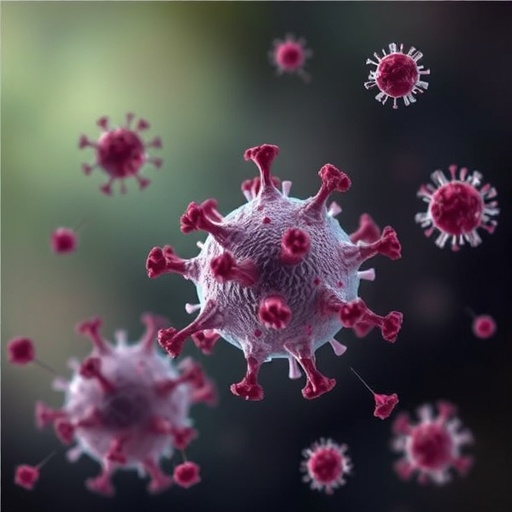
A new international study suggests that animation can do more than make scientific information easier to consume: it may help transform knowledge about airborne virus transmission into concrete disease-prevention behavior. Researchers led by the Aerosol Science Research Center at National Sun Yat-sen University in Taiwan compared the effects of plain text, explainer comics, and animation on how people understood respiratory virus transmission and whether they intended to adopt protective measures. The study, published in Humanities and Social Sciences Communications, involved 3,217 participants from Taiwan, Indonesia, Malaysia, and the Philippines, including healthcare professionals, educators, and university students. Across the study population, all three formats improved scientific knowledge, but animation produced the strongest effect on willingness to act.
The research addresses a persistent problem in viral science and public health: evidence about how pathogens spread does not automatically lead to behavior that limits transmission. Respiratory viruses can travel in aerosols, tiny airborne particles and droplets that may remain suspended in indoor air and move beyond the immediate vicinity of an infected person. These particles can contain infectious virions, the complete virus particles capable of initiating infection after entering a susceptible host. Explaining this process requires communicating invisible phenomena, including aerosol generation during breathing, speaking, coughing, or sneezing; transport through indoor air; dilution and accumulation; and inhalation by other people. The researchers argue that accurate information must therefore be presented in ways that support not only comprehension, but also risk perception, emotional engagement, and practical decision-making.
The communication materials evaluated in the study came from “The Quest of the Virosols,” an educational series developed by the Aerosol Science Research Center after the team’s work on airborne transmission of respiratory viruses. The series uses characters and narrative situations to explain the behavior of virus-laden aerosols and the mechanisms by which respiratory pathogens can move through shared air. In scientific terms, the materials address the distinction between larger respiratory droplets, which settle relatively quickly under gravity, and smaller aerosols, which can remain airborne for longer periods depending on ventilation, air movement, humidity, particle size, and other environmental conditions. They also provide a framework for understanding why measures such as ventilation, filtration, masking, and reducing time spent in crowded indoor spaces can lower exposure.
Participants were assigned or exposed to one of three presentation formats: plain text, illustrated explainer comics, or animation. The researchers then assessed changes in scientific understanding and reported willingness to adopt measures intended to reduce airborne infection. Text alone improved knowledge, indicating that conventional written communication can convey essential concepts. Comics performed better than text for several measures of understanding, presumably because illustrations can make spatial relationships and biological processes more visible. Animation showed the most consistent advantage, combining written or spoken explanation with movement, sequencing, visual cues, and narrative context. This combination may help viewers follow a chain of events that is otherwise difficult to imagine: a person emits aerosols, the particles disperse through a room, ventilation changes their concentration, and another person inhales some of them.
The behavioral findings were especially important. Compared with plain text, both comics and animation made the science of airborne virus transmission substantially easier to understand, but animation went further by significantly increasing participants’ willingness to implement preventive measures. The result suggests that information processing and behavior change are related but not identical outcomes. A person may correctly understand that infectious aerosols can accumulate indoors without feeling personally connected to the risk or motivated to change established habits. Animation may bridge that gap by showing consequences over time and placing abstract transmission processes within recognizable social settings, such as homes, classrooms, workplaces, or healthcare environments. The researchers interpret this effect as evidence that effective communication must connect mechanistic knowledge with personal relevance.
Professor Paichi Pat Shein, one of the study’s corresponding authors, said animation’s influence likely stems from its ability to combine visual explanation with emotional engagement. Character-driven storytelling can depict how an infection affects individuals, families, and communities, while motion can clarify processes that static images cannot fully represent. Such presentations may strengthen empathy and risk perception, two psychological factors that can influence whether people translate information into preventive action. The study also found that animation had a particularly strong effect among female participants. The authors suggest that this pattern may reflect differences in concern about public health, environmental issues, or the welfare of others, although the result should be interpreted cautiously and examined in future research rather than treated as a universal difference between demographic groups.
The findings have direct implications for pandemic preparedness and health communication. During an emerging outbreak, public authorities must explain transmission routes before complete scientific certainty is available, often while misinformation is spreading rapidly. Messages about airborne infection can be difficult to communicate because the relevant particles are invisible and because the risk depends on changing conditions, including room occupancy, air-exchange rates, filtration efficiency, exposure duration, and infectious dose. A well-designed animation can represent these variables dynamically, showing, for example, how outdoor air reduces aerosol concentration, how mechanical ventilation removes or dilutes particles, or how a high-efficiency filter captures suspended material. It can also distinguish between reducing the amount of virus released into the air and reducing the amount inhaled by others, helping audiences understand why layered interventions are more effective than relying on a single measure.
Professor Chia C. Wang, director of the Aerosol Science Research Center and a professor in the Department of Chemistry at National Sun Yat-sen University, said the COVID-19 pandemic demonstrated that scientific evidence by itself is not sufficient to change public behavior. In the researchers’ view, science communication should be treated as a public health capability rather than as an optional supplement to biomedical research. The work is also relevant beyond respiratory viruses. Similar communication challenges arise when explaining climate processes, environmental pollution, antimicrobial resistance, vaccination, food safety, and other subjects in which invisible mechanisms produce delayed or distributed effects. In each case, the public must understand not only what is happening, but also why it matters and which actions are likely to reduce harm.
“The Quest of the Virosols” was developed during the COVID-19 pandemic and has since been translated into 20 languages, expanding its potential reach across cultural and linguistic settings. The new evaluation provides an evidence-based assessment of educational resources that were initially created to address an urgent crisis. The researchers connect the results to broader efforts to build resilient societies, arguing that effective communication can foster critical thinking, systems thinking, empathy, openness to learning, and a sense of shared responsibility. Their conclusion is that the central challenge for viral science is no longer simply producing more knowledge about pathogens and transmission. It is ensuring that people can understand that knowledge, relate it to their own circumstances, and use it to make decisions that protect themselves and others who share the same air.
News Publication Date: 17-Jun-2026
Web References: https://doi.org/10.1057/s41599-026-06942-5
References: Wang et al., Science 373, eabd9149 (2021)
Cite Scienmag News
Kristina Jarvis. (August 25, 2026). Translating Scientific Evidence Into Action to Control Airborne Diseases. Scienmag. https://scienmag.com/translating-scientific-evidence-into-action-to-control-airborne-diseases/
Kristina Jarvis. "Translating Scientific Evidence Into Action to Control Airborne Diseases." Scienmag, 25 August 2026, https://scienmag.com/translating-scientific-evidence-into-action-to-control-airborne-diseases/. Accessed 5 September 2026.
Kristina Jarvis. "Translating Scientific Evidence Into Action to Control Airborne Diseases." Scienmag. August 25, 2026. https://scienmag.com/translating-scientific-evidence-into-action-to-control-airborne-diseases/


