


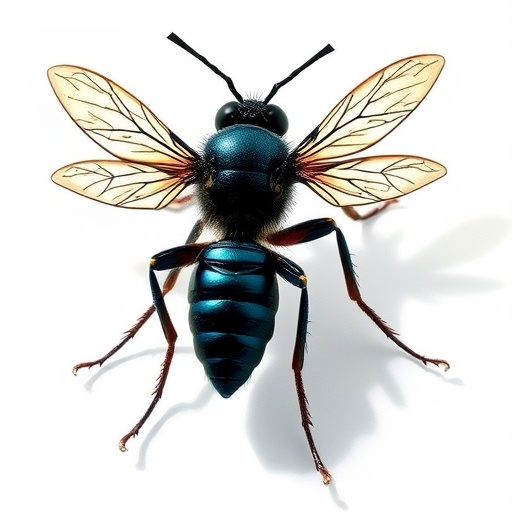
The intersection of innovation and sustainability has always been a focal point in scientific research, and the recent study led by Shen et al. elucidates a groundbreaking avenue in the valorization of food production side streams through the use of Black Soldier Fly (BSF) larvae. This approach not only addresses waste management but also enhances food security and environmental sustainability. The researchers propose a biocircular strategy that leverages the natural capabilities of BSF larvae to recycle waste materials while simultaneously producing valuable protein and nutrient-rich biomass.
In the era of rampant food waste, the potential of utilizing side streams from food production processes is immense. Approximately one-third of food produced globally goes to waste, presenting both an environmental challenge and an opportunity for resource recovery. The study emphasizes the necessity for sustainable practices that can transform this organic waste into useful bioresources. This aligns with the principles of a circular economy, where waste materials are continuously repurposed to minimize environmental impact.
BSF larvae are renowned for their efficiency in degrading organic matter. The larvae thrive on a variety of organic waste, making them ideal candidates for bioconversion processes. The research presents a comprehensive analysis of how these larvae can be integrated into existing food production systems to implement a co-addition strategy. This strategy ensures that waste materials are not merely disposed of but are instead transformed into high-quality feed for aquaculture, poultry, and other livestock, thereby reducing reliance on conventional feed sources.
One of the most remarkable aspects of the study is the nutritional profile of the biomass produced by BSF larvae. The larvae are rich in protein, essential amino acids, and fatty acids, which are vital for animal growth and health. The integration of BSF larvae into animal feed can significantly improve the sustainability of livestock production by providing an alternative feed source that reduces the need for fishmeal and soybean, both of which have substantial environmental footprints.
Moreover, the implications of this research extend beyond just animal nutrition. By incorporating a variety of food waste types into the larval diet, the study reveals that BSF can efficiently convert diverse organic materials into high-quality biomass. This versatility offers a dual benefit: it manages different streams of food waste and produces a nutrient-dense resource. The findings contribute to the ongoing discourse on waste management and resource recovery, providing a viable solution to mitigate the issue of food waste while addressing nutritional needs in livestock production.
The research also addresses potential concerns regarding the safety and quality of the BSF larvae-derived biomass. Detailed assessments of the larvae’s capacity to accumulate potential contaminants and heavy metals pose crucial questions in the context of food chain safety. The authors recommend comprehensive monitoring and adherence to safety standards to ensure that the biomass produced is not only sustainable but also safe for animal consumption.
In light of climate change and growing global populations, the research stresses the urgency for innovative solutions that can bolster food security while mitigating environmental impact. The study underscores the importance of interdisciplinary approaches that combine waste management, agriculture, and environmental science to develop holistic solutions for food production. Adopting BSF larvae not only aligns with environmental goals but also promotes economic resilience in the agricultural sector.
The study by Shen et al. serves as a clarion call for agro-industries to rethink waste management practices. By emphasizing a biocircular approach, the authors highlight the potential of turning waste into resources, setting the stage for future investments in sustainable agriculture. The implications of this research beckon collaboration between researchers, policy-makers, and industry stakeholders to pave the way for large-scale adoption of BSF larvae technology.
It is also essential to consider the scalability of implementing BSF larvae systems in diverse agricultural settings. The research presents insights into managing the cultivation of these larvae, ensuring they can be integrated efficiently into existing production systems. The exploration of optimal conditions for larval growth and conversion rates demonstrates the feasibility of large-scale applications in various contexts, from urban waste management to rural farm practices.
Furthermore, the economic benefits of adopting BSF larvae production are significant. The production of BSF larvae can create job opportunities within communities, contributing to economic development in rural areas while also providing a sustainable source of protein for animal feed. The study encourages local farmers and entrepreneurs to explore this innovative avenue as a means of enhancing their productivity and reducing waste.
Overall, this pioneering research highlights the multifaceted benefits of employing Black Soldier Fly larvae in a sustainable, biocircular approach to valorizing food production side streams. The authors provide a roadmap for harnessing the power of nature to solve pressing global challenges. It is a call to action for the scientific community, industry leaders, and policy-makers to collaborate and innovate around sustainable waste management solutions that support both ecological integrity and food security.
As the world grapples with the interconnected issues of waste, food security, and environmental degradation, studies like this illuminate the path forward. The transformation of food waste into valuable resources, powered by the efficiency of BSF larvae, could redefine food production systems. By embracing environmentally friendly practices rooted in science, society can move closer to achieving a truly sustainable future, one where food waste is no longer a burden, but a resource for growth.
In conclusion, the biocircular strategy presented by Shen et al. represents a significant leap toward sustainability in agriculture. By bridging the gap between waste management and resource recovery, the study not only addresses an immediate problem but also sets a precedent for future research and applications in agro-ecology and environmental science. The collaboration between various stakeholders will be essential to realize the full potential of this innovative approach and drive it to a wider audience. The time for action is now, and the insights gained from this research could be instrumental in shaping future policies and practices toward a sustainable food system.
Shen, K., Fan, S., Jiang, S. et al. A Sustainable Biocircular Approach of Valorizing Food Production Side Streams by Black Soldier Fly Larvae in a Co-addition Strategy. Waste Biomass Valor (2025). https://doi.org/10.1007/s12649-025-03377-y
Cite Scienmag News
Sloane Callahan. (November 11, 2025). Transforming Food Waste into Resources with Black Soldier Fly. Scienmag. https://scienmag.com/transforming-food-waste-into-resources-with-black-soldier-fly/
Sloane Callahan. "Transforming Food Waste into Resources with Black Soldier Fly." Scienmag, 11 November 2025, https://scienmag.com/transforming-food-waste-into-resources-with-black-soldier-fly/. Accessed 3 September 2026.
Sloane Callahan. "Transforming Food Waste into Resources with Black Soldier Fly." Scienmag. November 11, 2025. https://scienmag.com/transforming-food-waste-into-resources-with-black-soldier-fly/


