


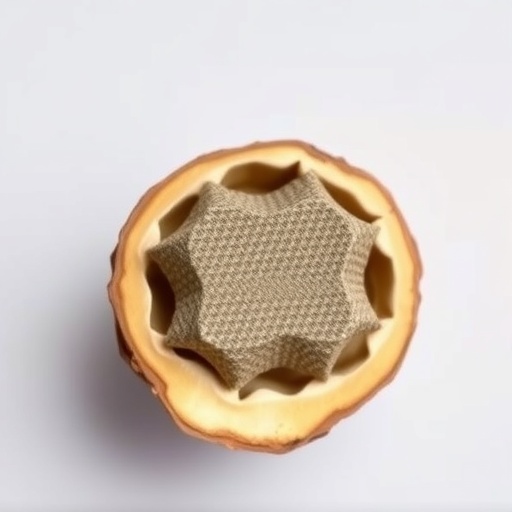
In the realm of environmental science and sustainable development, the valorization of agricultural by-products has garnered increasing attention in recent years. A study led by researchers J.P.S. da Silva, M.G.C. da Silva, and M.G.A. Vieira takes a deep dive into this innovative approach by investigating the conversion of Brazil nut shells into porous carbon materials. This innovative research not only emphasizes sustainability but also tackles the pressing need for effective solutions to mitigate water pollution, particularly concerning pharmaceutical contaminants.
Brazil nut shells, often regarded as agricultural waste, are abundant in regions where the Brazil nut tree thrives. Instead of being discarded or incinerated, these shells are now being explored for their potential to adsorb harmful contaminants from wastewater. The project highlights a sustainable method of waste utilization, transforming what would otherwise contribute to environmental degradation into a valuable resource for combating water pollution.
The cornerstone of the study lies in the synthesis of porous carbon from Brazil nut shells. This process involves carbonization, wherein the shells are subjected to high temperatures in an inert atmosphere. The result is a highly porous carbon material that possesses an impressive surface area, making it an ideal candidate for adsorbing contaminants such as pharmaceuticals from aqueous solutions. The transformation of waste into functional materials is a key focus area in environmental remediation, and this research exemplifies that potential.
One of the unique aspects of this research is the examination of both the single and simultaneous adsorption capacities of the synthesized porous carbon for ibuprofen and diclofenac. Both substances are widely used pharmaceuticals that can persist in the environment and pose substantial risks to aquatic ecosystems and human health. Their presence in water bodies necessitates the development of effective treatment methods to remove these contaminants and safeguard public health.
The authors meticulously conducted a series of laboratory experiments to evaluate the adsorption efficiency of the porous carbon. They investigated parameters such as contact time, initial concentration of pollutants, and temperature, ensuring a comprehensive understanding of the material’s performance. The results revealed a significant capacity of the carbon derived from Brazil nut shells to adsorb ibuprofen and diclofenac, with optimal conditions identified to maximize removal efficiency. Such findings illuminate the path towards innovative strategies for treating pharmaceutical-laden wastewater.
Moreover, the study utilized various adsorption models to interpret the data collected during experiments. This analytical approach provided insights into the mechanisms governing the adsorption process, contributing to the broader scientific understanding of how porous carbons function in environmental remediation settings. By detailing the adsorption kinetics and equilibrium, the researchers painted a clearer picture of the interactions between the carbon material and the pharmaceutical contaminants.
The implications of this research extend beyond merely addressing pollutant removal. By promoting the sustainable use of Brazil nut shells, the study also supports local economies that rely on agricultural practices. It encourages the development of circular economy concepts, where waste materials can be repurposed for beneficial uses, fostering both environmental and economic sustainability.
In a world grappling with mounting water pollution issues, solutions that incorporate waste valorization are increasingly vital. The synthesis of porous carbon from Brazil nut shells demonstrates an effective avenue for reducing pharmaceutical pollutants while simultaneously providing a practical use for agricultural waste. Such research builds the foundation for future innovations in the field of environmental science and engineering, promoting materials that are both functional and derived from renewable sources.
The researchers also addressed potential challenges in scaling this process for commercial applications. While laboratory results are promising, practical implementation requires careful consideration of cost-effectiveness and material availability. Future studies should aim to explore the feasibility of large-scale production of porous carbons from agro-industrial waste, ensuring that these advancements can be realized at an industrial level.
As the study progresses, it stands as a testament to the intersection of environmental sustainability and innovation. The brave exploration of converting Brazil nut shells into valuable adsorbents provides a refreshing perspective on waste management and pollution control. The findings could inspire similar approaches utilizing other types of agro-industrial waste, paving the way for extensive research on sustainable materials in environmental remediation.
As we await further developments in this exciting field, the contributions of da Silva and his colleagues remind us that solutions to environmental challenges can indeed be found within the very waste we generate. The potential for agricultural by-products to play a crucial role in combating pollution emphasizes the importance of innovative research and its impact on future sustainability efforts.
In conclusion, the valorization of Brazil nut shells into porous carbon not only addresses the immediate concerns surrounding pharmaceutical residues in water but also represents a paradigm shift towards a more sustainable approach in managing agricultural waste. The findings of this study will undoubtedly spark further inquiry, pushing the boundaries of what is possible when we rethink waste and pollution management strategies.
da Silva, J.P.S., da Silva, M.G.C., Vieira, M.G.A. et al. Valorization of agro-industrial waste (Brazil nut shells) for porous carbon synthesis: single and simultaneous adsorption of ibuprofen and diclofenac from aqueous solutions. Environ Sci Pollut Res (2025). https://doi.org/10.1007/s11356-025-37115-7
Cite Scienmag News
Violet Maxwell. (November 21, 2025). Transforming Brazil Nut Shells into Carbon Adsorbents. Scienmag. https://scienmag.com/transforming-brazil-nut-shells-into-carbon-adsorbents/
Violet Maxwell. "Transforming Brazil Nut Shells into Carbon Adsorbents." Scienmag, 21 November 2025, https://scienmag.com/transforming-brazil-nut-shells-into-carbon-adsorbents/. Accessed 3 September 2026.
Violet Maxwell. "Transforming Brazil Nut Shells into Carbon Adsorbents." Scienmag. November 21, 2025. https://scienmag.com/transforming-brazil-nut-shells-into-carbon-adsorbents/


