

Saturday, May 9, 2026
Science
No Result
View All Result
  • Login
  • HOME
  • SCIENCE NEWS
  • CONTACT US
  • HOME
  • SCIENCE NEWS
  • CONTACT US
No Result
View All Result
Scienmag
No Result
View All Result
Home Science News Biology

Training sheep to complete awake MRI imaging

July 1, 2024
in Biology
Reading Time: 3 mins read
0
group-sheep
66
SHARES
604
VIEWS
Share on FacebookShare on Twitter
ADVERTISEMENT

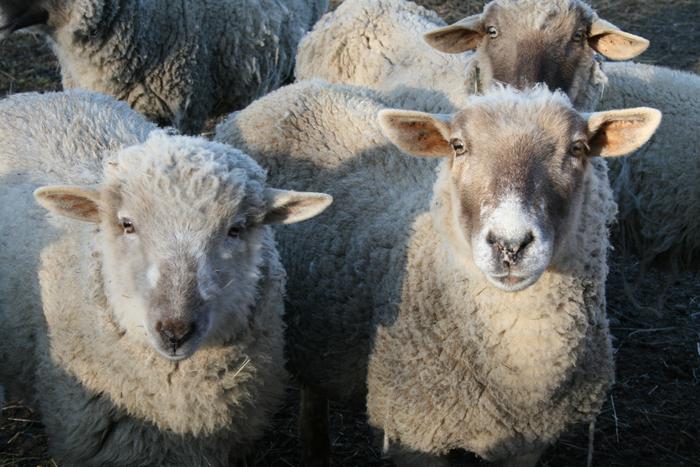
MRI or magnetic resonance imaging is a technique commonly used to explore the brains of sheep. Until now, it had only been performed under general anaesthesia, to ensure the animal’s immobility. Anaesthesia, however, leads to stress and other negative side-effects, in addition to jeopardising the study of brain activity.

group-sheep

Credit: INRAE – Sophie Normant

MRI or magnetic resonance imaging is a technique commonly used to explore the brains of sheep. Until now, it had only been performed under general anaesthesia, to ensure the animal’s immobility. Anaesthesia, however, leads to stress and other negative side-effects, in addition to jeopardising the study of brain activity.

A research team from INRAE has developed a training protocol adapted to sheep in order to carry out MRI acquisitions in awake animals, without the need for restraint. To do this, researchers drew on previous work with dogs, which until now had been the only animal species capable of carrying out this type of protocol. In the nursery of the Animal Physiology Facility experimental research unit (UEPAO), located at the INRAE Val de Loire centre in Nouzilly, researchers began a familiarisation phase as soon as the lambs were born. The objective was to identify which animals were most receptive to being stroked or to having foam objects placed near their heads.

After choosing 10 lambs, an initial training phase took place at the Nouzilly sheep farm. The research team trained the animals to climb a ramp to reach a mock MRI scanner and then lie down. The lambs were also taught to place their heads in a mock MRI coil.

Once they arrived at the real MRI room, the sheep were able to reproduce the same behaviour very easily, but had some difficulty remaining perfectly still. It took a few weeks for the animals to get used to the vibrations of the machine and stop moving for a few minutes. Ultimately, the MRI images of their brains were comparable to those obtained from anaesthetised sheep, a goal that was initially achieved in 6 out of the 10 sheep trained at the time of writing, and has since been achieved in 9 sheep. The protocol lasted 9 months, from the birth of the lambs to the first MRI acquisitions.

The success of this protocol is already opening up new avenues for research into animal neuroimaging (e.g. fMRI)—since it makes it possible to study brain function in awake animals. A study looking into the activation of certain brain regions in relation to hearing is currently underway, and is the subject of a PhD thesis that relies on this training protocol. This example of voluntary cooperation between trainer and sheep illustrates the animal’s ability to learn, and underlines the importance of human-animal relationships in the development of innovative methods. The study also opens up new possibilities for training other animals to carry out awake MRI scans. Such training methods could have numerous other applications, in areas such as shearing or medical training—when the animal learns to collaborate during veterinary care.


Journal

Behavior Research Methods

DOI

10.3758/s13428-024-02449-6

Article Title

Sheep (Ovis aries) training protocol for voluntary awake and unrestrained structural brain MRI acquisitions

Article Publication Date

21-Jun-2024

Share26Tweet17
Previous Post

Winners of the 2024 Student CanSat competition announced

Next Post

City fern, country fern: Citizen science is helping to study why some plants love the city life

Related Posts

Ancient Plant Populations Reveal Fresh Insights into Climate Resilience — Biology
Biology

Ancient Plant Populations Reveal Fresh Insights into Climate Resilience

May 8, 2026
Rare Brain Disorders in Children Linked to Mutations in Lesser-Known Protein Complex — Biology
Biology

Rare Brain Disorders in Children Linked to Mutations in Lesser-Known Protein Complex

May 8, 2026
SNU Professor Sangwoo Seo’s Team Develops Next-Generation CRISPR Biocontainment Technology to Control Microbial Survival Without DNA Cleavage — Biology
Biology

SNU Professor Sangwoo Seo’s Team Develops Next-Generation CRISPR Biocontainment Technology to Control Microbial Survival Without DNA Cleavage

May 8, 2026
From Odd Insect to Underwater Predator: The Remarkable Evolution of a Bloodthirsty Fruit Fly — Biology
Biology

From Odd Insect to Underwater Predator: The Remarkable Evolution of a Bloodthirsty Fruit Fly

May 8, 2026
Small Cell, Huge Impact: The Key Player in Brain Development — Biology
Biology

Small Cell, Huge Impact: The Key Player in Brain Development

May 8, 2026
Leaf Temperature vs. Ambient Air: Key Differences Explored — Biology
Biology

Leaf Temperature vs. Ambient Air: Key Differences Explored

May 8, 2026
Next Post
City fern, country fern: Citizen science is helping to study why some plants love the city life

City fern, country fern: Citizen science is helping to study why some plants love the city life

  • Mothers who receive childcare support from maternal grandparents show more parental warmth, finds NTU Singapore study

    Mothers who receive childcare support from maternal grandparents show more parental warmth, finds NTU Singapore study

    27642 shares
    Share 11053 Tweet 6908
  • University of Seville Breaks 120-Year-Old Mystery, Revises a Key Einstein Concept

    1044 shares
    Share 418 Tweet 261
  • Bee body mass, pathogens and local climate influence heat tolerance

    678 shares
    Share 271 Tweet 170
  • Researchers record first-ever images and data of a shark experiencing a boat strike

    541 shares
    Share 216 Tweet 135
  • Groundbreaking Clinical Trial Reveals Lubiprostone Enhances Kidney Function

    528 shares
    Share 211 Tweet 132
Science

Embark on a thrilling journey of discovery with Scienmag.com—your ultimate source for cutting-edge breakthroughs. Immerse yourself in a world where curiosity knows no limits and tomorrow’s possibilities become today’s reality!

RECENT NEWS

  • Medical Care Patterns in Complex-Needs Chinese Elders
  • Esomeprazole vs. Fexuprazan: Anti-Inflammatory Effects Compared
  • Epidermal MHC-II Drives NK Cell Attack in Psoriasis
  • Catecholaminergic Neurons Enhance Keloid Fibroblast Bone Growth

Categories

  • Agriculture
  • Anthropology
  • Archaeology
  • Athmospheric
  • Biology
  • Biotechnology
  • Blog
  • Bussines
  • Cancer
  • Chemistry
  • Climate
  • Earth Science
  • Editorial Policy
  • Marine
  • Mathematics
  • Medicine
  • Pediatry
  • Policy
  • Psychology & Psychiatry
  • Science Education
  • Social Science
  • Space
  • Technology and Engineering

Subscribe to Blog via Email

Enter your email address to subscribe to this blog and receive notifications of new posts by email.

Join 5,146 other subscribers

© 2025 Scienmag - Science Magazine

Welcome Back!

Login to your account below

Forgotten Password?

Retrieve your password

Please enter your username or email address to reset your password.

Log In
No Result
View All Result
  • HOME
  • SCIENCE NEWS
  • CONTACT US

© 2025 Scienmag - Science Magazine

Discover more from Science

Subscribe now to keep reading and get access to the full archive.

Continue reading
