


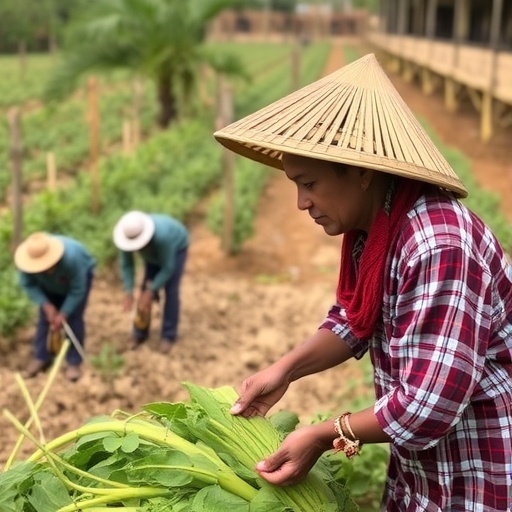
In an era characterized by the pressing need to balance food production with ecological preservation, traditional farming landscapes worldwide are gaining renewed scientific attention. Recently, a research initiative spearheaded by the University of Göttingen has meticulously examined Globally Important Agricultural Heritage Systems (GIAHS), a concept recognized by the Food and Agriculture Organization (FAO) of the United Nations. This international study delves into the potential of these heritage systems to simultaneously foster sustainable food production, conserve biodiversity, and uphold cultural heritage. The implications of this research, soon to be published in the journal Ecology & Society, underscore the profound lessons embedded in age-old agricultural practices that continue to resonate in modern sustainability dialogues.
The core of this research rests upon the detailed exploration of diverse agricultural heritage landscapes from various regions, spanning continents and environmental zones. For instance, the steep terraced rice paddies of the Philippines exemplify ingenious human adaptation to challenging topographies, enabling food production in otherwise inaccessible mountainous terrain. Simultaneously, traditional pastoral systems observed in Portugal illustrate the symbiotic relationship between livestock grazing, rye, and potato cultivation in sustaining both productivity and ecological balance in mountainous areas. The study also includes oasis agriculture systems where date palms flourish due to sophisticated traditional irrigation, revealing intricate water management techniques designed to optimize crop yield in arid environments.
A fascinating European example is found in the Austrian Alps’ time-honored hay-milk farming system. This system is characterized by cattle grazing on species-rich, long-established grasslands, which not only supports high-quality dairy production but also fosters the conservation of biodiverse alpine meadows. These systems represent more than just agricultural activity; they serve as living repositories of ecological knowledge and cultural values, demonstrating how sustainable land use can be harmoniously integrated with nature preservation.
The team’s systematic survey of GIAHS sites worldwide distills four critical pillars that underpin the viability and resilience of these ancient agricultural systems. Firstly, the certification of products linked to local markets provides economic incentives for maintaining traditional practices. Secondly, the production of staple foods through short, localized supply chains enhances food security while minimizing environmental footprints. Thirdly, the exportation of premium, high-quality specialty products elevates the economic stature of these regions on global markets. Finally, a pronounced respect for cultural values intertwined with adaptive responses to the looming challenges of climate change strengthens the community’s resolve to safeguard these systems.
Maria Chiara Camporese, PhD researcher and lead author of the study, emphasizes a crucial insight: “Our findings reveal that food production and nature conservation need not be mutually exclusive. Traditional farming landscapes embody sustainable land-use models that simultaneously protect cultural heritage and enhance local livelihoods.” This analytical perspective challenges dominant narratives that often pit agricultural intensification against biodiversity conservation, advocating instead for integrated frameworks inspired by time-tested practices.
Global recognition of these agricultural heritage systems emerges as a powerful catalyst. By spotlighting these regions at the international level, such recognition not only raises awareness but also mobilizes resources and policy measures that facilitate the conservation of both natural and cultural assets. This acknowledgment helps bridge gaps between scientific knowledge, policymaking, and community engagement, fostering collaborative stewardship models.
Despite their significant contributions, GIAHS face multifaceted threats that jeopardize their future viability. Rapid climate change introduces unpredictable environmental stressors, altering precipitation patterns and temperature regimes crucial for crop and pasture viability. Simultaneously, shifting market demands and urban migration trends accelerate rural depopulation and the aging of farming communities. These demographic transformations reduce the transmission of traditional knowledge and erode labor resources essential for maintaining labor-intensive agricultural practices. Moreover, the abandonment of time-honored land-use methods and the encroachment of industrial-scale agriculture further imperil these heritage landscapes.
Confronted with these challenges, the research underscores the absence of a universal remedy. Instead, it calls for finely-tuned, locally adapted strategies that respond to the unique ecological, socio-cultural, and economic contexts of each region. Achieving this requires a multidisciplinary approach, blending agronomy, ecology, anthropology, and policy studies to craft sustainable pathways adaptable to diverse environmental and social landscapes.
At a systems level, GIAHS serve as compelling exemplars of integrated landscape management where ecological processes, agricultural productivity, cultural heritage, and social well-being are interwoven in dynamic equilibrium. They advocate for a holistic paradigm that transcends fragmented sectoral policies, positioning landscape-scale integration as a cornerstone for sustainable development. The models emerging from these traditional systems offer valuable prototypes for contemporary agriculture striving to balance intensification with conservation.
The study’s insights also have practical implications for global sustainability initiatives. By validating the role of heritage agricultural systems in biodiversity conservation and sustainable livelihoods, the findings contribute empirical evidence reinforcing conservation agriculture, agroecology, and community-based natural resource management. These frameworks align with international agendas like the United Nations Sustainable Development Goals, particularly those concerned with zero hunger, climate action, life on land, and sustainable communities.
From an ecological standpoint, the maintenance of species-rich pastures and crop diversity within GIAHS landscapes enhances ecosystem resilience. Diverse plant assemblages contribute to soil health, water regulation, and pest control, buffering agricultural systems against environmental fluctuations. The preservation of cultural heritage embedded in these practices further strengthens local identity and social cohesion, fostering community engagement essential for conservation efforts.
The recognition of GIAHS also opens avenues for innovative economic development rooted in ecological sustainability and cultural pride. Certified traditional products and specialty foods linked to these systems can create niche markets that reward biodiversity-friendly farming and stimulate rural economies. Such economic incentives are pivotal in motivating younger generations to sustain familial and community farming traditions amidst urbanizing trends.
This research ultimately amplifies the narrative that agricultural heritage systems are not relics of the past but dynamic, evolving models vital for the future of food systems and biodiversity conservation. By embracing the wisdom embedded in these landscapes and adapting it for contemporary challenges, societies globally can chart resilient pathways for sustainable land use that honor nature and culture alike.
News Publication Date: 1-Jun-2026
Web References: https://doi.org/10.5751/ES-17116-310203
References: Camporese, M. C. et al. “Exploring the role of Globally Important Agricultural Heritage Systems in integrated landscape approaches”. Ecology and Society (2026).
Cite Scienmag News
Courtney Benton. (June 17, 2026). Traditional Farming Sustains Food Security, Biodiversity, and Cultural Heritage. Scienmag. https://scienmag.com/traditional-farming-sustains-food-security-biodiversity-and-cultural-heritage/
Courtney Benton. "Traditional Farming Sustains Food Security, Biodiversity, and Cultural Heritage." Scienmag, 17 June 2026, https://scienmag.com/traditional-farming-sustains-food-security-biodiversity-and-cultural-heritage/. Accessed 3 September 2026.
Courtney Benton. "Traditional Farming Sustains Food Security, Biodiversity, and Cultural Heritage." Scienmag. June 17, 2026. https://scienmag.com/traditional-farming-sustains-food-security-biodiversity-and-cultural-heritage/


