


Tomato fruit ripening, a process initiated by key gene demethylation, is significantly influenced by postharvest handling practices. These practices, while extending shelf life, can alter ripening dynamics and affect fruit quality. This study explores the impact of various postharvest treatments on the fruit’s methylome and transcriptome, shedding light on how physiological and molecular changes interplay to determine the final quality of tomatoes.
Postharvest handling practices, such as refrigeration and modified atmosphere storage, are commonly used to extend the shelf life of tomatoes. However, these methods can negatively impact fruit quality, affecting texture, flavor, and nutritional content. Understanding the molecular mechanisms behind these changes is crucial for improving postharvest management. Given these challenges, there is a pressing need to explore how postharvest conditions influence the epigenetic and transcriptional landscape of tomato fruit to develop strategies that enhance quality and reduce postharvest losses.
A research team from the University of California, Davis, published their findings (DOI: 10.1093/hr/uhae095) in Horticulture Research on March 25, 2024. The study explores how different postharvest storage conditions affect the epigenetic and transcriptional landscape of tomato fruit, providing insights into improving postharvest fruit quality.
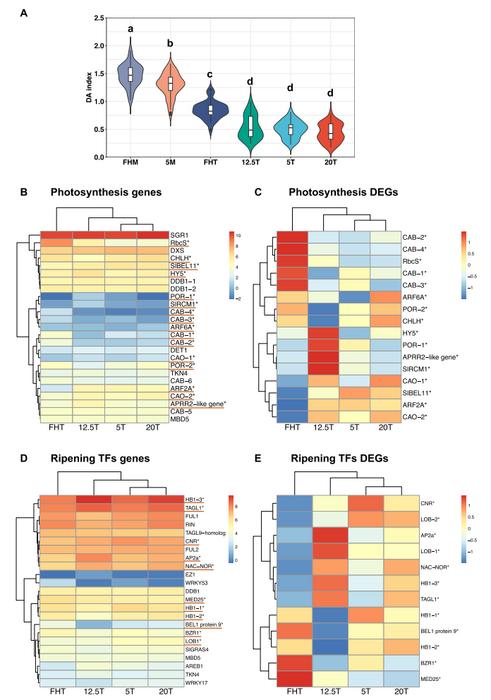
The study investigated the effects of different postharvest temperatures (20°C, 12.5°C, and 5°C followed by rewarming to 20°C) on the ripening of tomato fruit, comparing these with freshly harvested tomatoes. The findings revealed that storage at 12.5°C led to the most significant changes in DNA methylation and gene expression, especially in photosynthetic genes. These tomatoes also took the longest to ripen and had higher levels of abscisic acid, indicating a non-climacteric ripening pattern. The study identified several differentially methylated and expressed genes as potential biomarkers for assessing postharvest quality. These results suggest that modifying postharvest conditions can significantly impact the quality and shelf life of tomatoes. By understanding these molecular changes, strategies can be developed to optimize storage conditions, ultimately improving fruit quality and reducing postharvest losses.
Dr. Diane M. Beckles, the lead researcher, stated, “Our research provides a comprehensive understanding of how postharvest handling affects the molecular mechanisms of tomato ripening. By identifying key genes and pathways influenced by storage conditions, we can develop strategies to enhance fruit quality and reduce postharvest losses.”
This research has significant implications for the agriculture and food industries. By optimizing postharvest handling practices based on the study’s findings, producers can improve tomato quality, extending shelf life while maintaining desirable traits such as flavor and texture. Additionally, the identified biomarkers can be used to develop new technologies for monitoring and managing fruit quality during storage and transportation.

Credit: Horticulture Research
Tomato fruit ripening, a process initiated by key gene demethylation, is significantly influenced by postharvest handling practices. These practices, while extending shelf life, can alter ripening dynamics and affect fruit quality. This study explores the impact of various postharvest treatments on the fruit’s methylome and transcriptome, shedding light on how physiological and molecular changes interplay to determine the final quality of tomatoes.
Postharvest handling practices, such as refrigeration and modified atmosphere storage, are commonly used to extend the shelf life of tomatoes. However, these methods can negatively impact fruit quality, affecting texture, flavor, and nutritional content. Understanding the molecular mechanisms behind these changes is crucial for improving postharvest management. Given these challenges, there is a pressing need to explore how postharvest conditions influence the epigenetic and transcriptional landscape of tomato fruit to develop strategies that enhance quality and reduce postharvest losses.
A research team from the University of California, Davis, published their findings (DOI: 10.1093/hr/uhae095) in Horticulture Research on March 25, 2024. The study explores how different postharvest storage conditions affect the epigenetic and transcriptional landscape of tomato fruit, providing insights into improving postharvest fruit quality.
The study investigated the effects of different postharvest temperatures (20°C, 12.5°C, and 5°C followed by rewarming to 20°C) on the ripening of tomato fruit, comparing these with freshly harvested tomatoes. The findings revealed that storage at 12.5°C led to the most significant changes in DNA methylation and gene expression, especially in photosynthetic genes. These tomatoes also took the longest to ripen and had higher levels of abscisic acid, indicating a non-climacteric ripening pattern. The study identified several differentially methylated and expressed genes as potential biomarkers for assessing postharvest quality. These results suggest that modifying postharvest conditions can significantly impact the quality and shelf life of tomatoes. By understanding these molecular changes, strategies can be developed to optimize storage conditions, ultimately improving fruit quality and reducing postharvest losses.
Dr. Diane M. Beckles, the lead researcher, stated, “Our research provides a comprehensive understanding of how postharvest handling affects the molecular mechanisms of tomato ripening. By identifying key genes and pathways influenced by storage conditions, we can develop strategies to enhance fruit quality and reduce postharvest losses.”
This research has significant implications for the agriculture and food industries. By optimizing postharvest handling practices based on the study’s findings, producers can improve tomato quality, extending shelf life while maintaining desirable traits such as flavor and texture. Additionally, the identified biomarkers can be used to develop new technologies for monitoring and managing fruit quality during storage and transportation.
###
References
Original Source URL
Funding information
J.Z., B.C., and K.A. received fellowships from the University of California Davis Graduate Group of Horticulture & Agronomy, and Henry A. Jastro Graduate Research Awards; K.S. and K.L. thank the Postharvest Technology Innovation Center, Ministry of Higher Education, Science, Research and Innovation, Bangkok, Thailand for support. Work in DB’s lab was supported by the USDA National Institute of Food and Agriculture, Hatch Project CA-D-PLS-2404-H, and a UC Davis ADVANCE Scholar Fellowship.
About Horticulture Research
Horticulture Research is an open access journal of Nanjing Agricultural University and ranked number one in the Horticulture category of the Journal Citation Reports ™ from Clarivate, 2022. The journal is committed to publishing original research articles, reviews, perspectives, comments, correspondence articles and letters to the editor related to all major horticultural plants and disciplines, including biotechnology, breeding, cellular and molecular biology, evolution, genetics, inter-species interactions, physiology, and the origination and domestication of crops.
Journal
Horticulture Research
Subject of Research
Not applicable
Article Title
Integrative analysis of the methylome and transcriptome of tomato fruit (Solanum lycopersicum L.) induced by postharvest handling
Article Publication Date
1-Jun-2024
COI Statement
The authors declare that they have no competing interests.
Cite Scienmag News
Courtney Benton. (July 9, 2024). Tomato Time capsule: postharvest treatments and their role in ripening dynamics. Scienmag. https://scienmag.com/tomato-time-capsule-postharvest-treatments-and-their-role-in-ripening-dynamics/
Courtney Benton. "Tomato Time capsule: postharvest treatments and their role in ripening dynamics." Scienmag, 9 July 2024, https://scienmag.com/tomato-time-capsule-postharvest-treatments-and-their-role-in-ripening-dynamics/. Accessed 8 September 2026.
Courtney Benton. "Tomato Time capsule: postharvest treatments and their role in ripening dynamics." Scienmag. July 9, 2024. https://scienmag.com/tomato-time-capsule-postharvest-treatments-and-their-role-in-ripening-dynamics/

