


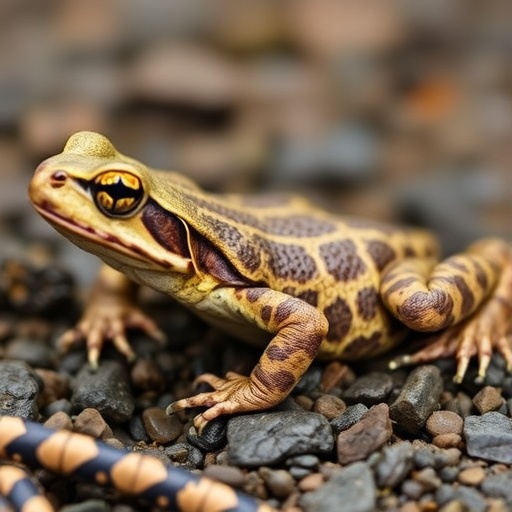
In a groundbreaking study published in Frontiers in Zoology, researchers conducted an extensive investigation into how Asiatic toads, specifically Bufo gargarizans, adapt physiologically to varying altitudes. The team of scientists, led by Ming Jiao and supported by a cadre of experts, harnessed the powerful analytical techniques of ecometabolomics. This approach allowed them to examine the metabolic profiles of these amphibians, providing profound insights into the ecological and physiological dynamics that underpin their survival in diverse environmental contexts.
The research was initiated against a backdrop of increasing concerns regarding environmental changes and their implications for wildlife. Climate change has been implicated in altering habitats, and as a result, organisms must possess remarkable adaptability to thrive. Toads are particularly fascinating subjects for such investigations, owing to their unique metabolic pathways and ecological roles. By exploring how Bufo gargarizans responds to environmental gradients, researchers aimed to elucidate the broader implications for amphibian species facing similar challenges.
Utilizing a combination of field studies and lab analyses, the researchers sampled toad populations across various altitudinal gradients. This involved painstaking collection techniques in distinct ecological niches ranging from lowland areas to high-altitude environments. Each ecological zone presents its unique set of challenges, including variations in temperature, humidity, food availability, and predator pressures. Understanding how these toads metabolically adapt to such diverse conditions was a core objective of this research.
One of the key findings of the research was the identification of distinct metabolic signatures associated with different altitudes. The metabolic profiles revealed marked differences in how toads processed nutrients, managed energy reserves, and responded to stressors at varying elevations. High-altitude toads exhibited metabolic pathways that suggested a greater emphasis on aerobic respiration and energy efficiency—crucial adaptations for surviving in oxygen-poor environments. This finding underscores the remarkable plasticity of this species and hints at broader patterns among amphibians that inhabit changing landscapes.
Moreover, the researchers employed state-of-the-art analytical equipment to conduct metabolomic profiling, which involved the analysis of metabolites extracted from toad tissues. The results indicated that certain metabolites related to stress response and energy metabolism were significantly upregulated in high-altitude populations. This underscores the physiological pressures faced by these organisms and their impressive ability to modify their metabolic processes in response to environmental challenges.
The implications of the study extend far beyond the specific traits observed in Bufo gargarizans. By understanding these intricate biochemical responses, the research may inform conservation strategies aimed at preserving amphibian diversity in the face of climate change. As amphibians are often seen as indicators of environmental health, the implications of their adaptive strategies could provide valuable insights into the resilience of other taxa.
Another fascinating aspect of the study was the exploration of how these metabolic adaptations might influence the toads’ reproductive strategies. Environmental stressors often affect breeding success and offspring viability in amphibians. The team hypothesized that the metabolic adjustments observed in high-altitude environments could translate into differences in reproductive timing or success, ultimately impacting population dynamics over generations.
As the research progressed, the team also focused on the ecological interactions of Bufo gargarizans within their habitats. The study examined how these toads interact with both their biotic and abiotic environments. For instance, the presence or absence of specific vegetation types may influence the nutritional landscape, subsequently affecting the toads’ metabolic profiles. Such ecological intricacies highlight the interconnectedness of species and their environments, reinforcing the importance of holistic research approaches in ecology.
In the realm of conservation biology, the findings of this research carry significant weight. The alterations in physiological responses noted in high-altitude toads could serve as early warning signals for impending ecological changes. As climate patterns continue to shift, understanding the mechanisms underlying adaptability provides critical insights for conservationists aiming to develop proactive measures for species at risk. By prioritizing the preservation of physical habitats, stakeholders can enhance the resilience of toad populations amid ongoing environmental changes.
Further examination of the effects of pollutants and habitat fragmentation on the metabolic pathways of Bufo gargarizans could yield important information, laying the groundwork for future studies. The researchers emphasized the importance of pursuing longitudinal studies to gauge how these amphibians fare over extended time periods in the face of geographic and climatic changes.
As the scientific community assimilates and builds upon the findings of this study, it encourages a dialogue around the methodologies employed in ecological research. Ecometabolomics emerges as a cutting-edge field that integrates metabolomics with ecological frameworks, enabling a deeper understanding of organism-environment interactions. By advancing this interdisciplinary approach, future research may uncover additional layers of complexity in the adaptations of various species across ecological gradients.
In conclusion, the study of Bufo gargarizans and its physiological adaptations to environmental pressures illustrates the intricate tapestry of life. This research not only advances our scientific understanding of amphibian biology but serves as a call to action for conservation efforts worldwide. The ability of these toads to thrive amidst challenging conditions is a testament to their resilience, yet it also highlights the fragility of ecosystems in the face of human-induced changes. The results from this study set a precedent for future research endeavors and underscore the importance of continued exploration into the metabolic responses of wildlife to changing environments.
As we move forward, the work of Jiao and colleagues will undoubtedly inform broader ecological theories and contribute to our understanding of biodiversity in a rapidly changing world. It serves as a reminder that every organism, no matter how small, plays a vital role in maintaining the balance of our planet’s ecosystems. Through continued research and conservation efforts, we can hope to preserve the enchanting diversity of life that we share this Earth with.
Jiao, M., Zhang, Y., Liu, C. et al. Ecometabolomics reveal physiological adaptations of Asiatic toads (Bufo gargarizans Cantor, 1842) to different environments along an altitudinal gradient. Front Zool 22, 21 (2025). https://doi.org/10.1186/s12983-025-00577-z
Cite Scienmag News
Drew Townsend. (August 31, 2025). Toads Adapt Metabolically to Altitude Variation. Scienmag. https://scienmag.com/toads-adapt-metabolically-to-altitude-variation/
Drew Townsend. "Toads Adapt Metabolically to Altitude Variation." Scienmag, 31 August 2025, https://scienmag.com/toads-adapt-metabolically-to-altitude-variation/. Accessed 4 September 2026.
Drew Townsend. "Toads Adapt Metabolically to Altitude Variation." Scienmag. August 31, 2025. https://scienmag.com/toads-adapt-metabolically-to-altitude-variation/


