


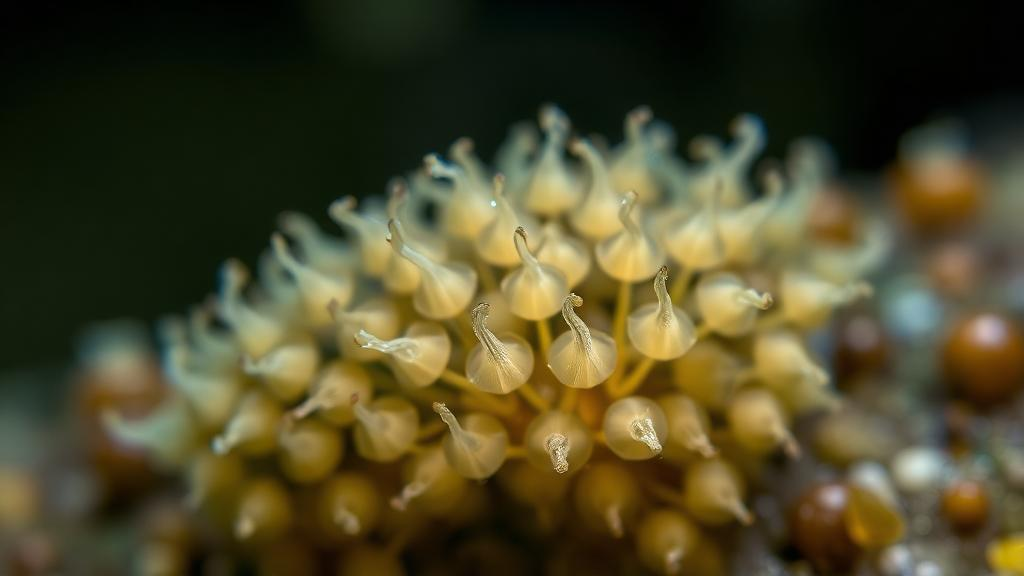
Deep in the mudflats of the Sundarbans, the world’s largest contiguous mangrove forest, an army of single-celled architects is quietly recording the state of one of the planet’s most vulnerable coastlines. These organisms, benthic foraminifera, build intricately sculpted shells from calcium carbonate or cemented sand grains, and when they die those shells accumulate in the sediment as a durable archive of the conditions in which they lived. A new study published in Discover Oceans by Arkaprava Mandal, Anwesha Ghosh and Punyasloke Bhadury of IISER Kolkata has now compiled the first consolidated and reverified inventory of these organisms across the mangrove ecosystems of the northeast coast of the Bay of Bengal, combining decades of published records with freshly collected samples to build a baseline against which future environmental change can be measured.
The significance of the work lies in what foraminifera can reveal. Because the standing crop, diversity and species composition of benthic foraminiferal communities respond rapidly to shifts in salinity, pH, dissolved oxygen, organic matter input and anthropogenic stress, they serve as powerful bioproxies for ecological monitoring. Indices such as the FORAM Index, originally developed for coral reefs and later extended to estuaries, and Foram-AMBI, which assigns observed taxa to sensitivity eco-groups, depend entirely on accurate species-level taxonomy and region-specific reference data. Without a reliable local inventory, misidentification or missing baseline information can compromise the ecological interpretations drawn from these tools. The new study directly addresses that gap for a globally significant but understudied region.
The research focused on two contrasting mangrove systems. The first is the Indian portion of the Sundarbans, which covers 9630 square kilometres, of which 4267 square kilometres is forested, and hosts 24 species of true mangroves. Seven major rivers flow through the delta; the Hooghly and Mooriganga still receive freshwater from the Ganges-Brahmaputra-Meghna system, delivering the world’s second-largest freshwater input of roughly 42,000 cubic metres per second, surging to 138,700 cubic metres per second during the monsoon. The remaining five rivers have lost their freshwater connection to the Ganga and are tidally fed, producing a steady salinity gradient that rises towards the east. The second study area, the Budhabalanga estuary near Chandipur, is a smaller system dominated by Avicennia officinalis, Ceriops decandra, Rhizophora mucronata and Phoenix paludosa, and home to the mangrove horseshoe crab Carcinoscorpius rotundicauda.
Both systems face mounting pressure. Previous research has estimated that air temperature over the Sundarbans is increasing at 0.19 degrees Celsius per year, while relative sea level rises at close to 3.14 millimetres per year. The IPCC Sixth Assessment Report projects a further 0.5 degree Celsius increase in mean temperature and a 10 to 45 centimetre rise in sea level across the Sundarbans. A coastal vulnerability assessment of a 269 kilometre stretch of coastline found that approximately 42 percent falls within moderate to very high vulnerability categories. Against this backdrop, establishing which foraminiferal species persist, where they occur, and how assemblages differ between ecosystems provides an essential reference point for detecting future shifts.
Methodologically, the team compiled published studies that reported benthic foraminiferal assemblages from mangrove-associated environments with sufficient species-level taxonomic detail, excluding work that lacked such information or focused on non-mangrove settings. They then collected 112 sediment core samples across the region: 30 from Ajmalmari, Dulibasani and Chulkathi in the Sundarbans Biosphere Reserve between June 2019 and November 2020, four from Dhanchi in January 2024, 72 from Sagar Island between November 2021 and October 2022, and six from the Budhabalanga estuary between 2021 and 2022. Sampling took place at low tide from intertidal mangrove-associated mudflats using a hand-held vertical corer, 10 centimetres long and 3.5 centimetres in diameter, ensuring consistent sampling volume across sites.
In the laboratory, the uppermost 0 to 2 centimetres of each core were homogenised and subsampled, with roughly 10 cubic centimetres of sediment analysed in full. Specimens were stained with Rose Bengal at 1 gram per litre to distinguish living individuals, whose cytoplasm takes up the stain, from dead tests, and preserved in 70 percent molecular-grade ethanol. The sediment was wet-sieved through stacked 500 and 63 micrometre meshes, and the fraction larger than 63 micrometres was examined under an Olympus BX 53i bright-field microscope at 400 times magnification. Taxonomic identifications were verified against the World Register of Marine Species, the Foraminifera.eu database and established taxonomic references, with surface water temperature and salinity measured in triplicate at each site using calibrated instruments equipped with automatic temperature compensation.
The contemporary samples yielded a rich if modest picture. In the Sundarbans Biosphere Reserve, the team recorded 13 taxa, eight calcareous and five agglutinated, belonging to nine families, while Sagar Island yielded 14 taxa, ten calcareous and four agglutinated. Assemblages were dominated by small specimens under 500 micrometres, a feature typical of mangrove environments worldwide. The intertidal communities included the calcareous taxa Ammonia sp.1, Ammonia sp.2, Bolivina sp.1, Elphidium and Nonionella stella, the porcelaneous Quinqueloculina seminulum, and the agglutinated Entzia macrescens, Trochammina inflata and Textularia agglutinans. Notably, the standing crop of live tests was extremely low, below 3 percent in the Sundarbans and below 1 percent at Chandipur, meaning dead shells overwhelmingly dominate the assemblages, a pattern consistent with earlier regional studies and one that makes time-averaged death assemblages an effective basis for documenting regional species inventories.
To assess spatial structure, the researchers built a species-site occurrence matrix in which each taxon was coded as recorded in the literature, in the present study, or in both, then applied Bray-Curtis similarity analysis with UPGMA hierarchical clustering in the R statistical environment. The results were striking: the contemporary Sundarbans sites of Chulkathi, Ajmalmari, Dhulibhasani, Sagar Island and Dhanchi clustered tightly together, indicating broadly comparable assemblages despite differences in location and sampling period. The Chandipur site in the Budhabalanga estuary, by contrast, formed a separate cluster, reflecting differences in community composition even though several dominant taxa are shared. One species, the calcareous Asterorotalia pulchella, was recorded only at Chandipur and was absent from the Sundarbans assemblages, contributing to that separation.
The study’s interpretation of these patterns draws on global comparisons. Mangrove foraminiferal communities worldwide tend to be low-diversity and often dominated by agglutinated forms, as documented in Puerto Rican mangrove-lagoon systems, French Guiana’s Kaw estuary, Australian intertidal flats and Brazilian mangrove estuaries. Tidal elevation strongly influences the balance: agglutinated taxa such as Entzia macrescens and Trochammina inflata favour higher intertidal positions, while calcareous forms like Ammonia are common in mudflat zones. The co-occurrence of both groups in the Bay of Bengal samples is consistent with ecological zonation across mangrove microhabitats. The dominance of Ammonia species, described in the literature as opportunistic generalists with rapid reproduction and broad physiological flexibility, alongside the ecologically tolerant Quinqueloculina seminulum and the widespread agglutinant Entzia macrescens, underscores the resilience of a core regional species pool adapted to salinity fluctuations, organic enrichment and hypoxic conditions.
The authors are careful to acknowledge limitations. The compiled dataset integrates studies spanning different periods, locations and methodologies, which may introduce sampling bias and underrepresent rare, cryptic or seasonally restricted taxa, and shifting taxonomic nomenclature complicates species-level comparisons despite standardisation against contemporary databases. The study was not designed to quantify environmental drivers or seasonal variation, so interpretations remain qualitative. Even so, the strong agreement between historical records and new observations confirms the persistence of key taxa across years and sampling campaigns, and the discovery elsewhere of the endemic agglutinant Srinivasania sundarbanensis hints at undocumented diversity still awaiting description. What emerges is a robust, region-specific framework: a verified checklist of benthic foraminifera for the mangroves of the northeast Bay of Bengal that can anchor foraminifera-based ecological monitoring, sharpen biotic indices, and help conservationists track how these climate-stressed coastal ecosystems respond in the decades ahead.
Subject of Research: Benthic foraminiferal assemblages and their use as ecological indicators in Bay of Bengal mangrove ecosystems
Article Title: Inventorization of spatial patterns and reassessment of benthic foraminiferal assemblages from mangrove ecosystems of Bay of Bengal
Article References: Mandal, A., Ghosh, A., & Bhadury, P. (2026). Inventorization of spatial patterns and reassessment of benthic foraminiferal assemblages from mangrove ecosystems of Bay of Bengal. Discover Oceans, 3(1), Article 63. https://doi.org/10.1007/s44289-026-00169-7
Image Credits: AI Generated
DOI: 10.1007/s44289-026-00169-7
Keywords: benthic foraminifera, mangroves, Sundarbans, Bay of Bengal, Budhabalanga estuary, ecological monitoring, bioproxy, Bray-Curtis clustering, Ammonia, Entzia macrescens, sea-level rise, species inventory
Cite Scienmag News
Violet Maxwell. (October 5, 2026). Tiny Shell-Bearing Microbes Reveal Hidden Health Clues in Bay of Bengal Mangroves. Scienmag. https://scienmag.com/tiny-shell-bearing-microbes-reveal-hidden-health-clues-in-bay-of-bengal-mangroves/
Violet Maxwell. "Tiny Shell-Bearing Microbes Reveal Hidden Health Clues in Bay of Bengal Mangroves." Scienmag, 5 October 2026, https://scienmag.com/tiny-shell-bearing-microbes-reveal-hidden-health-clues-in-bay-of-bengal-mangroves/. Accessed 5 October 2026.
Violet Maxwell. "Tiny Shell-Bearing Microbes Reveal Hidden Health Clues in Bay of Bengal Mangroves." Scienmag. October 5, 2026. https://scienmag.com/tiny-shell-bearing-microbes-reveal-hidden-health-clues-in-bay-of-bengal-mangroves/


