


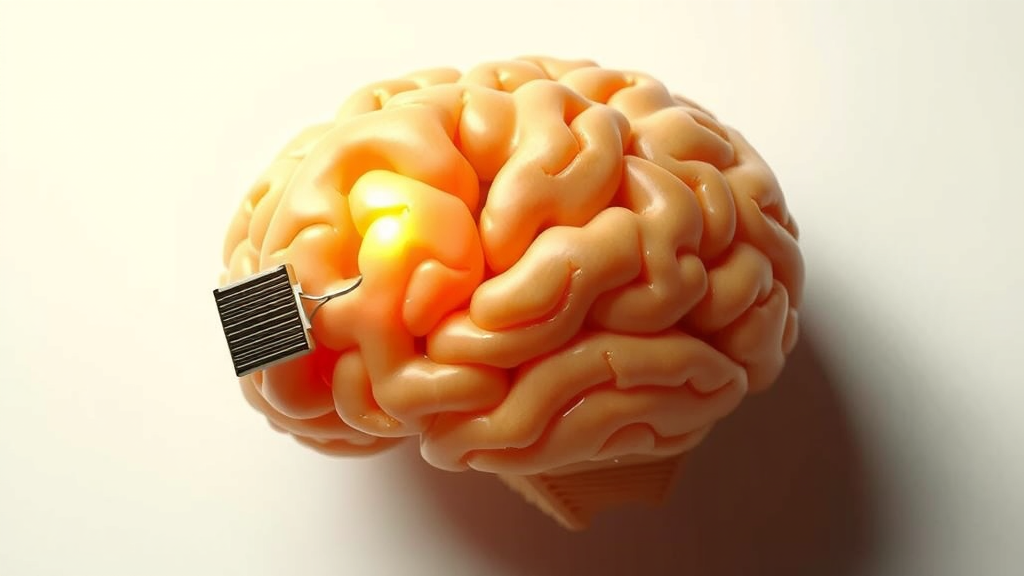
The idea of plugging an electronic device directly into the human brain has long occupied the boundary between science fiction and clinical ambition. A review published on September 11 in the journal Cyborg and Bionic Systems by researchers at Tianjin University now offers a detailed map of how far that boundary has shifted. The paper focuses on intracortical microstimulation, or ICMS, a technique that uses tiny electrodes implanted within the brain to activate specific, localized groups of neurons. What began decades ago as a laboratory instrument for charting which regions of the cortex control which functions has, according to the authors, matured into a candidate technology for delivering sensory feedback, transmitting information into the nervous system, closing the loop in neuromodulation and anchoring a new generation of biointegrated neural interfaces.
The technical premise of ICMS is deceptively simple. By passing carefully shaped pulses of electrical current through microelectrodes positioned in cortical tissue, researchers can evoke neural activity in targeted populations of neurons without requiring any natural sensory input. The timing, amplitude, frequency and spatial pattern of those pulses determine what the brain perceives. In a functioning brain-computer interface, this creates the possibility of a true two-way channel: the device decodes neural signals to infer intent, and it writes information back into the cortex through stimulation. The Tianjin University review, authored by Pengfei Hu, Chong Chen, Yunliang Zang, Xiaohong Li and Dong Ming, organizes the field around this delivery-and-parameter framework, tracing how pulse design and electrode placement jointly shape both perception and long-term circuit change.
The most direct and best-documented application is artificial touch. When electrodes stimulate the primary somatosensory cortex, human participants report localized sensations described as touch, pressure or tingling at specific points on the body, even though no peripheral nerve is involved. Early experiments established that individual electrodes reliably produce perceptible, place-specific sensations. More recent work has pushed further, using multiple electrodes and engineered spatiotemporal patterns to convey richer tactile information, including edges, curvature and even apparent motion across the skin. Human studies have shown that such patterned stimulation improves the controllability and internal structure of artificial touch, allowing users to discriminate features that single-pulse stimulation cannot convey. Yet the review is candid about the gap that remains: synthetic tactile signals still do not reproduce the complexity of natural touch, which combines thousands of mechanoreceptors firing with precisely coordinated timing.
Vision follows a parallel logic. Electrical stimulation of the primary visual cortex produces phosphenes, the perceived spots or lines of light that appear even in people who have been blind for years. Because phosphenes can be evoked across a grid of electrodes, coordinated stimulation of multiple sites can be composed into recognizable shapes and letters, much as individual pixels combine into an image. Experiments with blind participants have demonstrated simple two-dimensional visual patterns and basic object-localization tasks, offering proof of principle that cortical prostheses can deliver usable visual information. Still, the researchers note that current visual prosthesis studies remain confined to relatively simple shapes, letters and localization. Predicting how a given stimulation will be perceived, identifying which electrode combinations produce the most useful phosphenes, and maintaining stable stimulation over long implantation periods remain the field’s most stubborn engineering challenges.
One of the most consequential findings the review synthesizes is that the brain can learn. Animals trained with intracortical stimulation learn to interpret artificial patterns and use them to guide behavior, even when those patterns bear no direct resemblance to natural sensory codes. This observation suggests that the nervous system does not demand an exact mimicry of biology; it can assign meaning to an entirely synthetic neural signal through experience. The implications for future bidirectional brain-computer interfaces are substantial. Rather than painstakingly reverse-engineering natural sensory encoding, engineers may be able to design stimulation schemes that are simpler, more robust and more flexible, and trust cortical plasticity to do the interpretive work. The brain, in effect, becomes a co-designer of the interface.
The review then examines a more ambitious possibility: using ICMS not merely to create momentary sensations but to change how neural circuits function over longer periods. Repeated or precisely timed stimulation can induce plasticity-like changes in cortical networks, the same class of modifications through which the brain normally stores skills and recovers from injury. The authors discuss studies in which paired or activity-dependent stimulation altered functional connectivity between cortical regions. In one particularly striking closed-loop paradigm, spontaneous neural activity recorded from the motor cortex was used to trigger stimulation of the somatosensory cortex with a controlled delay. Because the stimulation arrived at a biologically meaningful time relative to the spontaneous activity, the temporally matched pairing strengthened intercortical coupling and was associated with improved motor recovery in a rat model of brain injury. The result points toward stimulation therapies that reshape circuits rather than simply activating them.
Despite these advances, the authors are explicit that such applications remain largely experimental. Reliable biomarkers that confirm a circuit has actually changed, reproducible stimulation parameters that work across individuals, implantation procedures that are safe over years, and therapeutic benefits that endure all require further validation before any clinical translation. The history of neuromodulation is littered with promising animal results that failed to survive the transition to human trials, and ICMS researchers are aware that plasticity induction, in particular, is exquisitely sensitive to timing, dosage and the state of the tissue being stimulated. What works in a healthy rat motor-sensory loop may behave very differently in an injured or aged human cortex.
A parallel challenge is the hardware itself. Conventional microwire and silicon electrodes are far stiffer than the soft, delicate tissue of the brain, and this mechanical mismatch has consequences. Micromotion between implant and tissue causes damage, inflammation and glial scar formation, which progressively isolate the electrode from the neurons it needs to reach and degrade signal quality over time. Flexible electrodes soften the mechanical mismatch, and the review describes the field’s migration from rigid probes toward flexible, biomimetic designs. But flexibility alone cannot eliminate the biological barrier between an artificial material and living neural tissue, which is why the researchers highlight a further step: biohybrid neural interfaces. These incorporate living biological components, including neural stem cells, neural progenitor cells and other neural cells, directly into the implanted device. The goal is twofold: improve integration with host tissue so the interface survives longer, and allow living tissue to participate in signal transmission itself. More advanced designs can even guide axon growth, creating new biological connections between neural tissue and the electronic device. In the most optimistic framing, biohybrid interfaces could extend beyond better electrodes to repairing damaged neural circuits, combining electronics, living cells and host tissue into a single functioning system.
None of this, the review stresses, makes ICMS a plug-and-play technology. Long-term performance depends on the stability of implanted electrodes, and stimulation effects vary between individuals and can drift over time within the same person. The authors therefore call for coordinated progress across electrode design, stimulation encoding, closed-loop calibration and safety evaluation, together with longer follow-up periods, cross-species validation, standardized safety assessments and reproducible behavioral and neural-network outcomes. Rather than replacing existing neuromodulation technologies, they argue, ICMS may ultimately serve as a complementary tool offering far finer control over local neural populations than surface stimulation or pharmacological approaches can achieve. Its long-term promise lies in combining several capabilities at once: delivering artificial sensory information, letting the brain learn entirely new information channels, reshaping dysfunctional circuits and integrating electronic devices more naturally with living neural tissue. As the review concludes, translating intracortical microstimulation from an experimental technique into durable brain-computer interface systems will require progress not in any single technology, but simultaneously across interface reliability, stimulation encoding, closed-loop control, safety and biohybrid integration. The work was supported by the National Key Research and Development Program of China, the Major Program of the National Natural Science Foundation of China and the National Natural Science Foundation of China.
Subject of Research: Intracortical microstimulation as a technique for evoking artificial perception and inducing plasticity in brain-computer interfaces
Article Title: Intracortical microstimulation in brain–computer interfaces: Evoking perception and plasticity
Article References: Intracortical microstimulation in brain–computer interfaces: Evoking perception and plasticity. (n.d.). Original publication
Image Credits: AI Generated
DOI: Not provided
Keywords: intracortical microstimulation, brain-computer interfaces, sensory feedback, phosphenes, neuroplasticity, closed-loop neuromodulation, biohybrid neural interfaces, somatosensory cortex, visual prosthesis, neural electrodes, Intracortical, microstimulation
Cite Scienmag News
Cassandra Pierce. (September 20, 2026). Tiny Brain Implants That Whisper to Neurons Move Closer to Restoring Senses. Scienmag. https://scienmag.com/tiny-brain-implants-that-whisper-to-neurons-move-closer-to-restoring-senses/
Cassandra Pierce. "Tiny Brain Implants That Whisper to Neurons Move Closer to Restoring Senses." Scienmag, 20 September 2026, https://scienmag.com/tiny-brain-implants-that-whisper-to-neurons-move-closer-to-restoring-senses/. Accessed 4 October 2026.
Cassandra Pierce. "Tiny Brain Implants That Whisper to Neurons Move Closer to Restoring Senses." Scienmag. September 20, 2026. https://scienmag.com/tiny-brain-implants-that-whisper-to-neurons-move-closer-to-restoring-senses/


