


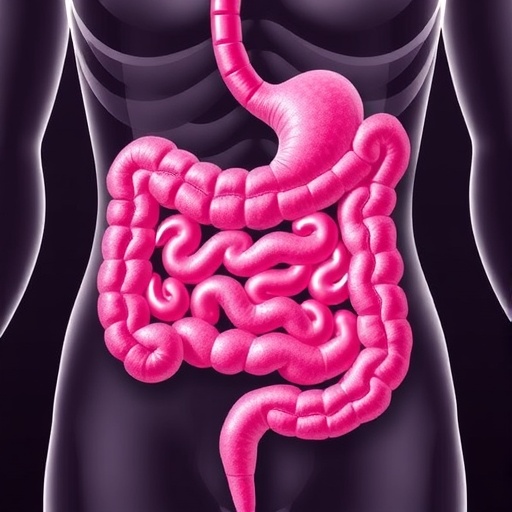
In a groundbreaking study published in Nature Communications, researchers have uncovered a novel molecular mechanism that could revolutionize our understanding and treatment of ulcerative colitis, a chronic inflammatory bowel disease. The study, led by Wu, D., Su, S., Zhang, P., and colleagues, illuminates the crucial role of the protein TIGAR (TP53-Induced Glycolysis and Apoptosis Regulator) in maintaining the integrity of the intestinal mucus barrier. This barrier is essential for protecting the gut lining from harmful pathogens and environmental insults, and its disruption is a hallmark of ulcerative colitis.
Ulcerative colitis causes inflammation and ulcers in the colon and rectum, leading to severe symptoms like abdominal pain, diarrhea, and rectal bleeding. Despite advances in understanding inflammatory bowel diseases, the molecular basis of how the mucus barrier becomes compromised remained elusive. This new research identifies a key regulatory axis involving TIGAR and the metabolic enzymes glucose-6-phosphate dehydrogenase (G6PD) and 6-phosphogluconate dehydrogenase (6PGD), which are vital for cellular metabolism and antioxidant defense.
The team focused on the post-translational modification known as lactylation—an emerging epigenetic modification where lactate molecules are added to proteins, influencing their function. The interplay between cellular metabolism and protein modification has increasingly been recognized as a driver of inflammatory diseases; however, lactylation’s role in intestinal pathology was largely unexplored. The researchers set out to determine how lactylation of G6PD and 6PGD impacts mucus barrier integrity in the context of ulcerative colitis and how TIGAR modulates this process.
Detailed biochemical assays and patient-derived tissue samples showed that in ulcerative colitis, elevated lactylation of G6PD and 6PGD correlates with diminished enzymatic activity of these critical pentose phosphate pathway components. This enzymatic impairment leads to decreased production of NADPH, a pivotal cofactor for regenerating reduced glutathione—the cell’s frontline antioxidant. As a result, oxidative stress intensifies, weakening the mucus barrier and exacerbating mucosal inflammation.
Intriguingly, TIGAR was found to counteract this pathway by inhibiting the lactylation of G6PD and 6PGD. Its regulatory action restores their function, promotes antioxidant capacity, and preserves the mucus barrier’s structural integrity. Functional experiments utilizing TIGAR knockout mice demonstrated that deficiency of this regulator led to increased susceptibility to chemically induced colitis, with more severe mucosal damage and increased lactylation of G6PD/6PGD. Conversely, overexpression of TIGAR mitigated these effects, underscoring its protective role.
These findings open new avenues for therapeutic interventions targeting metabolism-driven modifications in inflammatory diseases. By enhancing TIGAR activity or mimicking its inhibitory effect on lactylation, it could be possible to restore metabolic and redox homeostasis in the intestinal epithelium. Such strategies hold promise not only for ulcerative colitis but potentially for other disorders characterized by barrier dysfunction and chronic inflammation.
From a wider perspective, the study highlights the intricate crosstalk between metabolism, epigenetics, and immune regulation. The discovery that TIGAR acts as a metabolic gatekeeper to preserve mucosal health adds an important piece to the complex puzzle of gut homeostasis. It also exemplifies the translational potential of targeting metabolic enzymes and protein modifications for disease modulation.
The authors employed cutting-edge mass spectrometry to precisely identify lactylation sites on G6PD and 6PGD, and rigorous functional assays to elucidate their activity changes in disease states. Patient biopsy analyses confirmed the clinical relevance of their findings, with ulcerative colitis patients demonstrating distinct molecular signatures aligned with the proposed mechanism. This multidisciplinary approach ensured robust validation from molecular to clinical scales.
Moreover, the study advances the understanding of the pentose phosphate pathway’s contribution to intestinal health beyond its canonical metabolic roles. It reveals how metabolic flux and post-translational modifications can dynamically regulate enzyme activities, orchestrating redox balance and barrier integrity under pathological stress.
As ulcerative colitis continues to impose significant health burdens worldwide, affecting millions of individuals, the urgency for innovative treatments is high. Current therapies often target immune suppression but fail to adequately address the underlying metabolic dysfunctions that compromise tissue resilience. The TIGAR-mediated pathway identified here may represent a more precise target to bolster the mucosal barrier and reduce inflammatory damage.
Future research inspired by this discovery will likely explore pharmacological agents capable of modulating TIGAR activity or preventing aberrant lactylation. Additionally, investigating the potential interactions between diet, microbiome-derived metabolites, and lactylation pathways could provide further insights into disease susceptibility and treatment responsiveness.
In closing, this seminal work by Wu and colleagues paves the way for a new paradigm in ulcerative colitis research, situating TIGAR at the center of a metabolic-epigenetic axis critical for mucus barrier integrity. It underscores the transformative power of integrating molecular biology, metabolomics, and clinical science to uncover novel therapeutic targets that could ultimately improve patient outcomes in debilitating inflammatory disorders.
Cite Scienmag News
Ophelia Keating. (March 4, 2026). TIGAR Strengthens Gut Barrier by Blocking G6PD Lactylation. Scienmag. https://scienmag.com/tigar-strengthens-gut-barrier-by-blocking-g6pd-lactylation/
Ophelia Keating. "TIGAR Strengthens Gut Barrier by Blocking G6PD Lactylation." Scienmag, 4 March 2026, https://scienmag.com/tigar-strengthens-gut-barrier-by-blocking-g6pd-lactylation/. Accessed 5 September 2026.
Ophelia Keating. "TIGAR Strengthens Gut Barrier by Blocking G6PD Lactylation." Scienmag. March 4, 2026. https://scienmag.com/tigar-strengthens-gut-barrier-by-blocking-g6pd-lactylation/


