


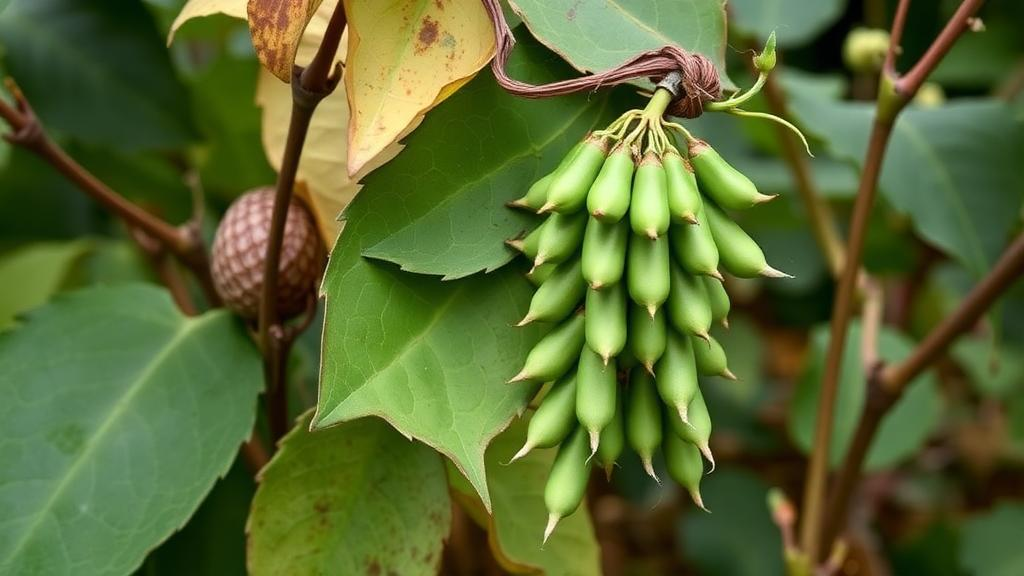
Bush beans, known locally in Bangladesh as Jhar seem or Farashi seem, are quietly becoming one of the most promising niche legume crops in the country’s northeast. Rich in protein, dietary fiber, vitamins and minerals, the crop offers both nutritional value and export potential. Yet in Sylhet, a region defined by high rainfall and persistent humidity, bush bean plants are under sustained attack from pathogens that thrive in exactly those conditions. A new study from Sylhet Agricultural University, published in Discover Plants, has now provided the first quantitative baseline of the major diseases affecting the crop in the region, and the picture it paints is sobering for farmers who rely on local, unimproved seed.
The research team, led by Nusrat Jahan with colleagues including Abdul Muqit, Md. Monirul Islam, Md. Mostafizur Rahman Sabim and Abdullah Al Kafi, set out to answer a deceptively simple question: which diseases dominate bush bean fields in Sylhet, how severe are they, and do different varieties respond differently? They compared two genotypes during the Rabi season of 2022–2023: BARI Bush Bean-1, a variety released by the Bangladesh Agricultural Research Institute, and a local line whose seed is commonly saved or purchased in local markets. The trials were conducted in pots under a complete randomized design with three replications, each replication comprising eight pots and sixteen plants, with disease observations recorded at seven-day intervals for sixty days after transplanting.
Three diseases emerged as the dominant threats. Anthracnose, caused by the fungus Colletotrichum lindemuthianum, announced itself through dark, sunken circular lesions on pods and stems. Alternaria leaf spot, driven by Alternaria alternata, produced round brown spots with concentric rings, often ringed by yellow halos, that could coalesce into large necrotic patches. Common bacterial blight, attributed to Xanthomonas axonopodis pv. phaseoli, began as tiny water-soaked spots or pale green areas on leaves that enlarged into brown necrotic lesions with a characteristic lemon-yellow halo. The fungal pathogens were confirmed through laboratory isolation on potato dextrose agar and microscopic examination of hyphae, conidiophores, conidia and acervuli, while the bacterial disease was diagnosed on the basis of its distinctive field symptoms.
The numbers revealed a consistent pattern: the local variety was substantially more susceptible across the board. Common bacterial blight showed the highest incidence, reaching 50 percent in BARI Bush Bean-1 but 70 percent in the local line. Anthracnose incidence climbed to 33 percent in the released variety versus 58 percent in the local one, and Alternaria leaf spot was the most dramatic contrast of all, at roughly 29 percent in BARI Bush Bean-1 against nearly 71 percent in the local variety. Disease severity ranged from about 17 to 30 percent depending on the disease and variety. Statistical analysis using a binomial generalized linear mixed-effects model for incidence and a cumulative link mixed-effects model for ordinal severity scores confirmed that variety had a significant effect in most cases, with analysis of variance showing, for example, a highly significant variety effect on Alternaria leaf spot incidence (F = 50.00, p = 0.0021).
Timing mattered as much as magnitude. The researchers tracked when each epidemic began and peaked. Alternaria leaf spot appeared earliest, initiating just fourteen days after transplanting and peaking at forty-two days, a rapid onset that the authors suggest may reflect seed-borne inoculum or swift colonization under favorable microclimatic conditions. Common bacterial blight began at twenty-eight days and peaked at fifty-six days, while anthracnose was the latest starter, appearing at thirty-five days and reaching its maximum at sixty-three days. In every case, the local variety showed both a higher peak and a steeper climb, reaching incidences as high as 70.8 percent for Alternaria leaf spot compared with 29.16 percent in the improved variety at the same time point.
To capture the full trajectory of each epidemic rather than just its peak, the team calculated the area under the disease progress curve, or AUDPC, a standard epidemiological metric that integrates disease intensity over time. Higher AUDPC values indicate not only more severe outbreaks but also more prolonged disease pressure, which is often more damaging to final yield than a short, sharp peak. For BARI Bush Bean-1, AUDPC values were 513.31 for anthracnose, 605.26 for Alternaria leaf spot and 626.50 for bacterial blight. For the local variety, the corresponding values were dramatically higher: 838.26, 860.85 and 887.1 respectively. By this measure, common bacterial blight proved the most virulent disease overall, followed by Alternaria leaf spot and then anthracnose.
The laboratory work added important diagnostic detail. Colletotrichum lindemuthianum colonies grown on potato dextrose agar developed a white, creamy, cottony appearance after three to six days of incubation at 25 degrees Celsius, with septate, branched hyphae and unicellular, hyaline, curved conidia borne on cushion-shaped acervuli studded with dark brown setae. Alternaria alternata colonies started white and turned brown, producing septate, unbranched conidiophores and single ellipsoidal conidia that generated germ tubes characteristic of dictyospores. Both fungi sporulated optimally at 25 degrees Celsius and a pH between 6.5 and 7.0. These morphological profiles, matched against standard identification keys, anchored the field observations to named pathogens.
Why does the local line fare so badly? The authors point to inherent genetic variability in host resistance. BARI Bush Bean-1 likely carries partial resistance traits, which may include structural barriers that reduce pathogen penetration and enhanced biochemical defenses such as the production of phenolic compounds and pathogenesis-related proteins. The local variety, by contrast, appears to lack or weakly express these mechanisms, leaving it vulnerable to rapid pathogen spread. The finding has practical consequences beyond plant physiology: farmers who save or purchase unimproved seed are effectively cultivating susceptibility, raising the risk of epidemic outbreaks and larger yield losses in smallholder systems. Because Xanthomonas species are seed-borne and can persist on contaminated seed lots, seed health emerges as a critical control point, reinforcing the case for certified clean seed and seed-treatment methods.
Sylhet’s agro-ecology amplifies every one of these risks. The region receives roughly 5,048 millimeters of annual rainfall with an average temperature of 23.6 degrees Celsius, and its sandy loam soils are acidic, with pH values between 4.9 and 6.1. Frequent rainfall and prolonged leaf wetness facilitate spore germination, bacterial multiplication and infection, while high humidity simultaneously enhances pathogen survival and can weaken plant defense responses. Globally, fungal pathogens cause the greatest losses in common bean, followed by bacterial and viral infections, and anthracnose alone has been reported to cause up to 100 percent crop damage in susceptible lines under favorable conditions. The Sylhet data align with this broader picture while adding region-specific quantitative evidence that had been missing.
The authors are candid about the study’s limitations. Bacterial blight was diagnosed primarily on symptoms and colony appearance, without molecular confirmation by PCR or pathogenicity testing, so precise species-level determination remains outstanding. The trials covered a single growing season at one location, and only two varieties were tested, which narrows the scope of inference about varietal resistance. Still, the work establishes an essential baseline: anthracnose, Alternaria leaf spot and common bacterial blight are the principal diseases of bush bean in Sylhet, and the local cultivar is consistently the more vulnerable of the two genotypes examined. The researchers call for follow-up experiments in farmers’ fields, molecular pathogen characterization, wider geographic sampling and evaluation of control measures. For a crop with genuine export potential and a growing role in Bangladesh’s food security, converting this epidemiological baseline into integrated disease management, resistant breeding lines and clean seed systems may determine whether Sylhet’s bush bean boom flourishes or withers under pathogen pressure.
Subject of Research: Disease incidence, severity and epidemiology of major bush bean pathogens in Sylhet, Bangladesh
Article Title: Disease incidence, severity, and AUDPC-based evaluation of two bush bean varieties
Article References: Jahan, N., Muqit, A., Islam, M. M., Sabim, M. M. R., & Kafi, A. A. (2026). Disease incidence, severity, and AUDPC-based evaluation of two bush bean varieties. Discover Plants, 3(1), Article 459. https://doi.org/10.1007/s44372-026-00944-y
Image Credits: AI Generated
DOI: 10.1007/s44372-026-00944-y
Keywords: bush bean, Phaseolus vulgaris, anthracnose, Colletotrichum lindemuthianum, Alternaria leaf spot, common bacterial blight, Xanthomonas, AUDPC, plant pathology, disease resistance, Bangladesh, Sylhet
Cite Scienmag News
Alan Morgan. (October 12, 2026). Three Diseases Threaten Bangladesh’s Bush Beans, and the Local Variety Fares Worst. Scienmag. https://scienmag.com/three-diseases-threaten-bangladeshs-bush-beans-and-the-local-variety-fares-worst/
Alan Morgan. "Three Diseases Threaten Bangladesh’s Bush Beans, and the Local Variety Fares Worst." Scienmag, 12 October 2026, https://scienmag.com/three-diseases-threaten-bangladeshs-bush-beans-and-the-local-variety-fares-worst/. Accessed 12 October 2026.
Alan Morgan. "Three Diseases Threaten Bangladesh’s Bush Beans, and the Local Variety Fares Worst." Scienmag. October 12, 2026. https://scienmag.com/three-diseases-threaten-bangladeshs-bush-beans-and-the-local-variety-fares-worst/


