

Wednesday, August 19, 2026
Science
No Result
View All Result
  • Login
  • HOME
  • SCIENCE NEWS
  • CONTACT US
  • HOME
  • SCIENCE NEWS
  • CONTACT US
No Result
View All Result
Scienmag
No Result
View All Result
Home Science News Technology and Engineering

Thousands of U.S. Historic Landmarks Threatened by Rising Wildfire Risk

July 28, 2026
in Technology and Engineering
Reading Time: 2 mins read
0
Thousands of U.S. Historic Landmarks Threatened by Rising Wildfire Risk

Thousands of U.S. Historic Landmarks Threatened by Rising Wildfire Risk

65
SHARES
587
VIEWS
Share on FacebookShare on Twitter
ADVERTISEMENT

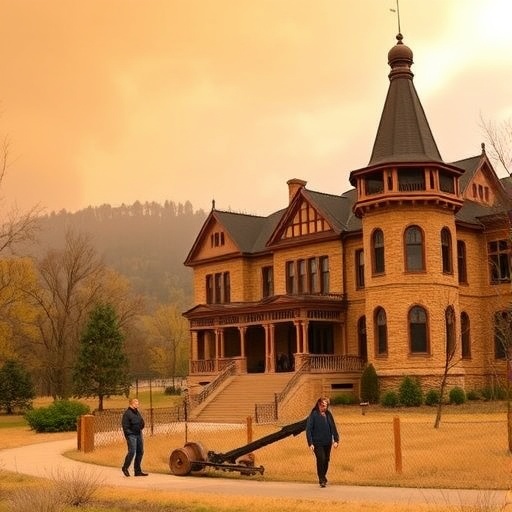
Wildfires are increasingly reshaping more than landscapes—they are erasing cultural memory. In January 2025, the Palisades Fire tore through Los Angeles and destroyed the Will Rogers Ranch House, a cherished California landmark. Six months later, the Dragon Bravo wildfire burned through Grand Canyon National Park and destroyed the Grand Canyon Lodge, originally built in 1927. Whether these historic sites can be restored in a meaningful way is uncertain, highlighting a broader risk that may be easy to underestimate.

A new study published in Nature Scientific Reports frames these events as signals rather than isolated tragedies. Researchers from UC Santa Barbara’s National Center for Ecological Analysis and Synthesis (NCEAS) completed what they describe as the first national-scale assessment of wildfire risk to American cultural heritage.

Using the National Register of Historic Places, the team examined 100,117 mappable sites across the United States. More than half show measurable wildfire exposure when cross-referenced with high-resolution burn-probability models. For 3,446 places, the exposure is categorized as severe.

The analysis goes beyond location, linking risk to place type, geography, and cultural significance. Their modeling indicates that wildfire exposure is most concentrated in the western United States, with additional hotspots appearing in Oklahoma, Arkansas, and along parts of the southeastern coastline.

A critical result is that buildings and historic districts—representing 90% of listed historic resources—are likely to be especially vulnerable. Because their cultural value is inseparable from their original physical form, loss can mean heritage is effectively unrecoverable, even if partial reconstruction is possible.

The study also finds that nationally significant sites face disproportionately high exposure compared with places of state or local importance. In California, New Mexico, Colorado, and Oklahoma, at-risk sites cluster particularly strongly, suggesting uneven vulnerability shaped by both climate and development patterns.

The work attributes part of this urgency to climate change, which is expected to expand wildfire hazard zones into regions that have historically experienced lower risk. Yet the authors emphasize that heritage protection is often missing from dedicated wildfire planning frameworks in most states.

To address this gap, they recommend mitigation strategies compatible with preservation standards, including vegetation management, structural hardening using fire-resistant materials, and concealed fire suppression systems designed to protect structures without compromising historic character. The study’s open-source dataset is provided to help agencies prioritize protection proactively rather than after the next fire decides outcomes.

Subject of Research: Wildfire risk to United States cultural resources
Article Title: Wildfire risk to United States cultural resources
News Publication Date: 12-May-2026
Web References: https://www.nature.com/articles/s41598-026-52407-9
References: UC Santa Barbara NCEAS study (Nature Scientific Reports, 12-May-2026)
Image Credits: Not provided

Keywords

Wildfire risk, cultural heritage, historic preservation, burn probability models, National Register of Historic Places, climate change, structural hardening, vegetation management, fire-resistant materials, emergency planning

Tags: Cultural heritage preservationeffects of climate change on cultural landmarkshistoric site vulnerability to wildfiresimpact of wildfires on national parksnational-scale wildfire risk analysispreservation challenges for historic sitesregional wildfire hotspots in the USthreats to US historic landmarks from wildfireswildfire mitigation for cultural heritagewildfire modeling and predictionwildfire risk assessment in the USwildfire risk to historic landmarks
Share26Tweet16
Previous Post

Dynamic Nanopore Breathing Boosts Efficiency for Molecule Separation and Diffusion

Next Post

Atomic Structure of Rare Earths in Deep-Sea Sediments Boosts Extractability

Related Posts

Wildlife Disease Increases with Urban Density, Habitat Connectivity and Climate Change
Technology and Engineering

Wildlife Disease Increases with Urban Density, Habitat Connectivity and Climate Change

August 19, 2026
Thermal justice could make urban heat adaptation fairer as cities grow hotter
Technology and Engineering

Thermal justice could make urban heat adaptation fairer as cities grow hotter

August 19, 2026
New AI Model Could Enhance Digital Coaching and Rehabilitation
Technology and Engineering

New AI Model Could Enhance Digital Coaching and Rehabilitation

August 19, 2026
DGIST radar receiver unifies communication and detection, easing autonomous vehicles’ computing load
Technology and Engineering

DGIST radar receiver unifies communication and detection, easing autonomous vehicles’ computing load

August 19, 2026
Sensor detects ammonia leaks at just one part per million
Technology and Engineering

Sensor detects ammonia leaks at just one part per million

August 19, 2026
Sandia Labs Partners to Develop Technologies Strengthening the Electric Grid
Technology and Engineering

Sandia Labs Partners to Develop Technologies Strengthening the Electric Grid

August 19, 2026
Next Post
Atomic Structure of Rare Earths in Deep-Sea Sediments Boosts Extractability

Atomic Structure of Rare Earths in Deep-Sea Sediments Boosts Extractability

  • Mothers who receive childcare support from maternal grandparents show more

    Mothers who receive childcare support from maternal grandparents show more parental warmth, finds NTU Singapore study

    27656 shares
    Share 11059 Tweet 6912
  • University of Seville Breaks 120-Year-Old Mystery, Revises a Key Einstein Concept

    1061 shares
    Share 424 Tweet 265
  • Bee body mass, pathogens and local climate influence heat tolerance

    682 shares
    Share 273 Tweet 171
  • Researchers record first-ever images and data of a shark experiencing a boat strike

    546 shares
    Share 218 Tweet 137
  • Groundbreaking Clinical Trial Reveals Lubiprostone Enhances Kidney Function

    531 shares
    Share 212 Tweet 133
Science

Embark on a thrilling journey of discovery with Scienmag.com—your ultimate source for cutting-edge breakthroughs. Immerse yourself in a world where curiosity knows no limits and tomorrow’s possibilities become today’s reality!

RECENT NEWS

  • Chronic Kidney Disease in Women: Global Burden and Metabolic-Cardiovascular Connections
  • Large Language Models Win Gold at International Astronomy and Astrophysics Olympiad
  • Molecular Self-Assembly Enables High-Throughput DNA Fragment Synthesis from Overlapping Oligonucleotides
  • Dynamic duo weaves hierarchical DNA materials using two classes of biomolecular nanomachines

Categories

  • Agriculture
  • Anthropology
  • Archaeology
  • Athmospheric
  • Biology
  • Biotechnology
  • Blog
  • Bussines
  • Cancer
  • Chemistry
  • Climate
  • Earth Science
  • Editorial Policy
  • Marine
  • Mathematics
  • Medicine
  • Pediatry
  • Policy
  • Psychology & Psychiatry
  • Science Education
  • Social Science
  • Space
  • Technology and Engineering

Subscribe to Blog via Email

Enter your email address to subscribe to this blog and receive notifications of new posts by email.

Join 5,150 other subscribers

© 2025 Scienmag - Science Magazine

Welcome Back!

Login to your account below

Forgotten Password?

Retrieve your password

Please enter your username or email address to reset your password.

Log In
No Result
View All Result
  • HOME
  • SCIENCE NEWS
  • CONTACT US

© 2025 Scienmag - Science Magazine

Discover more from Science

Subscribe now to keep reading and get access to the full archive.

Continue reading
