

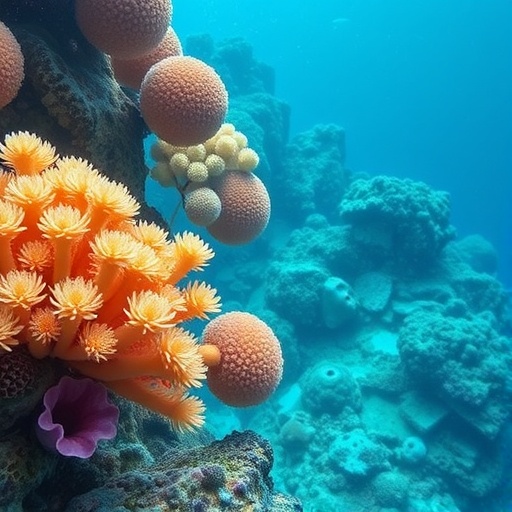
Coral reefs, often referred to as the “rainforests of the sea,” are among the most diverse ecosystems on the planet. They provide essential services not only to marine life but also to human populations that rely on them for food, coastal protection, and recreation. However, the health of coral reefs is diminishing at an alarming rate, largely due to climate change, which causes rising ocean temperatures. One of the most dramatic manifestations of coral reef stress is coral bleaching, a phenomenon that occurs when corals expel the symbiotic algae, known as zooxanthellae, that live within their tissues. This symbiosis is critical for the survival of corals, as the algae perform photosynthesis, providing nutrients to the coral, while the coral offers a protected environment for the algae.
Recent research published in the journal Coral Reefs by Shimakawa, Aoyama, and Takagi has shed light on the underlying mechanisms of coral bleaching, focusing particularly on the thermal inactivation of endosymbiont photos synthesis and the impact of nutrient deprivation. The study aims to dissect the key factors contributing to coral bleaching during periods of thermal stress and how these interactions can exacerbate the situation for coral reefs in an increasingly warming ocean. The scientists used controlled laboratory experiments alongside field observations to illustrate the complex interplay between temperature, light, and nutrient availability in coral ecosystems.
In their research, the authors provide a detailed analysis of the photosynthetic process in corals and how elevated temperatures can lead to thermal inactivation of photosynthesis. This inactivation occurs under stress conditions, where the enzymes responsible for facilitating photosynthesis in zooxanthellae become denatured or dysfunctional. As a result, the efficiency of photosynthesis declines, leading to reduced nutrient production for the coral host. The authors argue that understanding this thermal threshold is crucial for predicting coral responses to ongoing climate change.
Moreover, the study discusses nutrient deprivation as an additional layer of stress. Nutrients such as nitrogen and phosphorus are essential for the growth and maintenance of coral reefs. In nutrient-poor environments, the competition between corals and macroalgae intensifies, often favoring the latter, which can overrun and suffocate coral. The research shows that regions experiencing nutrient limitation are particularly vulnerable to the impacts of thermal stress, leading to more severe bleaching events.
Qualitative observations from the study highlight that the extent of coral bleaching varies significantly depending on the specific environmental circumstances. Some coral species exhibit greater resilience to temperature fluctuations, while others succumb more rapidly to bleaching. This resilience can be attributed to various genetic factors and their adaptations to local conditions, emphasizing the need for conservation efforts that consider species diversity and genetic variability.
The findings of Shimakawa et al. not only contribute to the scientific community’s understanding of coral biology but also underline the urgent need for innovative strategies in coral conservation. As the oceans continue to warm, preserving coral reefs will require a multifaceted approach that incorporates stressor management, restoration, and active interventions. This includes targeted efforts to mitigate climate change and enhance coral resilience through selective breeding and the transplantation of more heat-tolerant coral species.
Furthermore, the study’s insights reveal a critical aspect of the role of anthropogenic activity in coral health. Overfishing, pollution, and coastal development significantly contribute to nutrient enrichment and harmful algal blooms, which pose additional threats to coral ecosystems. Hence, integrated coastal zone management becomes imperative to ensure the long-term sustainability of these vital ecosystems.
To understand the practical implications of their findings, the authors recommend further investigation into the complex interactions between temperature and nutrient availability. They suggest that future studies should explore how different coral species respond to combined stressors, paving the way for effective conservation strategies tailored to address regional variations in environmental conditions.
In conclusion, the research presented by Shimakawa and colleagues highlights critical findings that deepen our understanding of coral bleaching dynamics in the context of climate change. By elucidating the roles of thermal inactivation of photosynthesis and nutrient deprivation, the authors underscore the delicate balance within coral ecosystems. They stress the importance of continued research and conservation efforts, especially as global temperatures continue to rise, presenting a formidable challenge to the survival of coral reefs and the myriad species that depend on them.
Given the fragility of coral reefs, effective communication of these research results is vital to galvanize public interest and policy action towards their preservation. The innovative methodologies employed by the researchers serve as a model for future studies aimed at elucidating the intricate relationships between coral, their symbiotic partners, and environmental pressures. This research serves as a clarion call to the scientific community and policymakers alike to prioritize coral reef conservation as a critical component of global climate initiatives.
In summary, the findings from this groundbreaking study not only contribute to our scientific understanding but also emphasize the need for urgent action to protect coral reefs, an essential lifeline for marine biodiversity and coastal communities. Immediate, concerted efforts can help mitigate the impact of climate change and preserve these vital ecosystems for future generations.
Subject of Research: Thermal inactivation of endosymbiont photosynthesis and nutrient deprivation in coral bleaching.
Article Title: The comparative roles of thermal inactivation of endosymbiont photosynthesis and nutrient deprivation in coral bleaching.
Article References:
Shimakawa, G., Aoyama, K. & Takagi, T. The comparative roles of thermal inactivation of endosymbiont photosynthesis and nutrient deprivation in coral bleaching.
Coral Reefs (2025). https://doi.org/10.1007/s00338-025-02800-z
Image Credits: AI Generated
DOI: https://doi.org/10.1007/s00338-025-02800-z
Keywords: Coral bleaching, thermal inactivation, photosynthesis, nutrient deprivation, climate change, marine biodiversity, coral conservation.


