


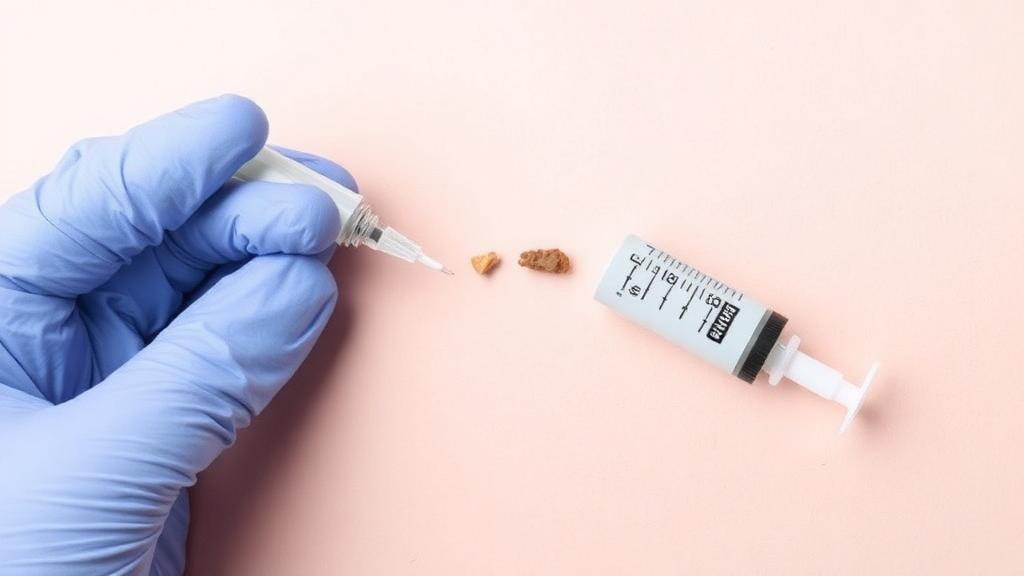
Every day in dermatology clinics around the world, syringes of triamcinolone acetonide are drawn up to flatten keloids, calm inflamed plaques, and halt the progression of scarring alopecias. The corticosteroid is one of the most frequently used injectable medications in the specialty, prized for its potency, low cost, and versatility. Yet behind each routine injection lies a quieter problem that has long escaped scrutiny: how much of the drug, and the material and energy embedded in its delivery, is simply thrown away? A research letter published in the Archives of Dermatological Research by Jordan K. Bui, Christine Chow, Meg Greer, Michael Lindberg, and Thomas Stringer takes aim at precisely that question, quantifying waste in triamcinolone injection practices and exploring how clinics might reduce it.
The study, conducted by researchers affiliated with Georgetown University School of Medicine and the Department of Dermatology at MedStar Washington Hospital Center in Washington, DC, and approved under Georgetown’s institutional review board, addresses an issue that sits at the intersection of clinical practice, health economics, and environmental sustainability. The work arrives at a moment when medicine broadly, and dermatology specifically, is being asked to account for its environmental footprint. Health care is a major contributor to greenhouse gas emissions, and outpatient specialties have increasingly turned their attention to the waste generated by everyday procedures, from single-use instruments to discarded medications.
Triamcinolone acetonide is typically supplied in small vials that are labeled for single-dose use, even when the vial contains far more medication than a single injection requires. Regulatory guidance discourages the reuse of vials designated as single-dose because of the risk of contamination, which means that whatever remains after a patient’s injection is discarded. The scale of that discard is easy to underestimate. A clinic that injects a fraction of a milliliter into a hypertrophic scar may open a vial containing several milliliters, use a small portion, and consign the rest, along with the vial itself, to the waste stream. Multiplied across thousands of patient encounters, the arithmetic becomes sobering.
The problem is not unique to dermatology, and the authors situate their work within a broader policy conversation. A 2021 report from the National Academies of Sciences, Engineering, and Medicine examined the implications of discarded drugs from single-dose vials, highlighting how weight-based dosing and conservative vial sizing combine to produce systematic waste across medicine. That report noted that the issue is structural rather than a matter of individual carelessness: clinicians follow labeling and infection-control rules, and the waste follows from how products are packaged and regulated. The dermatology research letter brings that structural analysis down to the level of a single, ubiquitous injection practice.
To quantify waste, the researchers drew on established methodologies from the emerging field of sustainable health care. Their reference list points to a carbon footprint analysis of an outpatient dermatology practice at an academic medical center, published in JAMA Dermatology, which demonstrated that routine clinical activities carry measurable emissions when materials, energy use, and waste streams are tallied. It also cites the United Kingdom Government’s greenhouse gas conversion factors for electricity, accessed through the Climatiq emissions database, and the United States Environmental Protection Agency’s greenhouse gas equivalencies calculator, tools that allow researchers to translate consumption and waste into carbon terms that can be compared across settings.
The technical logic of such analyses is worth unpacking, because it explains why a seemingly trivial injection can carry a nontrivial footprint. Each vial of medication embodies not only the active pharmaceutical ingredient but also the glass, rubber stopper, aluminum seal, packaging, sterilization processes, and cold-chain or ambient transport that brought it to the clinic. When a fraction of a vial is used and the remainder discarded, all of that embedded material and energy is written off. Add the syringe, needle, alcohol prep pad, gauze, and gloves used for the injection itself, and each procedure generates a stream of single-use items destined for regulated medical waste, which is often autoclaved or incinerated, processes that themselves consume energy and generate emissions.
Crucially, the authors also looked toward solutions rather than merely documenting the problem. Their references include a 2023 study on vial-splitting and repackaging into aliquot-specific syringes as a cost-effective and waste-decreasing strategy for sugammadex, an anesthesiology medication. That approach, in which a larger vial is divided under sterile conditions into pre-measured aliquots matched to typical doses, has been proposed as a way to use more of each vial’s contents while preserving safety. Adapting such strategies to dermatology, where triamcinolone injections follow fairly predictable dosing patterns, offers a concrete pathway for reducing both pharmaceutical waste and the per-injection carbon burden.
The broader context for this work is a growing sustainability movement within dermatology. A 2025 review in the Journal of the American Academy of Dermatology’s sister journal, titled Going Green in Dermatology, surveyed the specialty’s environmental impact and the strategies available to shrink it, from waste segregation and recycling programs to rethinking supply chains and medication use. Dermatology clinics are well positioned for such efforts because much of their work is procedural and outpatient-based, meaning that changes in practice patterns can be implemented locally without the complex infrastructure changes required in operating theaters or intensive care units. The triamcinolone study adds a granular, medication-specific data point to that agenda.
What makes the research letter notable is its framing of waste as a quantifiable, and therefore manageable, quantity. By measuring how much triamcinolone is discarded under current practice and modeling what could be saved under alternative approaches, the authors convert an abstract concern into a set of numbers that clinic managers, pharmacy committees, and professional societies can act upon. The methodology also demonstrates that such analyses can be carried out with publicly available emissions factors and standard calculators, lowering the barrier for other departments and specialties to replicate the approach for their own high-volume medications and procedures.
The implications extend beyond one drug or one specialty. Single-dose vial policies exist for good reasons, and any strategy to reduce waste must navigate infection-control standards, regulatory constraints on compounding and repackaging, and the practical realities of clinic workflow. The National Academies report made clear that meaningful change will likely require action at multiple levels, including manufacturers, regulators, payers, and professional bodies, rather than relying solely on individual clinicians to squeeze more use from each vial. Studies like this one supply the evidence base that such systemic conversations require, showing where the waste concentrates and which interventions offer the greatest return.
For clinicians, the message is that sustainability and good stewardship can align with patient care rather than compete with it. Reducing discarded medication lowers costs, shrinks the waste stream, and cuts emissions, all without altering the dose a patient receives. For patients, the sight of a syringe drawn from a vial is unlikely to change, but the systems behind it may. As health systems face increasing pressure to decarbonize, the humble triamcinolone injection has become an unlikely case study in how careful measurement, borrowed techniques from other fields, and attention to the full life cycle of a medication can turn routine practice into an opportunity for meaningful improvement. The Georgetown and MedStar team’s work suggests that even the smallest procedures, examined closely enough, reveal both the scale of medicine’s waste problem and the practical routes out of it.
Subject of Research: Quantifying and reducing pharmaceutical waste in dermatologic triamcinolone injection practices
Article Title: Quantifying and reducing waste with triamcinolone injection practices
Article References: Bui, J. K., Chow, C., Greer, M., Lindberg, M., & Stringer, T. (2026). Quantifying and reducing waste with triamcinolone injection practices. Archives of Dermatological Research, 318(1), Article 492. https://doi.org/10.1007/s00403-026-04988-8
Image Credits: AI Generated
DOI: 10.1007/s00403-026-04988-8
Keywords: triamcinolone acetonide, dermatology, pharmaceutical waste, single-dose vials, vial-splitting, carbon footprint, sustainable health care, greenhouse gas emissions, medical waste, corticosteroid injections, health care sustainability, National Academies report
Cite Scienmag News
Ophelia Keating. (October 2, 2026). The Hidden Cost of a Corticosteroid Shot: Dermatologists Tally Up Triamcinolone Waste. Scienmag. https://scienmag.com/the-hidden-cost-of-a-corticosteroid-shot-dermatologists-tally-up-triamcinolone-waste/
Ophelia Keating. "The Hidden Cost of a Corticosteroid Shot: Dermatologists Tally Up Triamcinolone Waste." Scienmag, 2 October 2026, https://scienmag.com/the-hidden-cost-of-a-corticosteroid-shot-dermatologists-tally-up-triamcinolone-waste/. Accessed 5 October 2026.
Ophelia Keating. "The Hidden Cost of a Corticosteroid Shot: Dermatologists Tally Up Triamcinolone Waste." Scienmag. October 2, 2026. https://scienmag.com/the-hidden-cost-of-a-corticosteroid-shot-dermatologists-tally-up-triamcinolone-waste/


