


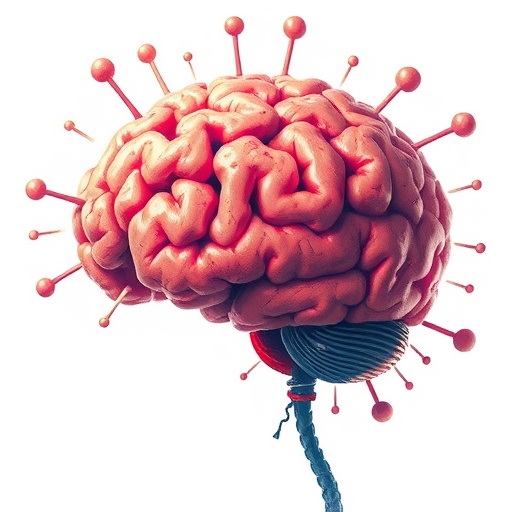
In a groundbreaking study emanating from a collaboration between Turun yliopisto and the University of Turku, neuroscientists led by Birgitta Paranko and Lauri Nummenmaa have unveiled critical insights into how exposure to bullying profoundly impacts the human brain. Their research, recently published in the prestigious journal JNeurosci, bridges the gap between social psychological experiences and their immediate neural correlates, providing compelling evidence on how the brain’s social and emotional circuits respond to distressing social stimuli.
The team focused on elucidating the acute neural mechanisms triggered when individuals witness bullying, a form of antisocial behavior that inflicts severe psychological harm. By employing advanced neuroimaging techniques, including functional magnetic resonance imaging (fMRI), and integrating these with eye-tracking and pupillometry, the researchers crafted a multi-modal approach capable of capturing both the neural activations and autonomic responses provoked during observation of social interactions.
Participants included two distinct age groups, tweens aged 11 to 14, and adults, to determine how developmental factors influence the brain’s response to social adversity. During the experiments, subjects were exposed under controlled laboratory conditions to first-person perspective video stimuli depicting either bullying incidents or positive social exchanges. This ecologically valid design aimed to simulate real-world social experiences and examined the immediate brain dynamics elicited by such environmental input.
Analysis of the neuroimaging data revealed robust activation in networks linked to social distress, encompassing the anterior insula, the dorsal anterior cingulate cortex (dACC), and the amygdala. These regions are well-documented in prior literature to mediate emotional salience, threat detection, and affective pain, underscoring their role as critical nodes in processing social pain analogous to physical pain pathways. Importantly, these activations did not occur uniformly but showed enhanced intensity when participants viewed bullying scenarios compared to benign social interactions.
Complementing the neuroimaging findings, autonomic nervous system markers indicated heightened vigilance and arousal during exposure to bullying videos. Increased pupil dilation and altered eye-tracking metrics signaled intensified attentional allocation and emotional engagement, consistent with the phenomenon of a threat-induced alarm state. This autonomic response reflects activation of subcortical pathways, including the hypothalamic-pituitary-adrenal (HPA) axis, which orchestrates physiological stress responses.
Moreover, the study uncovered a significant interaction between prior personal experiences of victimization and neural responsivity. Participants with a history of being bullied demonstrated amplified activity in distress-related circuits and an elevated autonomic threat profile. This finding suggests a sensitization effect, whereby previous exposure to bullying leaves lasting imprints on the brain’s threat detection system, potentially predisposing individuals to heightened social distress during subsequent encounters.
The research additionally emphasizes the dual hazards of a persistently engaged alarm state. According to co-lead author Lauri Nummenmaa, this continuous neural hypervigilance not only undermines mental health by fostering anxiety, depression, and social withdrawal but also endangers somatic wellbeing through prolonged autonomic activation. Chronic elevations in stress hormones and sympathetic nervous system activity can compromise immune function, increase cardiovascular risk, and contribute to systemic inflammation.
From a cognitive neuroscience perspective, these findings enrich our understanding of social cognition, particularly how the brain interprets complex social cues related to threat and safety. Integrating functional neuroimaging with behavioral metrics provides a nuanced portrait of the temporal and spatial dynamics of brain networks involved in empathy, social evaluation, and emotional regulation when confronted with antisocial behavior like bullying.
Furthermore, this research has profound implications for intervention strategies. By identifying the neural substrates that underpin the distress experienced during bullying, tailored therapeutic approaches could be developed to mitigate these neural alarm states. Early interventions aimed at bolstering resilience in children and adolescents, especially those with prior victimization histories, could attenuate the harmful neurobiological sequelae documented in this study.
The work also raises important questions about the long-term neuroplastic changes induced by repeated exposure to social stressors. Chronic bullying might not only trigger transient neural activations but could lead to enduring alterations in synaptic connectivity within social distress circuits. Future longitudinal studies using advanced imaging modalities will be critical to delineate these trajectories and to understand how the brain adapts or maladapts to sustained social adversity.
In addition to direct neural implications, the study offers insights into the autonomic pathways mediating the psychosomatic interface. The documented link between social distress and autonomic activation elucidates how psychosocial experiences translate into physiological states, supporting emerging frameworks that view mental and physical health as deeply intertwined through bidirectional neural and hormonal communication.
This exploration into the neurobiological underpinnings of bullying exposure exemplifies the power of multidisciplinary research, combining behavioral psychology, cognitive neuroscience, and biomedical imaging to illuminate the hidden impact of social maltreatment. It marks a significant step forward in decoding the neural coding of complex human emotional experiences and paves the way for novel public health policies aimed at minimizing the prevalence and effects of bullying in school and community settings.
Ultimately, Paranko, Nummenmaa, and their colleagues deliver a clarion call for increased awareness around the neural consequences of social victimization. Their meticulous investigation not only reinforces the grave implications of bullying on brain health but underscores the urgency of fostering supportive social environments that protect vulnerable individuals from chronic social defeat and distress.
Cite Scienmag News
Cassandra Pierce. (September 22, 2025). The Brain’s Response to Bullying: What Science Reveals. Scienmag. https://scienmag.com/the-brains-response-to-bullying-what-science-reveals/
Cassandra Pierce. "The Brain’s Response to Bullying: What Science Reveals." Scienmag, 22 September 2025, https://scienmag.com/the-brains-response-to-bullying-what-science-reveals/. Accessed 3 September 2026.
Cassandra Pierce. "The Brain’s Response to Bullying: What Science Reveals." Scienmag. September 22, 2025. https://scienmag.com/the-brains-response-to-bullying-what-science-reveals/


