


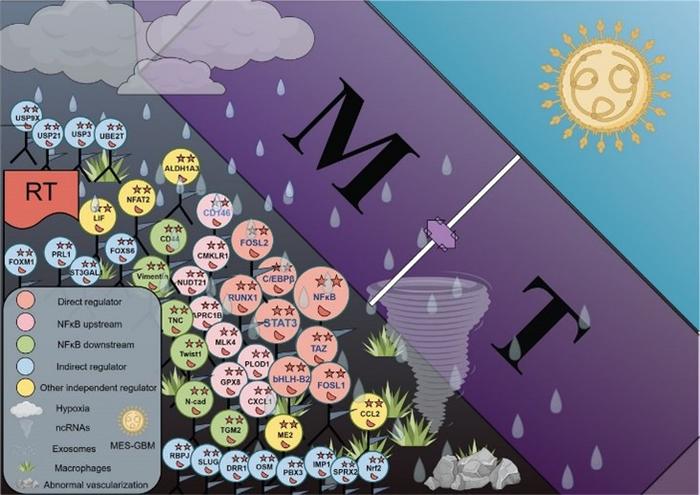
A transformative study has provided a profound understanding of glioblastoma’s molecular subtypes, revealing the nuances of cellular heterogeneity and the mechanisms behind resistance to treatment. This critical research not only enhances our comprehension of this aggressive cancer but also opens new frontiers for the precision-targeting of therapies, potentially improving patient outcomes significantly.
Glioblastoma multiforme (GBM) stands as a formidable adversary in oncology, characterized by its molecular complexity and relentless progression. Despite advancements, the high degree of tumor heterogeneity and its tendency to evade conventional therapies pose significant clinical challenges. The quest for effective treatments is thus propelled by the necessity to unravel the underlying molecular dynamics and the tumor microenvironment’s role in GBM’s resilience.
Researchers from Hebei University, in a collaborative effort, have unveiled a comprehensive review (DOI: 10.20892/j.issn.2095-3941.2023.0510) published in the Cancer Biology & Medicine journal on May 6, 2024, focusing on the molecular subtyping of GBM and the exploration of its mesenchymal transition mechanisms, which are key to developing targeted therapies.
This pioneering research meticulously dissects the genetic mosaic of glioblastoma, spotlighting the diversity within its subtypes and their intricate interactions. The study homes in on the distinct gene expression patterns that set each subtype apart, shedding light on their behavior and responsiveness to therapies. The proneural-mesenchymal transition (PMT) emerges as a central theme, identified as a critical catalyst for therapy resistance and tumor relapse. This analysis peels back layers of GBM’s adaptability, offering a nuanced view of its microenvironmental navigation and response to treatment pressures, setting a solid foundation for more effective, personalized therapeutics.
Dr. Chuan Fang, the lead scientist of the study, underscores its profound impact: “Our in-depth review of GBM’s molecular phenotypes marks a significant leap in neuro-oncology, offering clarity on subtype characteristics and their transitions. This clarity is essential for devising more accurate and potent therapeutic strategies, with the ultimate goal of bolstering patient survival rates and life quality in the face of this aggressive cancer.”
The study’s insights herald a new era in GBM treatment strategies. With an enhanced understanding of the molecular subtypes and their dynamic transitions, the research paves the way for personalized medicine, where treatments are finely tuned to the genetic fingerprint of individual tumors. This customized approach is anticipated to amplify treatment efficacy, providing renewed hope for patients and marking a notable advancement in combating this complex form of cancer.

Credit: Cancer Biology & Medicine
A transformative study has provided a profound understanding of glioblastoma’s molecular subtypes, revealing the nuances of cellular heterogeneity and the mechanisms behind resistance to treatment. This critical research not only enhances our comprehension of this aggressive cancer but also opens new frontiers for the precision-targeting of therapies, potentially improving patient outcomes significantly.
Glioblastoma multiforme (GBM) stands as a formidable adversary in oncology, characterized by its molecular complexity and relentless progression. Despite advancements, the high degree of tumor heterogeneity and its tendency to evade conventional therapies pose significant clinical challenges. The quest for effective treatments is thus propelled by the necessity to unravel the underlying molecular dynamics and the tumor microenvironment’s role in GBM’s resilience.
Researchers from Hebei University, in a collaborative effort, have unveiled a comprehensive review (DOI: 10.20892/j.issn.2095-3941.2023.0510) published in the Cancer Biology & Medicine journal on May 6, 2024, focusing on the molecular subtyping of GBM and the exploration of its mesenchymal transition mechanisms, which are key to developing targeted therapies.
This pioneering research meticulously dissects the genetic mosaic of glioblastoma, spotlighting the diversity within its subtypes and their intricate interactions. The study homes in on the distinct gene expression patterns that set each subtype apart, shedding light on their behavior and responsiveness to therapies. The proneural-mesenchymal transition (PMT) emerges as a central theme, identified as a critical catalyst for therapy resistance and tumor relapse. This analysis peels back layers of GBM’s adaptability, offering a nuanced view of its microenvironmental navigation and response to treatment pressures, setting a solid foundation for more effective, personalized therapeutics.
Dr. Chuan Fang, the lead scientist of the study, underscores its profound impact: “Our in-depth review of GBM’s molecular phenotypes marks a significant leap in neuro-oncology, offering clarity on subtype characteristics and their transitions. This clarity is essential for devising more accurate and potent therapeutic strategies, with the ultimate goal of bolstering patient survival rates and life quality in the face of this aggressive cancer.”
The study’s insights herald a new era in GBM treatment strategies. With an enhanced understanding of the molecular subtypes and their dynamic transitions, the research paves the way for personalized medicine, where treatments are finely tuned to the genetic fingerprint of individual tumors. This customized approach is anticipated to amplify treatment efficacy, providing renewed hope for patients and marking a notable advancement in combating this complex form of cancer.
###
References
10.20892/j.issn.2095-3941.2023.0510
Original Source URL
Funding information
This research was supported by grants from the National Natural Science Foundation of China (Grant No. 82172660), Hebei Province Graduate Student Innovation Project (Grant No. CXZZBS2023001), and Baoding Natural Science Foundation (Grant No. H2272P015).
About Cancer Biology & Medicine
Cancer Biology & Medicine (CBM) is a peer-reviewed open-access journal sponsored by China Anti-cancer Association (CACA) and Tianjin Medical University Cancer Institute & Hospital. The journal monthly provides innovative and significant information on biological basis of cancer, cancer microenvironment, translational cancer research, and all aspects of clinical cancer research. The journal also publishes significant perspectives on indigenous cancer types in China. The journal is indexed in SCOPUS, MEDLINE and SCI (IF 5.6, 5 year IF 5.9), with all full texts freely visible to clinicians and researchers all over the world (http://www.ncbi.nlm.nih.gov/pmc/journals/2000/).
Journal
Cancer Biology & Medicine
Subject of Research
Not applicable
Article Title
Comprehensive understanding of glioblastoma molecular phenotypes: classification, characteristics, and transition
Article Publication Date
6-May-2024
COI Statement
The authors declare that they have no competing interests.
Cite Scienmag News
Juliet Wilcox. (August 7, 2024). The Battle against glioblastoma: classifying molecular profiles for precision medicine. Scienmag. https://scienmag.com/the-battle-against-glioblastoma-classifying-molecular-profiles-for-precision-medicine/
Juliet Wilcox. "The Battle against glioblastoma: classifying molecular profiles for precision medicine." Scienmag, 7 August 2024, https://scienmag.com/the-battle-against-glioblastoma-classifying-molecular-profiles-for-precision-medicine/. Accessed 6 September 2026.
Juliet Wilcox. "The Battle against glioblastoma: classifying molecular profiles for precision medicine." Scienmag. August 7, 2024. https://scienmag.com/the-battle-against-glioblastoma-classifying-molecular-profiles-for-precision-medicine/

