


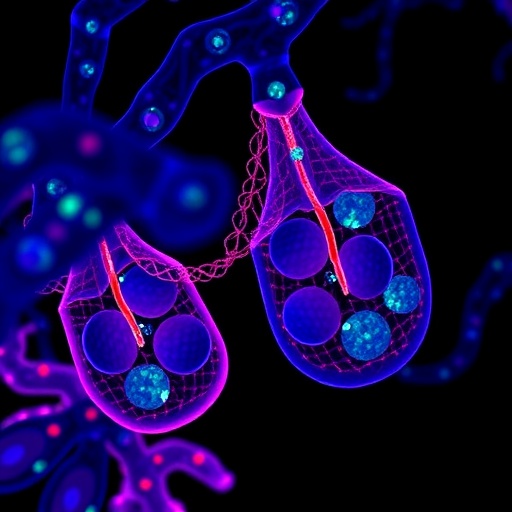
In a groundbreaking discovery that could revolutionize the treatment landscape for pancreatic cancer, researchers have identified a critical feedback loop involving TGM2 and P2RX7 that drives resistance to gemcitabine, one of the frontline chemotherapeutic agents. This intricate molecular interplay appears to reprogram glutamine metabolism and orchestrate mitophagy, thereby enhancing the tumor cells’ survival against drug-induced stress. The findings, recently published in Cell Death Discovery, offer unprecedented insights into the metabolic adaptations governing pancreatic cancer resilience, marking a significant stride in oncology research.
Gemcitabine has long served as a standard chemotherapy drug for pancreatic ductal adenocarcinoma, yet its clinical efficacy is severely hampered by the rapid acquisition of resistance, which remains a major hurdle in improving patient outcomes. Elucidating the mechanisms underlying this resistance has captivated researchers worldwide, prompting detailed investigations into cellular metabolism and survival pathways. The current study sheds light on how a regulatory loop between TGM2, a transglutaminase enzyme involved in post-translational protein modifications, and P2RX7, a purinergic receptor linked to cellular stress responses, enables cancer cells to escape gemcitabine-induced death.
The researchers demonstrated that TGM2 upregulation in pancreatic cancer cells triggers the activation of P2RX7-mediated signaling cascades. This activation leads to profound metabolic reprogramming, specifically boosting glutamine metabolism—a critical anaplerotic pathway supplying carbon and nitrogen for cancer cell growth and survival under nutrient-limiting conditions. Glutamine dependency is well-documented in aggressive tumors, but this study provides mechanistic clarity on how TGM2-P2RX7 signaling fine-tunes glutamine utilization to foster a chemoresistant phenotype.
Moreover, the TGM2-P2RX7 loop was found to modulate mitophagy, a specialized form of autophagy that selectively removes damaged mitochondria, maintaining mitochondrial quality control and function. This mitophagic activity is essential in managing the oxidative stress induced by gemcitabine treatment, allowing tumor cells to maintain bioenergetic homeostasis and avoid apoptosis. By fine-tuning mitophagy, pancreatic cancer cells can effectively mitigate the cytotoxic effects of chemotherapy, thus sustaining their survival and proliferative capacity.
Importantly, these findings underscore a dual role for TGM2-P2RX7 in both metabolic regulation and mitochondrial homeostasis, positioning this loop as a central hub in chemoresistance evolution. The study utilized state-of-the-art methodologies including metabolomic profiling, confocal microscopy for mitochondrial dynamics, gene knockdown approaches, and drug response assays, providing robust evidence for this novel resistance mechanism. This multidisciplinary approach enabled a comprehensive dissection of the biochemical and cellular events that characterize gemcitabine-resistant pancreatic cancer cells.
The implications of the TGM2-P2RX7 axis extend beyond understanding resistance; they open avenues for targeted therapeutic interventions. Pharmacological inhibitors of TGM2 and P2RX7 could potentially disrupt this metabolic and mitophagic adaptation, restoring gemcitabine sensitivity. Combination therapies that include such inhibitors might erode the tumor’s survival advantage, presenting a promising strategy to overcome chemoresistance and improve patient prognosis. This prospect invigorates hope in a cancer type notoriously resistant to conventional therapies.
Furthermore, the research emphasizes the pivotal role of metabolic plasticity in cancer drug resistance. By hijacking glutamine metabolism, pancreatic cancer cells exhibit remarkable flexibility, allowing them to adjust bioenergetic pathways in response to pharmacological assault. The dependence on glutamine catabolism, coupled with enhanced mitochondrial quality control via mitophagy, highlights a sophisticated network of survival tactics employed by malignancies under therapeutic pressure. Understanding these dynamic adaptations is crucial for designing more effective, tailored cancer treatments.
Beyond metabolism, the study alludes to the broader cellular stress responses mediated by the purinergic receptor P2RX7. Traditionally recognized for its role in inflammation and immune signaling, P2RX7’s contribution to tumor biology, particularly in regulating mitochondrial function and cellular energetics, is now being unveiled. This receptor’s involvement bridges extracellular signaling and intracellular metabolic remodeling, spotlighting its multifaceted influence on cancer cell physiology.
The TGM2 component of the loop holds unique biochemical significance as well. TGM2’s enzymatic activity in catalyzing protein cross-linking participates not only in structural cellular modifications but also in signaling pathways influencing cell fate decisions. Its heightened expression in gemcitabine-resistant cells suggests that TGM2 may act as a molecular switch activating downstream targets such as P2RX7, therefore coordinating metabolic and mitophagic processes. This positions TGM2 as a potential biomarker for therapy resistance and disease progression.
Researchers also highlight the potential feedback mechanisms and crosstalk within the TGM2-P2RX7 loop, which may induce sustained signaling conducive to resistance. Such feedback confers robustness to the chemoresistant phenotype, making it more challenging to counteract with monotherapies. These insights lay the foundation for future exploration into combinatorial therapeutic regimens aimed at disrupting the stability of resistance circuits in tumor cells.
In addition to the cellular and molecular discoveries, the study’s translational relevance is underscored by analyses of patient-derived tumor samples. Elevated TGM2 and P2RX7 expression levels correlated with poor response to gemcitabine and adverse clinical outcomes, suggesting their utility as prognostic markers. Integration of these biomarkers into clinical practice could refine patient stratification and treatment personalization, moving closer to precision oncology paradigms.
Moreover, this research accentuates the importance of mitophagy as a survival process in chemotherapy resistance. While autophagy’s role in cancer has been extensively studied, mitophagy’s selective nature in maintaining mitochondrial integrity amidst chemotherapeutic stress is a burgeoning area of focus. By revealing how TGM2-P2RX7 signaling orchestrates mitophagy, this study enriches the understanding of how mitochondrial quality control mechanisms intersect with cancer metabolism and therapy resistance.
The environmental context within the tumor microenvironment may further amplify the effects of the TGM2-P2RX7 loop. Given that pancreatic cancer exhibits a highly desmoplastic stroma with poor vascularization, the resulting hypoxia and nutrient scarcity likely intensify glutamine dependency and mitophagic turnover. Future investigations are warranted to explore how this loop functions within the complex tumor ecosystem and whether targeting it affects not only cancer cells but also stromal and immune components.
In conclusion, the discovery of the TGM2-P2RX7 feedback loop as a driver of gemcitabine resistance via metabolic reprogramming and mitophagy modulation offers an exciting target to combat one of the deadliest malignancies. By disrupting this loop, it may be possible to sensitize pancreatic tumors to chemotherapy, enhance treatment efficacy, and improve survival rates. This research exemplifies the power of integrating molecular biology, metabolism, and cell signaling to unlock novel cancer vulnerabilities and heralds a promising stride towards overcoming therapeutic resistance.
Cite Scienmag News
Nathaniel Bowman. (December 30, 2025). TGM2-P2RX7 Loop Drives Pancreatic Cancer Drug Resistance. Scienmag. https://scienmag.com/tgm2-p2rx7-loop-drives-pancreatic-cancer-drug-resistance/
Nathaniel Bowman. "TGM2-P2RX7 Loop Drives Pancreatic Cancer Drug Resistance." Scienmag, 30 December 2025, https://scienmag.com/tgm2-p2rx7-loop-drives-pancreatic-cancer-drug-resistance/. Accessed 5 September 2026.
Nathaniel Bowman. "TGM2-P2RX7 Loop Drives Pancreatic Cancer Drug Resistance." Scienmag. December 30, 2025. https://scienmag.com/tgm2-p2rx7-loop-drives-pancreatic-cancer-drug-resistance/


