


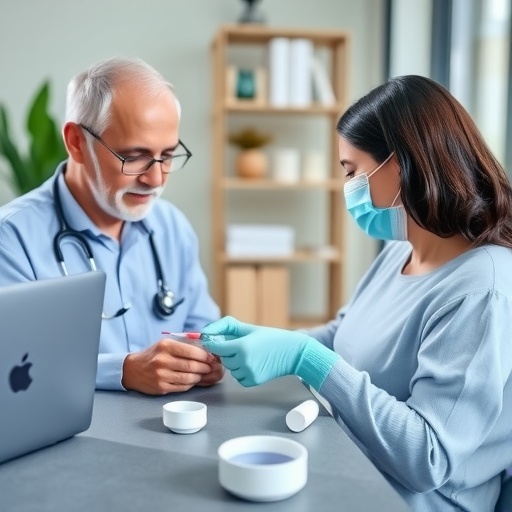
Breast cancer patients receiving injectable gonadotropin-releasing hormone agonist therapy may be able to shift a significant part of their treatment from the clinic to the home, according to a study published in JAMA Network Open. The investigation evaluated a home injection model supported by telemedicine and found that the approach reduced the practical burden of treatment for many participants. Patients reported greater convenience and time savings, while most of those who completed the home-injection pilot elected to continue receiving their medication outside the traditional clinical setting. The findings suggest that remote support could help redesign a time-intensive component of cancer care, although financial and insurance-related barriers may limit who can benefit.
Gonadotropin-releasing hormone agonists, often called GnRH agonists, are medications that alter signaling between the brain, pituitary gland, and reproductive organs. In breast cancer care, they may be used to suppress ovarian function in patients whose tumors are sensitive to estrogen, particularly before natural menopause. These drugs are administered by injection and may require recurring visits to a clinic, where trained personnel prepare and deliver the medication. Although each appointment may be relatively brief, the cumulative burden can be substantial when patients must arrange transportation, take time away from work or caregiving, wait for treatment, and return home afterward. For patients already undergoing surgery, chemotherapy, radiation, endocrine therapy, or frequent monitoring, repeated injection visits can add another layer of logistical strain.
The home-based model studied by Erin M. Bange, MD, MSCE, and colleagues combined patient self-administration or home administration with telemedicine guidance. Rather than eliminating clinical oversight, the model moved selected parts of the process into the patient’s living environment while preserving access to professional instruction and follow-up. Telemedicine can be used to explain the medication schedule, review injection technique, assess whether a patient is comfortable handling the device or medication, and address questions about side effects. This type of hybrid care is technically different from simply mailing a prescription to a patient: it requires coordination among clinicians, pharmacies, insurers, and patients, as well as systems for confirming that the drug is obtained, stored, prepared, and administered correctly.
The study’s central outcome was not only whether patients could complete an injection at home, but whether the arrangement improved the experience of treatment. Participants described convenience and time savings as major advantages. A home injection may eliminate travel to an oncology center and reduce the hours spent navigating appointments, registration, clinical preparation, and post-treatment discharge. For people living far from cancer centers, those benefits may be especially meaningful. The model may also help patients maintain employment, manage family responsibilities, and avoid the physical and emotional disruption associated with repeated medical visits. In cancer care, these practical factors are not merely matters of comfort; they can affect how patients perceive treatment, engage with care teams, and sustain long-term therapy.
Most patients who completed the pilot chose to continue home injections after the initial evaluation. That decision provides an important signal about acceptability because it reflects a preference made after patients had experienced the process rather than a hypothetical opinion gathered before treatment. Continued participation may indicate that patients found the training adequate, the technology usable, and the remote clinical support responsive to their needs. It also suggests that home administration can be integrated into ongoing care for at least some individuals receiving injectable hormonal therapy. However, the decision to continue should not be interpreted as proof that the model is appropriate for everyone. Patients differ in health literacy, dexterity, vision, anxiety about needles, home circumstances, language needs, and access to reliable internet or private space for telemedicine visits.
The technical and clinical safeguards surrounding home injection are therefore essential. A successful program must establish that the patient understands the dosing schedule and can identify when assistance is needed. Medication storage requirements, preparation steps, injection-site selection, needle disposal, and management of local reactions must be explained clearly. Patients also need instructions for recognizing symptoms that warrant urgent medical attention, although many injection-related concerns may be handled through scheduled or on-demand telemedicine contact. Clinicians may need to document training, verify administration, monitor adherence, and provide a pathway for in-person evaluation when remote assessment is insufficient. These requirements illustrate why the study’s model is best understood as telemedicine-enabled oncology care rather than a simple transfer of responsibility from professionals to patients.
The investigators also identified obstacles that could prevent widespread adoption. Insurance denials and higher copayments for at-home administration may make the home option more expensive than receiving the same therapy in a clinic. This creates a paradox in which a treatment pathway that saves patients time may increase their direct financial burden. Coverage policies can be complicated because the medication, injection service, pharmacy dispensing, telemedicine support, and home administration may be classified under different benefit structures. A patient may therefore face different costs depending on where the drug is obtained and who administers it. Without payment models that recognize the value of remote clinical support and the patient’s time, home-based care could remain available mainly to those with favorable insurance, flexible schedules, stable internet access, or the resources to absorb unexpected expenses.
The findings arrive as oncology practices continue to test which elements of cancer care can be delivered safely beyond hospital and clinic walls. Remote monitoring, virtual consultations, specialty pharmacy services, and patient-directed treatment are expanding, but each approach must be evaluated according to the medication involved and the risks associated with missed or incorrect doses. GnRH agonist therapy presents a useful setting for this work because it is administered intermittently and follows a predictable treatment plan, yet it remains part of a complex cancer regimen requiring clinical coordination. The home model could potentially reduce congestion in infusion and injection clinics, allowing staff time to be redirected toward patients who need hands-on care. Any such operational benefit, however, should be considered alongside the need to preserve equity and avoid shifting hidden work onto patients or family members.
The study does not establish that every breast cancer patient should receive GnRH agonist injections at home, nor does it remove the need for individualized medical judgment. Instead, it provides evidence that a carefully supported option can reduce treatment burden and earn strong patient acceptance among those able to complete the pilot. Future research will need to clarify which patient characteristics predict successful home administration, how training should be delivered, whether virtual support remains effective over longer periods, and how home treatment affects adherence, safety events, quality of life, and total costs. Larger evaluations may also determine whether the model works across different health systems and communities, including patients with limited digital access or greater medical complexity.
For now, the results point toward a broader principle in cancer care: convenience can be a clinically relevant outcome when treatment extends over months or years. Moving an injection from the clinic to the home does not change the underlying biology of hormone suppression, but it can change the daily reality of receiving therapy. The challenge is to ensure that such flexibility is supported by reliable education, responsive telemedicine, appropriate clinical oversight, and insurance coverage that does not penalize patients for choosing home care. If those conditions are met, telemedicine-supported injection programs could become a practical way to make long-term breast cancer treatment less disruptive while preserving the safety and continuity of specialist care.
Web References: https://jamanetwork.com/channels/womens-health
References: Bange EM et al. JAMA Network Open. doi:10.1001/jamanetworkopen.2026.29406
Cite Scienmag News
Nathaniel Bowman. (August 21, 2026). Telemedicine-Supported Home Injections Offer New Care Model for Breast Cancer Patients. Scienmag. https://scienmag.com/telemedicine-supported-home-injections-offer-new-care-model-for-breast-cancer-patients/
Nathaniel Bowman. "Telemedicine-Supported Home Injections Offer New Care Model for Breast Cancer Patients." Scienmag, 21 August 2026, https://scienmag.com/telemedicine-supported-home-injections-offer-new-care-model-for-breast-cancer-patients/. Accessed 4 September 2026.
Nathaniel Bowman. "Telemedicine-Supported Home Injections Offer New Care Model for Breast Cancer Patients." Scienmag. August 21, 2026. https://scienmag.com/telemedicine-supported-home-injections-offer-new-care-model-for-breast-cancer-patients/


