Graduate dietetics students who delivered free virtual nutrition counseling to people living with chronic conditions came away convinced the experience sharpened their skills, according to a qualitative study conducted at the University of North Florida. In interviews carried out in 2023, all fourteen participants said the program improved their ability to apply nutrition knowledge to real-life situations, and thirteen of the fourteen, or 92.9 percent, reported stronger counseling skills. The findings come from a single university program and rest entirely on students’ self-reported experiences, but they offer a detailed picture of how future dietitians perceive training in a rapidly virtualizing corner of healthcare.
The study, published in the journal Food, Nutrition and Health, examined a community-based telehealth counseling program that ran from Fall 2019 through Fall 2022. Second-year graduate students in the university’s combined master’s and dietetic internship program or its online master’s program provided free counseling to local uninsured, low-income working individuals in Northeast Florida. The program partnered with Volunteers in Medicine, a non-profit free clinic serving people with at least one of three chronic conditions: hypertension, type 2 diabetes or obesity. Students participated as part of their dietetic internship rotations or a project class, and all had completed nutrition counseling coursework before taking part.
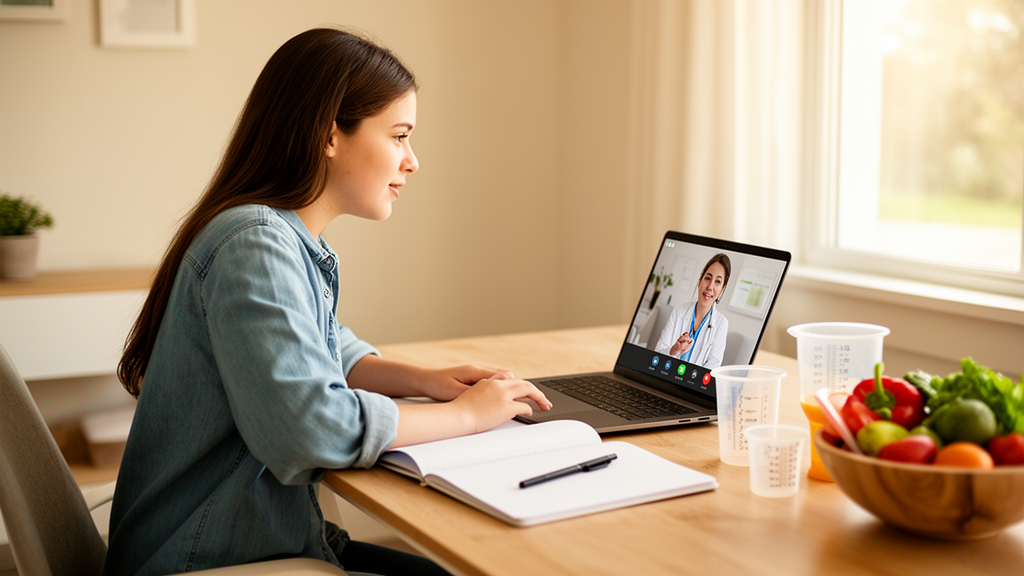
Before their first semester in the program, students completed a standardized telehealth training and orientation covering navigation of the doxy.me video platform, telehealth etiquette and professional communication, strategies for building rapport and delivering patient-centered counseling virtually, troubleshooting common technical problems, and documentation expectations. They also received the Academy of Nutrition and Dietetics’ telehealth quick guide, webinar recordings and additional counseling resources. With faculty oversight, students used a standardized counseling guide built on the ADIME documentation format, principles of motivational interviewing and SMART goal setting. Sessions took place over the doxy.me platform, with occasional telephone sessions when internet connectivity or other technical issues prevented video visits.
For the research itself, the team contacted all twenty-five former program students by email in April 2023. Fourteen met the inclusion criteria, which required participation in at least one semester of the program and completion of at least three telehealth counseling sessions, and agreed to be interviewed. All fourteen were female, and the majority identified as Caucasian, at 65 percent, followed by Hispanic and African American participants at 14 percent each and Asian participants at 7 percent. Thirty-six percent had participated in the program for one semester, half for two semesters, and the remainder for three or four semesters. Five participants were already registered dietitians at the time of their program participation. Semi-structured individual interviews, conducted over Zoom between April and May 2023, lasted thirty minutes to one hour and covered four areas: perceived program effectiveness, benefits to academic and professional growth, experiences and opinions about telehealth, and social responsibility and public service.
Two doctoral-level independent coders manually reviewed the transcripts using the four predefined thematic categories, without qualitative analysis software, and a third experienced investigator resolved coding discrepancies and finalized the themes. The analysis produced fifteen themes across the four categories. Beyond the near-universal reports of improved counseling skills and knowledge application, every student said the experience enhanced their sense of social responsibility, and five students, or 35.7 percent, reported increased cultural awareness. Students also credited the program with improving critical thinking, time management, active listening and patient-centered goal making, along with giving them experience using telehealth platforms, adapting nutrition education for virtual delivery, troubleshooting technology and communicating effectively at a distance. Exposure to ADIME documentation and SMART goal development further supported their professional development, they reported.
On the question of whether the counseling actually helped the people being served, students identified when individuals successfully met their nutrition goals in thirteen of the fourteen accounts. Even when a long-term health goal had not been reached, students described small behavioral changes such as increased fruit and vegetable intake, more physical activity, reading nutrition facts labels and avoiding sugary beverages. One student estimated that roughly three-quarters of her clients had experienced some level of success, measured in changed habits and a more intuitive way of eating. Students also believed that individuals with a support system were more likely to succeed, and seven students said the program and its faculty leader were available to help with difficult participant situations.
The program was not without friction. The most frequently cited barriers were technological difficulties, reported by thirteen students, and difficulty contacting and scheduling visits, reported by eleven, or 78.6 percent. Frequent no-shows, difficulty finding time to complete sessions and the absence of follow-up appointments after an initial assessment also frustrated students, who believed participant success would improve with follow-up visits. Half of the students, seven in total, said the in-person connection component was missing, making it harder to educate through a screen and to build rapport with clients. One student described bringing visual teaching materials to sessions only to find them difficult to display through the camera, leaving a sense of disconnect with the person she was trying to help.
Students saw genuine strengths in the telehealth format alongside those drawbacks. Eleven students, or 78.6 percent, cited increased access and reduced barriers as benefits, and one described the flexibility of meeting clients at seven in the morning or eight at night. Five students also reported difficulty maintaining participant engagement and focus during virtual appointments, noting that distractions and competing demands in the home could interfere with counseling. Knowledge of community resources emerged as another important factor: ten students said that familiarity with local food banks, food pantries and community assistance programs enhanced their ability to provide individualized counseling, particularly because telehealth often limited direct access to support services.
The social dimension of the program left a marked impression. All fourteen students said meaningful public service was important to them and that volunteering provided a sense of fulfillment, and every student said participation solidified a desire to pursue public health. Several said the experience helped them identify the area of dietetics or the population they wanted to work with, and some called for more volunteer work to be woven into the nutrition curriculum itself. The authors note that this theme was not specific to the telehealth modality, but that participating in the service-learning program nonetheless shaped students’ commitment to serving underserved populations. Five participants were dietitians at the time of the program, which the authors suggest may have muted their perception of professional benefits compared with students who had little or no prior experience.
The authors state that, to their knowledge, this is the first study to examine the impact of telehealth nutrition counseling programs on student providers in nutrition and dietetics, and they argue that more universities would benefit from exposing students to telehealth counseling before clinical rotations. They are candid about the study’s limits: the findings rest on self-reported interviews subject to bias, participation was voluntary and may have attracted students with stronger opinions, the all-female sample and single-university setting limit transferability, the perspectives of the individuals receiving counseling were not included, and participants’ prior telehealth experience was not assessed. The authors recommend that future programs set a minimum participation timeframe, build in continuity of care between semesters, and study larger cohorts over the long term. They conclude that dietetic students who participated improved their perception of their ability to counsel individuals, and that future studies should examine longer program durations and strategies for further integrating telehealth training into nutrition counseling curricula to prepare students for current practice environments.
Subject of Research: Dietetic students' experiences providing telehealth nutrition counseling to individuals with chronic conditions
Article Title: Dietetic students’ experiences with telehealth nutrition counseling – a qualitative research study
Article References: Fiorio, M., Cruz, D., Rodriguez, J., Patterson, K., & Yu, Z. (2026). Dietetic students’ experiences with telehealth nutrition counseling – a qualitative research study. Food, Nutrition and Health, 3(1), Article 36. https://doi.org/10.1007/s44403-026-00082-z
Image Credits: AI Generated
DOI: 10.1007/s44403-026-00082-z
Keywords: telehealth, nutrition counseling, dietetics education, qualitative research, graduate students, chronic disease, service-learning, motivational interviewing, counseling skills, University of North Florida, health professions training, virtual care
Cite Scienmag News
Daisy Hatcher. (October 28, 2026). Telehealth Nutrition Counseling Builds Skills and Confidence in Dietetic Students. Scienmag. https://scienmag.com/telehealth-nutrition-counseling-builds-skills-and-confidence-in-dietetic-students/
Daisy Hatcher. "Telehealth Nutrition Counseling Builds Skills and Confidence in Dietetic Students." Scienmag, 28 October 2026, https://scienmag.com/telehealth-nutrition-counseling-builds-skills-and-confidence-in-dietetic-students/. Accessed 28 October 2026.
Daisy Hatcher. "Telehealth Nutrition Counseling Builds Skills and Confidence in Dietetic Students." Scienmag. October 28, 2026. https://scienmag.com/telehealth-nutrition-counseling-builds-skills-and-confidence-in-dietetic-students/