


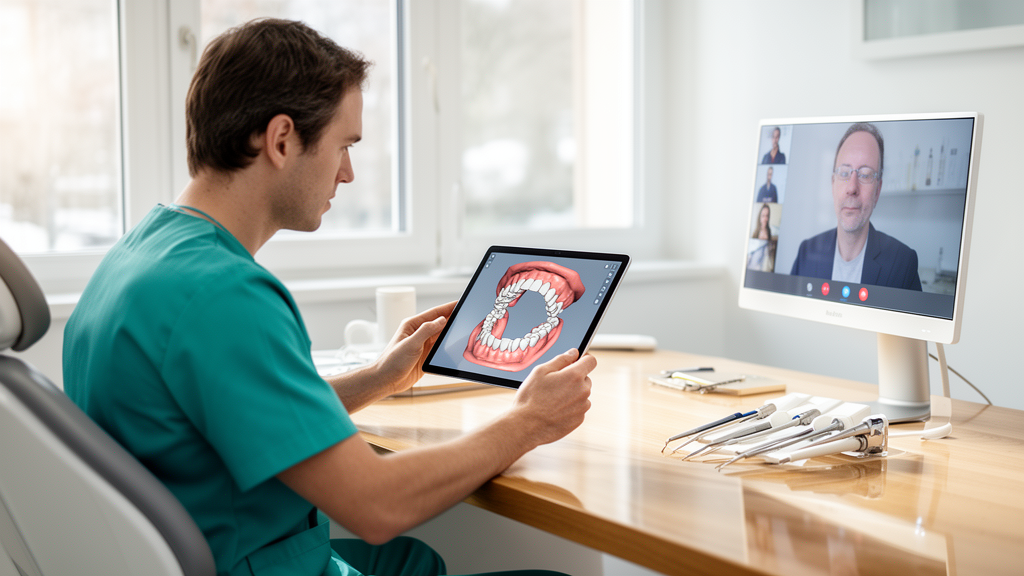
An editorial published in Frontiers in Oral Health provides a comprehensive synthesis of recent research on teledentistry, highlighting that the successful integration of digital oral healthcare depends on more than just technological availability. The article, authored by Maha El Tantawi, Moréniké Oluwátóyìn Foláyan, Rodrigo Mariño, and Nicolas Giraudeau, serves as an introduction to a Research Topic that examines the clinical, professional, and health-system challenges associated with remote dental care. The authors argue that while teledentistry offers a pathway to address uneven access to oral healthcare, its sustainable implementation requires a complex alignment of clinical evidence, workforce preparation, infrastructure, and supportive policy frameworks.
The editorial begins by establishing the context of oral health as a major public health challenge, noting that access to care is often hindered by geographic isolation, a shortage of professionals, financial constraints, and limited specialist availability. Teledentistry is defined broadly as the use of information and communication technologies to support oral healthcare, including remote consultation, screening, referral, and monitoring. The authors point out that the COVID-19 pandemic accelerated the adoption of these digital tools, demonstrating their potential to maintain patient communication and access when conventional services were disrupted. However, they caution that the mere existence of a digital tool does not guarantee improved care, emphasizing the need for rigorous evaluation of real-world outcomes.
At the clinical level, the editorial reviews contributions that investigate the practical application of teledentistry in diagnosis and specialist support. One study by Lamas-Lara et al. examined the use of smartphone photographs for caries detection, addressing whether images from widely available devices can provide dependable information for clinical decision-making. The authors note that factors such as image quality, acquisition protocols, diagnostic criteria, and reproducibility are critical to the reliability of such methods. They emphasize that evidence from this specific study must be interpreted within the context of its population and method, and that further research is necessary to prove reliable detection from photographs alone for other conditions.
Another clinical contribution by Flores-Hidalgo et al. described an institutional experience using teledentistry in oral and maxillofacial pathology during the pandemic. This work illustrated how remote communication and image sharing can facilitate specialist input, screening, triage, consultation, and referral when physical access is difficult. The editorial underscores a critical limitation: teledentistry should never delay in-person examination or further investigation when clinical findings are uncertain or concerning.
At the health systems level, the editorial highlights a study by El Tantawi et al. that examined teledentistry policies, programs, and implementation across 19 countries. The findings revealed substantial variation in policy support and program maturity, with some countries reporting established programs while others relied on pilots or informal arrangements. The authors argue that these variations underline the importance of legislation, financing, professional training, and integration into existing health services. They stress that privacy, data protection, professional accountability, reimbursement, and governance are not peripheral administrative concerns but fundamental determinants of whether teledentistry can become a trusted component of care.
The editorial also discusses a pilot teledentistry model evaluated by Beltrán et al., which used satellite communication to reach older adults in remote areas with limited conventional connectivity. This study highlighted how alternative communication infrastructure and service organization can extend oral healthcare to populations otherwise excluded from digital services. However, the authors note that the practical value of such remote assessments ultimately depends on the existence of clear referral pathways, adequate treatment capacity, affordability, and continuity of care.
Workforce development is identified as another critical pillar for successful teledentistry implementation. A study by Falah et al. assessed dentists’ knowledge and attitudes towards teledentistry, reporting generally favorable views alongside reservations about its applicability across different dental specialties. The editorial suggests that confidence in remote decision-making, familiarity with digital workflows, perceptions of diagnostic limitations, and clarity about clinical responsibility all shape professional practice. The authors advocate for workforce development strategies that support these aspects, rather than simply focusing on moving conventional tasks onto digital platforms.
Across the various contributions reviewed, several priorities for future research and implementation emerge. The editorial calls for evaluations that move beyond technical feasibility and professional attitudes to examine patient outcomes, continuity of care, cost, and effects on inequalities in access to care. It emphasizes that implementation should be supported by context-appropriate policy, sustainable financing, infrastructure, and continuing professional development. Furthermore, research should identify who benefits from teledentistry, who remains underserved, and how services can respond to the specific needs and preferences of patients and communities.
Equity is a central theme in the editorial, with the authors noting that while digital interventions may reduce geographical barriers, they can also create new inequalities related to connectivity, digital literacy, disability, language, and affordability. The editorial highlights the importance of addressing the digital divide to safeguard the digital health rights of underserved populations. It mentions platforms such as the first digital oral health conference dedicated to low- and middle-income countries, held at Alamein International University, as examples of initiatives that foster dialogue on the challenges and opportunities for equitable digital oral health solutions. The authors argue that addressing these challenges requires collaboration among oral health professionals, researchers, policymakers, technology developers, service managers, and communities.
The sustainability of digital oral health is also addressed, with the authors noting that while teledentistry may reduce travel-related emissions, its reliance on digital infrastructure, data transmission, and electronic devices has environmental implications. Assessing these effects is essential to ensure that digital oral health innovations contribute to environmentally sustainable health systems. The editorial concludes by stating that the promise of teledentistry lies not merely in delivering consultations remotely, but in improving the organization and accessibility of oral healthcare. Progress will depend on the integration of these technologies into health systems and the rigorous evaluation of their real-world outcomes.
The authors emphasize that aligning technological innovation with these priorities can help establish teledentistry as an effective and sustainable component of oral healthcare worldwide. They argue that the value of teledentistry depends not only on what technology can do, but also on how it is used, by whom, and within which service and policy environments.
The Research Topic, Advances with the Practice of Teledentistry, brings together contributions from around the world to examine these challenges at multiple levels. The authors note that the diversity of teledentistry approaches demonstrated in the contributions underscores the importance of aligning clinical evidence with professional capacity, infrastructure, policy, and patient needs.
Subject of Research: A synthesis of research on the clinical, professional, and health-system challenges of implementing teledentistry.
Article Title: Editorial: Advances with the practice of teledentistry
Article References: El Tantawi, M., Foláyan, M. O., Mariño, R., & Giraudeau, N. (2026). Editorial: Advances with the practice of teledentistry. Frontiers in Oral Health, 7, Article 2040108. https://doi.org/10.3389/froh.2026.2040108
Image Credits: AI Generated
DOI: 10.3389/froh.2026.2040108
Keywords: teledentistry, oral health, digital health, health equity, remote care, public health, dental policy, health systems, workforce development, digital divide, Editorial, Advances
Cite Scienmag News
Phoebe Ingram. (November 10, 2026). Teledentistry Research Topic Examines Global Implementation Barriers. Scienmag. https://scienmag.com/teledentistry-research-topic-examines-global-implementation-barriers/
Phoebe Ingram. "Teledentistry Research Topic Examines Global Implementation Barriers." Scienmag, 10 November 2026, https://scienmag.com/teledentistry-research-topic-examines-global-implementation-barriers/. Accessed 10 November 2026.
Phoebe Ingram. "Teledentistry Research Topic Examines Global Implementation Barriers." Scienmag. November 10, 2026. https://scienmag.com/teledentistry-research-topic-examines-global-implementation-barriers/




