In the crowded landscape of global health policy, the people who arguably have the most at stake—patients themselves—are often the least equipped to navigate the technical machinery that determines which treatments get funded, which screening programs expand, and which voices are heard in ministry conference rooms. A new quasi-experimental study from Chile suggests that this gap is not inevitable. Researchers at the Center for Global Intercultural Health at Universidad del Desarrollo, working with funding from the Center for Cancer Prevention and Control, designed and tested an educational and empowerment program called “Lidera con Ciencia”—Lead with Science—aimed squarely at leaders of civil society organizations devoted to cancer care and advocacy. The results, published in the International Journal for Equity in Health, show that a carefully structured training program can measurably raise the scientific literacy of patient leaders, with gains of roughly ten percent in overall knowledge attributable to the intervention alone.
The rationale for the study is rooted in a stubborn paradox of Latin American health systems. Chile has a national cancer plan and legally enshrined universal health coverage, anchored by the public National Health Fund, known as FONASA, and a parallel market of private health insurers called ISAPREs. Yet access to timely, high-quality cancer care remains uneven, and outcomes vary dramatically across socioeconomic lines. The research team argues that one underused lever for closing these gaps is social participation: when organized patient groups understand public health principles, evidence-based medicine, and health technology assessment, they can advocate more credibly for their constituencies and claim a legitimate seat in decision-making processes. Cancer, which imposes a heavy burden of disability-adjusted life years across Latin America and the Caribbean, is precisely the kind of issue where such empowered civic voices could shift policy priorities.
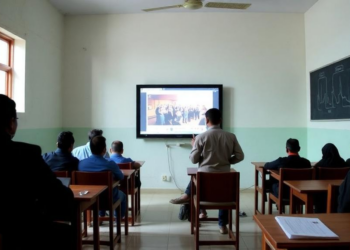
What distinguishes this intervention from a standard workshop is that it was built through participatory needs-prioritization. Rather than presuming what patient leaders needed to learn, the investigators asked them. The curriculum that emerged covered core concepts of public health and epidemiology, the logic of evidence-based medicine, and the fundamentals of health technology assessment, known in Spanish as ETESA. Health technology assessment is the formal discipline through which governments weigh the clinical benefits, costs, and societal value of new drugs, devices, and screening tools—a process that in most countries happens in committee rooms far removed from patient experience. Teaching advocates the vocabulary and reasoning of that process is, in effect, handing them a key to a door that has historically been closed.
The study’s design reflects an honest compromise between scientific rigor and real-world logistics. True randomized controlled trials, the gold standard for causal inference, are often impractical for community interventions, so the team used a quasi-experimental design. Fifty-six leaders of cancer-related civil organizations enrolled, with twenty-eight assigned to the intervention group and twenty-eight to a control group. Every single participant completed the program and all assessments—a one hundred percent retention rate that speaks both to the demand for this kind of training and to the trust the researchers had built within the community. The hybrid training, blending in-person and remote sessions, ran between April and June of 2025.
Measurement happened through a self-administered online questionnaire administered before and after the intervention, covering knowledge, self-perceived efficacy in citizen participation, and perceptions of leadership. The analytical centerpiece was a difference-in-differences approach, a statistical technique borrowed from economics that compares the change over time in the intervention group with the change over time in the control group. By differencing out whatever knowledge gains might have occurred anyway—from general exposure to health information, for instance—this method isolates the effect that can plausibly be attributed to the training itself. The researchers also used generalized estimating equations to handle the repeated measures properly, and they controlled for age, gender, and place of residence to ensure the findings were not driven by demographic differences between the groups.
The headline number is striking. The exponentiated difference-in-differences estimate of approximately 1.105 translates into an average increase of 10.5 percent in total knowledge scores attributable to the intervention, independent of who the participants were or where they lived. When the team broke the results down by domain, a clearer picture emerged: the largest and most statistically robust gains appeared on questions testing evidence-based medicine, where the difference-in-differences estimate reached 2.47 with a p-value of 0.007—a conventional threshold for statistical significance. Other sections of the questionnaire, including measures of self-perceived efficacy and leadership perception, did not shift significantly in the quantitative analysis. That pattern suggests the program was most effective where it was most concrete: teaching people how scientific evidence is generated, appraised, and applied to health decisions.
Numbers alone, however, do not capture what happened in the room. The researchers complemented their survey data with two focus groups, one conducted immediately after the intervention and another three months later. Participants described substantial learning gains, particularly in technical domains, but they also reported something harder to quantify: a strengthened sense of empowerment and a heightened recognition of their own social roles as advocates. In effect, the training did not just add facts; it changed how these leaders saw themselves in relation to the health system. For organizations that often operate on shoestring budgets and volunteer labor, being treated as capable partners in technical conversations appears to have been transformative in its own right.
The findings sit comfortably within a broader body of evidence on participatory and community-based health education, which has repeatedly shown that meaningful learning and lasting behavioral change are more likely when interventions are tailored to the sociocultural context of the people they serve. The Chilean team is explicit on this point: generic curricula imported from other settings are unlikely to land with the same force as content co-designed with the target community. Their participatory needs-prioritization process was not a procedural nicety but, in their assessment, a critical ingredient for maximizing impact. This aligns with a growing movement in global health that treats communities not as passive recipients of services but as co-producers of health policy.
There are, of course, limits to what one study can establish. Quasi-experimental designs, however well executed, cannot fully rule out confounding in the way that randomization can, and the sample of fifty-six leaders, while achieving perfect retention, is modest. Self-administered questionnaires depend on honest and accurate self-report. The non-significant results on efficacy and leadership measures raise open questions about whether longer or more intensive programs are needed to move those outcomes, or whether different instruments are required to capture changes that participants clearly described in the focus groups. The study was independently conducted and funded through Chile’s national research infrastructure, with ethics approval from the university’s institutional review board and signed informed consent from all participants, lending credibility to the process even as these methodological caveats stand.
Still, the implications reach well beyond Chile. Patient organizations worldwide are increasingly being invited—or demanding to be invited—into decisions about drug pricing, screening guidelines, and research priorities. The Chilean experiment offers a template: identify the leaders already doing the work, ask them what they need to know, teach them the technical language of evidence and health technology assessment, and measure whether it works. If a ten percent knowledge gain, concentrated precisely in the domain of evidence-based medicine, can be replicated at scale, the long-term payoff could be health systems that hear more clearly from the people they exist to serve. For a field where equity gains have proven stubbornly hard to engineer, teaching advocates to lead with science looks like one of the more promising, and refreshingly testable, strategies on the table.
Subject of Research: An educational and empowerment intervention for leaders of cancer patient civil organizations in Chile
Article Title: “Lidera con Ciencia” [Lead with Science]: a quasi-experimental educational and empowerment intervention for leaders of cancer patient civil organizations
Article References: “Lidera con Ciencia” [Lead with Science]: a quasi-experimental educational and empowerment intervention for leaders of cancer patient civil organizations. (n.d.). https://doi.org/10.1186/s12939-026-03063-y
Image Credits: AI Generated
DOI: 10.1186/s12939-026-03063-y
Keywords: cancer, Chile, health equity, patient advocacy, health technology assessment, evidence-based medicine, quasi-experimental study, empowerment, civil society organizations, citizen participation, public health education, difference-in-differences
Cite Scienmag News
Nathaniel Bowman. (October 13, 2026). Teaching Cancer Advocates the Science of Evidence Boosts Their Power to Push for Better Care. Scienmag. https://scienmag.com/teaching-cancer-advocates-the-science-of-evidence-boosts-their-power-to-push-for-better-care/
Nathaniel Bowman. "Teaching Cancer Advocates the Science of Evidence Boosts Their Power to Push for Better Care." Scienmag, 13 October 2026, https://scienmag.com/teaching-cancer-advocates-the-science-of-evidence-boosts-their-power-to-push-for-better-care/. Accessed 13 October 2026.
Nathaniel Bowman. "Teaching Cancer Advocates the Science of Evidence Boosts Their Power to Push for Better Care." Scienmag. October 13, 2026. https://scienmag.com/teaching-cancer-advocates-the-science-of-evidence-boosts-their-power-to-push-for-better-care/