


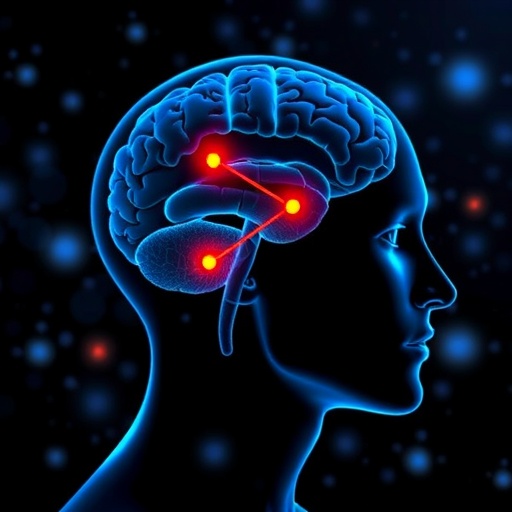
In a groundbreaking development that could reshape the landscape of treatment for metabolic and mood disorders, researchers have unveiled compelling evidence that transcutaneous auricular vagus nerve stimulation (taVNS) holds promise in alleviating depressive-like symptoms alongside metabolic dysfunction in Type 2 diabetic depression (T2DD) mouse models. This innovative study not only underscores the therapeutic potential of non-invasive neuromodulation but also elucidates a critical neuromechanistic pathway involving hypothalamic serotonin (5-HT) signaling, invigorating hope for integrative treatment strategies in comorbid metabolic and psychiatric conditions.
Type 2 diabetes mellitus (T2DM) frequently coexists with depression, forming a complex clinical picture known as Type 2 diabetic depression (T2DD), which profoundly impairs quality of life and complicates disease management. Traditional pharmacotherapy often faces hurdles due to side effects and suboptimal responses, spurring the scientific community to explore alternative interventions. Within this context, the vagus nerve, a critical conduit between the brain and peripheral organs, emerges as a compelling target due to its pivotal role in autonomic regulation, inflammation modulation, and mood regulation.
The vagus nerve’s auricular branch, accessible via the external ear, enables a non-invasive approach—transcutaneous auricular vagus nerve stimulation—delivering electrical pulses capable of influencing central nervous system activity. The study spearheaded by Zhang et al. meticulously investigated the efficacy of taVNS in T2DD mice, revealing marked improvements not only in depressive-like behaviors but also in metabolic profiles including glucose regulation and insulin sensitivity. These findings demonstrate that the modulation of vagus nerve activity transcends mere symptomatic relief, impacting underlying pathophysiological mechanisms.
Central to the observed therapeutic effects is the modulation of the hypothalamic serotonin system, a neurotransmitter network integral to mood regulation and energy homeostasis. The researchers provided evidence that taVNS enhances 5-HT signaling within the hypothalamus, a brain region pivotal for orchestrating neuroendocrine responses and metabolic balance. Enhanced serotonergic transmission appears to mediate both the antidepressant and metabolic benefits, suggesting a dual-action mechanism that addresses both facets of T2DD simultaneously.
In dissecting the neurobiological underpinnings, the study employed rigorous behavioral assays, biochemical analyses, and molecular techniques to quantify alterations in serotonergic receptor expression and signaling cascades. The data reveal upregulation of serotonin receptor subtypes implicated in mood enhancement and metabolic control, alongside downstream signaling molecules that govern neuronal plasticity and metabolic pathways. This integrated approach provides a comprehensive view of how taVNS exerts its multifaceted effects.
The metabolic improvements observed extend beyond glucose metabolism, encompassing lipid profiles and systemic inflammatory markers, which are known contributors to both diabetes and depressive pathology. By mitigating inflammation and restoring metabolic equilibrium, taVNS appears to recalibrate systemic physiological networks that are dysregulated in T2DD. This holistic benefit highlights the potential of neuromodulation therapies to target interconnected disease axes rather than isolated symptoms.
Furthermore, the translational relevance of these findings cannot be overstated. The use of a non-invasive modality like taVNS offers an attractive alternative to invasive vagus nerve stimulation or pharmacological treatments, minimizing risk and enhancing patient compliance. With mounting evidence supporting the safety and effectiveness of taVNS, its application in clinical settings for T2DD patients becomes increasingly feasible.
The implications extend into the realm of personalized medicine, where neuromodulation parameters may be tailored to individual neurochemical profiles and disease trajectories. Such precision approaches could optimize therapeutic outcomes and minimize adverse effects, revolutionizing management strategies for complex disorders marked by intertwined metabolic and neuropsychiatric components.
Moreover, this study opens avenues for exploring taVNS in other comorbid conditions where neurotransmitter dysregulation and metabolic impairments intersect, such as obesity-related mood disorders, neurodegenerative diseases, and chronic inflammatory states. The modular nature of neuromodulation techniques allows for adaptation across diverse clinical contexts, promising broad-spectrum impact.
While the data are compelling, further research is warranted to delineate long-term effects, optimal stimulation protocols, and potential translational challenges in human populations. Clinical trials designed to evaluate efficacy, safety, and mechanistic biomarkers are essential to corroborate these preclinical findings and pave the way for regulatory approval and widespread clinical adoption.
The study also invites a deeper philosophical consideration of brain-body communication pathways in health and disease. The bidirectional dialogue mediated by the vagus nerve underscores the inseparability of neurological and systemic health, encouraging interdisciplinary collaboration among neuroscientists, endocrinologists, and psychiatrists to refine holistic treatment paradigms.
The integration of advanced neuroimaging and omics technologies in future investigations may further unravel the complex networks and molecular signatures influenced by taVNS. Such insights could enhance our understanding of individual variability in treatment response and identify novel therapeutic targets within neural-metabolic interfaces.
In summary, the pioneering research led by Zhang and colleagues spotlights transcutaneous auricular vagus nerve stimulation as a potent modulator of hypothalamic 5-HT signaling, effectively mitigating depressive-like and metabolic dysfunction in T2DD mice. This convergence of neuromodulation and metabolic psychiatry heralds a new paradigm in treating multifaceted disorders, fostering synergy between non-invasive technology and neurochemical science.
As the scientific community steps forward with enthusiasm, this study serves as a beacon illuminating the path toward innovative, efficacious, and patient-friendly interventions for the growing population burdened by diabetes and depression. Transcending traditional boundaries, taVNS exemplifies the potential within the nervous system’s elegant circuitry to restore balance and health through precise, targeted stimulation.
The exciting frontier unveiled by this research not only advances fundamental knowledge but also promises tangible improvements in human health outcomes. Continued exploration and clinical translation of taVNS could ultimately transform the therapeutic landscape, offering renewed hope to millions grappling with the debilitating duality of metabolic and mood disorders.
With the advent of such integrative approaches, the future of medicine appears poised to embrace the complexity of human physiology, leveraging technological innovation to harmonize mind and body in a singular pursuit of wellbeing.
Cite Scienmag News
Glenn Wilkins. (June 23, 2026). taVNS Improves Depression and Metabolism via Hypothalamic 5-HT. Scienmag. https://scienmag.com/tavns-improves-depression-and-metabolism-via-hypothalamic-5-ht/
Glenn Wilkins. "taVNS Improves Depression and Metabolism via Hypothalamic 5-HT." Scienmag, 23 June 2026, https://scienmag.com/tavns-improves-depression-and-metabolism-via-hypothalamic-5-ht/. Accessed 4 September 2026.
Glenn Wilkins. "taVNS Improves Depression and Metabolism via Hypothalamic 5-HT." Scienmag. June 23, 2026. https://scienmag.com/tavns-improves-depression-and-metabolism-via-hypothalamic-5-ht/


