


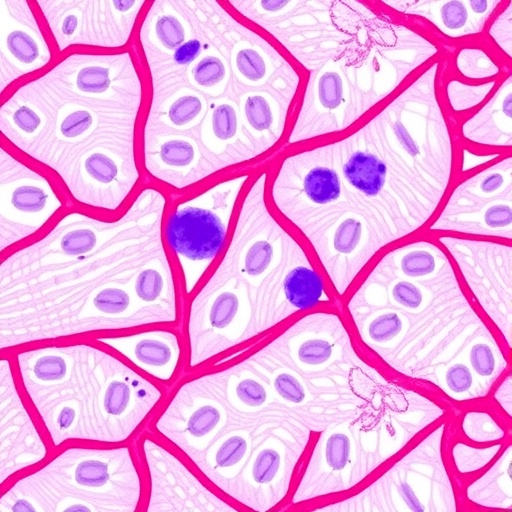
In a groundbreaking study published in Cell Death Discovery, researchers have unveiled a complex molecular pathway that may pave the way for transformative therapeutic strategies targeting Dupuytren’s contracture, particularly prevalent and more debilitating in diabetic patients. This novel insight elucidates the role of the S100A4–TLR4–TGF-β axis in the pathological progression of this fibrotic hand disorder, which causes permanent finger contracture, severely impairing hand function and quality of life.
Dupuytren’s contracture is characterized by the abnormal thickening and shortening of the palmar fascia, leading to progressive finger flexion deformities. Despite its prevalence among elderly populations, individuals with diabetes face a significantly elevated risk of developing more aggressive forms of the disease. This association has long puzzled clinicians and scientists, fostering an urgent need to decode the underlying molecular drivers that differentiate diabetic patients in disease severity and response to treatment.
The investigative team, spearheaded by Kato, Komura, Yanagihara, and collaborators, delved into the intricate signaling mechanisms within the affected tissues. Their research focused on three key molecular players: S100A4, Toll-like receptor 4 (TLR4), and transforming growth factor-beta (TGF-β). Each of these components plays pivotal roles in inflammation, fibrogenesis, and immune modulation, yet their interplay in Dupuytren’s contracture remained unexplored until now.
S100A4, also known as fibroblast-specific protein 1, is widely recognized for its involvement in cellular motility, fibrosis, and metastasis. The team demonstrated that elevated expression of S100A4 in the palmar fascia of diabetic patients correlates with increased fibroblast activation and extracellular matrix production, hallmark features of fibrosis. This protein appears to act as a crucial upstream regulator, initiating pathological changes through its interaction with TLR4.
TLR4, a pattern recognition receptor traditionally associated with innate immunity and pathogen recognition, emerges in this study as a key mediator of sterile inflammation within fibrotic tissues. Activation of TLR4 by endogenous ligands such as S100A4 triggers downstream signaling cascades that culminate in the augmentation of TGF-β production. This growth factor is a well-documented master regulator of fibrosis, promoting fibroblast proliferation, myofibroblast differentiation, and excessive collagen deposition.
The researchers employed advanced molecular techniques, including immunohistochemistry, gene expression profiling, and functional assays in both human tissue samples and diabetic animal models. These approaches allowed them to delineate the temporal and spatial dynamics of the S100A4–TLR4–TGF-β axis during disease progression. Importantly, inhibition of TLR4 signaling in diabetic models led to a marked reduction in fibrotic markers and improvement in digital mobility, highlighting the therapeutic potential of targeting this pathway.
Beyond mechanistic insights, the study offers compelling evidence for the involvement of diabetes-induced metabolic dysregulation in amplifying fibrogenic signaling pathways. Hyperglycemia and associated oxidative stress appear to exacerbate S100A4 overexpression, thereby heightening TLR4 activation and subsequent TGF-β-mediated fibrosis. This finding bridges a critical gap in understanding why diabetic patients experience more severe forms of Dupuytren’s contracture.
The implications of these discoveries are profound, especially in the context of developing disease-modifying treatments. Current management options for Dupuytren’s contracture are largely limited to surgical intervention or enzymatic collagenase injections, both of which do not address underlying molecular pathology and carry risks of recurrence. Targeting the S100A4–TLR4–TGF-β axis represents a paradigm shift toward precision medicine, aiming to halt or reverse fibrotic remodeling at its core.
Pharmaceutical development could focus on designing small-molecule inhibitors, neutralizing antibodies, or RNA interference strategies that specifically disrupt this signaling cascade. Such approaches might not only prevent the progression of contracture but could also enhance the efficacy of existing treatments when used in combination. Preliminary in vitro experiments indicate that blocking TLR4 impedes myofibroblast differentiation and mitigates collagen overproduction, setting the stage for clinical translation.
Additionally, the study underscores the importance of patient stratification in therapeutic trials. Diabetic status should be a critical consideration given the molecular distinctions elucidated by this research. Personalized interventions that account for the metabolic milieu may yield superior outcomes, reducing the high burden of disability associated with severe Dupuytren’s contracture in this subgroup.
The identification of S100A4 as a principal initiator within this axis also invites further exploration into its role as a potential biomarker. Non-invasive detection of S100A4 levels in serum or tissue could facilitate early diagnosis, monitor disease activity, and predict therapeutic response. Combining biomarker-driven diagnostics with targeted therapy offers a compelling future trajectory for managing fibrotic diseases beyond Dupuytren’s contracture.
Moreover, the study reveals broader implications for fibrotic disorders in other organs where similar pathways are implicated, such as pulmonary fibrosis, scleroderma, and diabetic nephropathy. The S100A4–TLR4–TGF-β axis could represent a ubiquitous pathogenic mechanism amenable to common therapeutic targeting, thereby magnifying the impact of this discovery across multiple chronic diseases.
Ethical considerations in clinical application are also addressed, emphasizing the need for thorough preclinical safety evaluations. Given TLR4’s role in innate immunity, therapeutic inhibition must be finely balanced to avoid impairing host defense mechanisms. The authors advocate for the development of selective modulators that minimize systemic immunosuppression while effectively curtailing fibrogenic signaling.
In conclusion, this pioneering research elucidates a previously unrecognized molecular pathway critically involved in the enhanced fibrotic response seen in diabetic Dupuytren’s contracture. By unraveling the crosstalk between S100A4, TLR4, and TGF-β, the study opens new avenues for targeted therapies that may ultimately alleviate suffering and restore function for millions affected worldwide.
As this work progresses toward clinical translation, it heralds a new era in the management of fibroproliferative diseases driven by metabolic and inflammatory dysregulation. The convergence of molecular biology, immunology, and clinical medicine embodied in this study exemplifies the forward momentum of contemporary biomedical research, promising hope for previously intractable conditions.
Cite Scienmag News
Ophelia Keating. (May 23, 2026). Targeting S100A4–TLR4–TGF-β Axis in Diabetic Dupuytren’s. Scienmag. https://scienmag.com/targeting-s100a4-tlr4-tgf-%ce%b2-axis-in-diabetic-dupuytrens/
Ophelia Keating. "Targeting S100A4–TLR4–TGF-β Axis in Diabetic Dupuytren’s." Scienmag, 23 May 2026, https://scienmag.com/targeting-s100a4-tlr4-tgf-%ce%b2-axis-in-diabetic-dupuytrens/. Accessed 4 September 2026.
Ophelia Keating. "Targeting S100A4–TLR4–TGF-β Axis in Diabetic Dupuytren’s." Scienmag. May 23, 2026. https://scienmag.com/targeting-s100a4-tlr4-tgf-%ce%b2-axis-in-diabetic-dupuytrens/


