


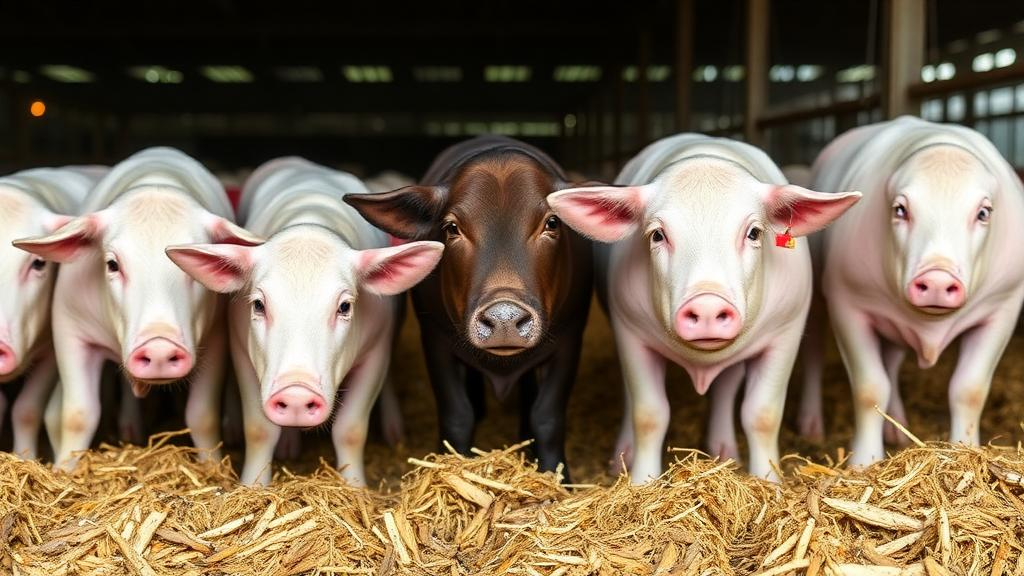
Plant-derived tannins, long dismissed as anti-nutritional factors that bind proteins and deter herbivores, are enjoying a scientific rehabilitation as feed additives for livestock. A new review published in Frontiers in Animal Science has systematically examined what happens when these polyphenolic compounds, extracted from natural plant by-products such as grape pomace or from trees including wattle, quebracho and chestnut, are added to concentrate and conserved feeds. The verdict is strikingly uneven across the animal kingdom: tannins appear to deliver substantial benefits to ruminants, while their value for monogastric animals such as pigs and poultry remains far more questionable.
The review, which analysed 72 studies in which tannin extracts or tannin-rich plant materials were added to concentrate or conserved feeds for ruminant animals, found that positive benefits were confirmed in 63 percent of cattle and cow studies and 54 percent of sheep and goat studies. These are not trivial numbers. In a field where feed additives routinely promise more than they deliver, a majority of trials reporting measurable gains for both beef and dairy cattle, as well as small ruminants, suggests that tannin supplementation has moved beyond the anecdotal stage and into the realm of reproducible nutritional intervention.
The mechanisms behind these benefits are chemically elegant. Tannins are polyphenolic compounds that bind proteins and other macromolecules through hydrogen bonding and hydrophobic interactions. In the rumen, this binding capacity can be harnessed rather than feared. By complexing with dietary proteins, tannins can slow the rate of protein degradation by rumen microbes, allowing more dietary protein to bypass ruminal fermentation and reach the small intestine, where it is digested and absorbed with greater efficiency. This shift in nitrogen metabolism reduces the excess ammonia that rumen microbes would otherwise convert and excrete, improving the efficiency with which dietary nitrogen becomes animal product rather than environmental pollutant.
Perhaps the most consequential benefit, however, lies in the rumen’s gas production. Methanogenesis, the microbial process by which archaea in the rumen convert hydrogen and carbon dioxide into methane, represents both a significant loss of dietary energy and a major source of agricultural greenhouse gas emissions. Tannins interfere with this process through multiple routes: they can directly inhibit methanogenic archaea, reduce the populations of protozoa that harbour methane-producing microbes in symbiotic association, and shift fermentation patterns toward pathways that produce less hydrogen gas as a by-product. The review identifies reduced methane emissions as one of the most likely benefits of tannin-containing diets for ruminants, a finding with obvious implications for the livestock sector’s climate footprint.
A second major benefit highlighted by the review concerns gut health, specifically the anthelmintic effect that certain tannins exert against gastrointestinal parasites. Condensed tannins in particular have been shown in numerous studies to reduce the establishment and fecundity of parasitic nematodes in the digestive tract of ruminants, offering a potential complementary tool in the face of growing anthelmintic resistance worldwide. For grazing and housed livestock alike, a feed additive that simultaneously improves protein utilisation, curbs methane output and lightens parasite burden represents a rare triple dividend in animal agriculture.
Yet the review is equally instructive about failure. In a substantial minority of ruminant studies, tannin supplementation produced no measurable benefit, and the authors identify several recurring reasons. The ‘wrong’ type or concentration of tannin is a primary culprit: hydrolysable tannins and condensed tannins differ fundamentally in structure and biological activity, and even within these broad classes, molecular weight and galloyl content vary enormously between sources such as chestnut, quebracho and grape pomace. Doses that are too low produce no effect, while doses that are too high can depress feed intake, bind essential nutrients indiscriminately and damage the rumen microbial community itself. An unsuitable combination of tannin type and concentrate composition can also negate any potential benefit, as can the developmental status of the animal, with young, growing or lactating animals responding differently to mature ones.
Another subtle complication arises from the complexity of plant extracts themselves. When tannins are sourced from crude plant by-products rather than purified extracts, the preparation contains a cocktail of other polyphenols, flavonoids, organic acids and residual compounds that may interact with, and in some cases cancel out, the effects of the tannins. The review notes that negation of tannin effects by other compounds in the extract is a recognised reason why some trials fail to reproduce the positive results seen elsewhere. This underscores a broader principle in animal nutrition: the biological activity of a feed additive cannot be predicted from its nominal label alone, but depends on the full chemical context in which it is delivered.
The picture for monogastric animals is considerably less rosy. The review examined 20 studies each for poultry and swine, and the results diverge sharply from the ruminant experience. In poultry, the inclusion of tannins in feed provided little nutritional benefit, although a notable exception emerged in the context of coccidiosis, a devastating intestinal disease caused by protozoal infection. Where coccidiosis severity was measured, tannin supplementation reduced infection, suggesting that the antimicrobial and anti-protozoal properties of tannins may find a targeted niche in poultry health management even where growth and feed efficiency gains are absent.
For pigs, the results were variable to the point of inconsistency. At low inclusion levels, tannin extracts often produced no appreciable influence on performance, while at higher levels they sometimes negatively impacted the nutritive value of the feed, presumably by binding dietary proteins and reducing their digestibility in the small intestine, where monogastric animals lack the ruminal microbial machinery that ruminants can deploy to liberate tannin-bound nutrients. In some cases, however, pig health was improved, hinting that the antimicrobial and antioxidant properties of tannins may still hold value in specific contexts, such as weaning transitions or disease challenge, even when growth benefits are elusive.
The overall conclusion of the review is unambiguous: tannin extracts appear to provide more benefit for ruminants than for monogastrics, particularly poultry. This asymmetry makes biological sense, since the rumen is precisely the environment where tannin chemistry can be exploited to modulate fermentation, protein flow and microbial populations, whereas the simple stomach of a pig or chicken offers fewer opportunities for such manipulation and greater vulnerability to anti-nutritional effects. Looking forward, the authors raise an intriguing question: if tannin supplementation of concentrate feeds continues to prove beneficial, would it be advantageous to breed or engineer the main ingredients of those concentrates, such as maize or soybean, to express tannins natively? Such an approach could embed the benefits directly into the feed matrix, though it would also raise new questions about dose control, digestibility trade-offs and the interaction of endogenous tannins with other feed components. For now, the evidence points to a clear division of labour: tannins belong, first and foremost, in the rations of cattle, sheep and goats, where their capacity to improve protein utilisation, reduce methane emissions and support gut health through anthelmintic action offers livestock producers a natural, plant-derived tool with measurable and multifaceted returns.
Subject of Research: Review of tannin supplementation in concentrate diets for ruminant and monogastric livestock
Article Title: Benefits of tannin added to concentrate diets fed to ruminants and monogastric livestock
Article References: Caradus, J. R. (2026). Benefits of tannin added to concentrate diets fed to ruminants and monogastric livestock. Frontiers in Animal Science, 7, Article 1905042. https://doi.org/10.3389/fanim.2026.1905042
Image Credits: AI Generated
DOI: 10.3389/fanim.2026.1905042
Keywords: tannins, ruminants, cattle, sheep, goats, poultry, swine, methane emissions, gut health, anthelmintic, feed additives, polyphenols
Cite Scienmag News
William Thompson. (October 15, 2026). Tannins in Livestock Feed Show Clear Gains for Ruminants but Mixed Results for Pigs and Poultry. Scienmag. https://scienmag.com/tannins-in-livestock-feed-show-clear-gains-for-ruminants-but-mixed-results-for-pigs-and-poultry/
William Thompson. "Tannins in Livestock Feed Show Clear Gains for Ruminants but Mixed Results for Pigs and Poultry." Scienmag, 15 October 2026, https://scienmag.com/tannins-in-livestock-feed-show-clear-gains-for-ruminants-but-mixed-results-for-pigs-and-poultry/. Accessed 15 October 2026.
William Thompson. "Tannins in Livestock Feed Show Clear Gains for Ruminants but Mixed Results for Pigs and Poultry." Scienmag. October 15, 2026. https://scienmag.com/tannins-in-livestock-feed-show-clear-gains-for-ruminants-but-mixed-results-for-pigs-and-poultry/


