

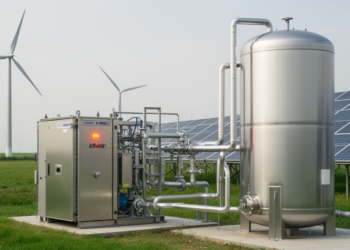
Iran factory model finds hydrogen curbs renewable power curtailment
A Shiraz factory-scale simulation found that power-to-hydrogen reduced unused renewable electricity from 37.1% to 9.36% while producing 3,869 kilograms of ...
A Shiraz factory-scale simulation found that power-to-hydrogen reduced unused renewable electricity from 37.1% to 9.36% while producing 3,869 kilograms of ...

A new study from King Saud University in Riyadh shows that attention-enhanced deep learning models trained on detailed environmental data ...

A first-of-its-kind dataset of state-based wind and solar permitting across 19 states shows 90 percent approval rates and average timelines ...

The distinction between reported emissions and avoided emissions rests on a fundamental asymmetry in how environmental accounting treats cause and ...

A new two-stage framework couples improved wind and solar power forecasting with multi-objective shared energy storage planning, achieving a 90.3 ...

Researchers have developed an interpretable deep reinforcement learning framework that schedules wind turbine maintenance to maximize power generation and minimize ...
A new model shows that rapid solar deployment could trigger decades of production oscillations, while wind power grows smoothly toward ...

A new CMIP6-based assessment shows that decadal climate forecasts can skillfully predict European solar potential up to three years ahead, ...

A new Nature Sustainability study shows that land-use restrictions could raise the cost of China's carbon-neutral power system by up ...

A new study of 129 Brazilian municipalities finds that wind and solar power development is statistically linked to urban expansion ...


Embark on a thrilling journey of discovery with Scienmag.com—your ultimate source for cutting-edge breakthroughs. Immerse yourself in a world where curiosity knows no limits and tomorrow’s possibilities become today’s reality!