

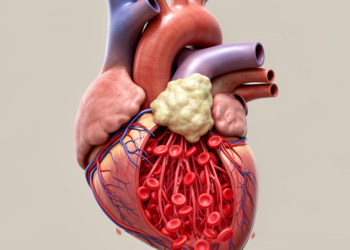
Review links coronary microvascular dysfunction to upstream plaque formation
A review of experimental, clinical, and imaging evidence proposes that coronary microvascular dysfunction may promote upstream plaque formation through altered ...
A review of experimental, clinical, and imaging evidence proposes that coronary microvascular dysfunction may promote upstream plaque formation through altered ...

A cross-sectional MRI and computational fluid dynamics study links carotid geometry to both arterial stenosis and potentially pro-atherogenic flow patterns, ...
A new fully coupled fluid-structure interaction simulation reveals how non-Newtonian blood rheology, arterial wall deformation, heat transfer, and magnetic resistance ...
A new CT-based computational study shows that realistic, spirometry-derived breathing waveforms and full-cycle particle tracking significantly change predicted aerosol deposition ...
A pilot study from the University of Bern shows that computational fluid dynamics built from routine CT angiography and ultrasound ...
A retrospective study of 157 bypass patients used postoperative computed fractional flow reserve and computational fluid dynamics to show that ...
A multiscale simulation study shows that microvascular resistance alone can shift identical coronary lesions across the clinical FFR and CFR ...
A new study of healthy female mice reveals that aging reduces carotid blood flow and arterial elasticity while triggering region-specific ...
A new mathematical model captures the rough, misaligned walls of diseased small arteries and reveals how out-of-phase lesions sharply amplify ...
Researchers report that disturbed blood flow can make vessel walls vibrate at high frequencies, and that these vibrations may directly ...

Embark on a thrilling journey of discovery with Scienmag.com—your ultimate source for cutting-edge breakthroughs. Immerse yourself in a world where curiosity knows no limits and tomorrow’s possibilities become today’s reality!