


Ceramic Coating Thickness Dictates Crack Paths in Gas Turbine Thermal Barriers
Discrete element modeling demonstrates that ceramic topcoat thickness governs whether cracking in gas turbine thermal barrier coatings causes shallow spallation ...
Discrete element modeling demonstrates that ceramic topcoat thickness governs whether cracking in gas turbine thermal barrier coatings causes shallow spallation ...

Alumina-based ceramics represent a leading protective candidate due to their cost efficiency and inherent capacity to react thermochemically with molten ...

Materials scientists synthesized defect fluorite high-entropy oxides with multicomponent rare earths and hafnium-zirconium substitution that achieve low thermal conductivity and ...

Finite element simulations and furnace tests reveal that zig-zag columnar crystal structures in electron beam-physical vapor deposition thermal barrier coatings ...

Molecular dynamics and first-principles calculations demonstrate that increasing calcium content in molten silicate deposits dramatically lowers contact angles and enhances ...

A sustained melt exposure study reveals that the physical continuity of an intermediate reaction layer, rather than silicate crystallization, controls ...

A computational fluid dynamics and thermal modeling study demonstrates that increasing afterburner fuel injector spray angles up to 90 degrees ...
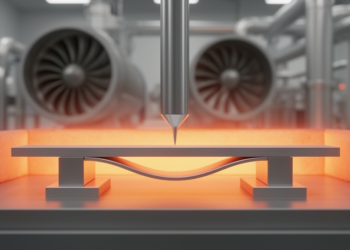
A unified reference-stress framework shows that miniature bending specimens, with their large equivalent gauge lengths and closed-form analytical solutions, can ...
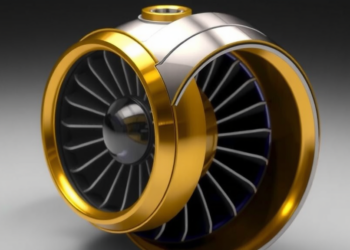
A new review details how synthesis routes and rare-earth doping transform samarium zirconate pyrochlore into a leading candidate for next-generation ...

A new first-principles study shows how the symmetry reduction from cubic to monoclinic zirconia lifts electronic degeneracy and produces strong ...


Embark on a thrilling journey of discovery with Scienmag.com—your ultimate source for cutting-edge breakthroughs. Immerse yourself in a world where curiosity knows no limits and tomorrow’s possibilities become today’s reality!