

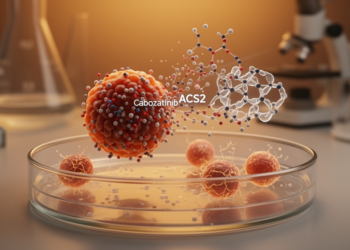
ACSS2 inhibition boosts cabozantinib activity in liver cancer models
Preclinical hepatocellular carcinoma models showed that blocking ACSS2 or autophagy enhanced cabozantinib’s antitumor activity by disrupting a TFEB-linked protective response.
Preclinical hepatocellular carcinoma models showed that blocking ACSS2 or autophagy enhanced cabozantinib’s antitumor activity by disrupting a TFEB-linked protective response.

A new study of human skin fibroblasts from donors aged 20 to 96 shows that autophagy's early stages remain intact ...
A new review argues that Huntington's disease is driven by widespread disruptions of interconnected protein networks, pointing to hub proteins ...
A new mouse study shows that hyperactive NLRP3 inflammasome signaling within vascular smooth muscle cells drives inflammation, pyroptosis, lipid accumulation, ...
A Nature study from TIGEM reveals a previously unknown TBK1-ULK1 signaling pathway that controls the master recycling regulator TFEB, exposing ...
New research reveals that the Alpha-TFEB fusion gene drives t(6;11) translocation renal cell carcinoma by activating the long non-coding RNA ...

Embark on a thrilling journey of discovery with Scienmag.com—your ultimate source for cutting-edge breakthroughs. Immerse yourself in a world where curiosity knows no limits and tomorrow’s possibilities become today’s reality!