


Redox Molecule Stabilizes Perovskite Interfaces to Boost Tandem Solar Cell Efficiency
Incorporating an in situ redox-converted molecule into the hole transport layer stabilizes the buried interface of tin-lead perovskites, enabling monolithic ...
Incorporating an in situ redox-converted molecule into the hole transport layer stabilizes the buried interface of tin-lead perovskites, enabling monolithic ...

A comprehensive review analyzes how molecularly engineered self-assembled monolayer hole transport layers overcome conventional interface losses to drive inverted perovskite ...

Researchers developed a lead-based metallomesogen that relieves grain boundary distortion in wide-bandgap perovskites, enabling tandem solar cells to achieve 32.08% ...

A systematic review identifies surface and interface defect engineering as the decisive pathway for driving monolithic CIGS/perovskite tandem solar cells ...

A review in Discover Sustainability evaluates how overcoming stability, scalability, and environmental challenges could enable the commercialization of perovskite solar ...

A literature review in Science Bulletin demonstrates how synchrotron X-ray scattering methods track the formation, nanoscale heterogeneity, and degradation of ...

A simulation study finds that pairing serrated textures at the front interface and back electrode of all-perovskite tandem solar cells ...
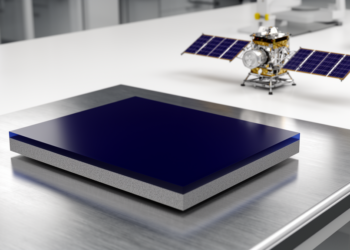
A new optical and thermal modeling framework identifies optimal perovskite/silicon tandem solar cell designs for satellites by simulating angle-dependent illumination ...

A research team used SCAPS-1D simulation to optimize a lead-free CsSnI3 perovskite solar cell and then fabricated it, lifting the ...

Princeton-led researchers have shown that adding a volatile eutectic mixture of zinc bromide and methyl ammonium chloride during fabrication dramatically ...


Embark on a thrilling journey of discovery with Scienmag.com—your ultimate source for cutting-edge breakthroughs. Immerse yourself in a world where curiosity knows no limits and tomorrow’s possibilities become today’s reality!