

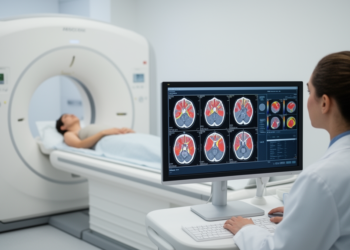
Automated CT body composition markers show limited survival-prediction gains
A retrospective study found that automated CT body-composition markers were associated with overall survival in digestive system cancers but added ...
A retrospective study found that automated CT body-composition markers were associated with overall survival in digestive system cancers but added ...

A comprehensive Heliyon benchmark of 16 survival prediction methods and 12 feature engineering strategies across three radiomic datasets finds that ...
A blood-based epigenetic clock, GrimAge2, significantly improves survival prediction in early-stage non-small cell lung cancer, outperforming traditional risk factors including ...
A French team has built a deep learning model that predicts glioblastoma survival categories with up to 87 percent accuracy ...
Researchers in China have built and validated a statistical survival calculator for young patients with upper tract urothelial carcinoma using ...
A new review in the Journal of Neuro-Oncology finds that machine learning, especially multimodal AI, is transforming brain cancer outcome ...
A multi-task deep learning model that fuses pretreatment MRI and whole slide pathology images outperformed standard staging in predicting chemotherapy ...
An explainable graph neural network called SpaCEy identifies the spatial tissue patterns and protein markers that predict cancer survival and ...
A multicenter Chinese study of 3,148 Parkinson's disease patients developed and validated interpretable survival prediction models and deployed the best-performing ...
A machine learning analysis of 146 canine mammary tumors shows that age, lymphatic invasion, and estrogen receptor status predict survival ...

Embark on a thrilling journey of discovery with Scienmag.com—your ultimate source for cutting-edge breakthroughs. Immerse yourself in a world where curiosity knows no limits and tomorrow’s possibilities become today’s reality!