

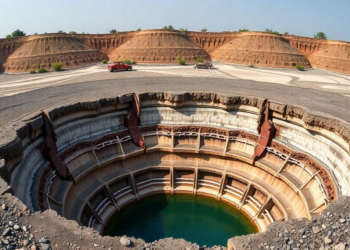
Shale 2.0: Scientists turn old oil and gas wells into critical mineral factories
A $6 million NSF-funded project called Shale 2.0 will test whether engineered fluids can extract nickel, titanium, manganese, vanadium and ...
A $6 million NSF-funded project called Shale 2.0 will test whether engineered fluids can extract nickel, titanium, manganese, vanadium and ...
A Nature Food Perspective drawing on a workshop series of more than 150 stakeholders proposes a land-grant university-led Agricultural Cybersecurity ...
A new differential game study shows that Chinese shale gas supply chain firms achieve the greatest innovation and profit gains ...

New research argues that circular economy strategies can strengthen resilience to known disruptions while simultaneously eroding the system options needed ...
A new Bentham Books reference volume, edited by scholars from India, Australia and the UAE, surveys how generative AI is ...
Researchers mapped Europe's largest seafood processing hub as a social-ecological network of 227 nodes and 595 links, revealing that production ...

A new study of 354,565 freight shipments shows that prompted GPT-4o ranks cancellation risk as well as boosted trees yet ...
Kyushu University researchers have proposed a framework for intelligent food packaging that senses spoilage in real time, heals its own ...

Researchers have built a blockchain-and-AI-agent system for crowdsourced pharmaceutical delivery that cut simulated route time by 25 percent while keeping ...

A two-agent AI system separates proxy selection from independent quality assessment to map procurement items to lifecycle inventory databases with ...


Embark on a thrilling journey of discovery with Scienmag.com—your ultimate source for cutting-edge breakthroughs. Immerse yourself in a world where curiosity knows no limits and tomorrow’s possibilities become today’s reality!