

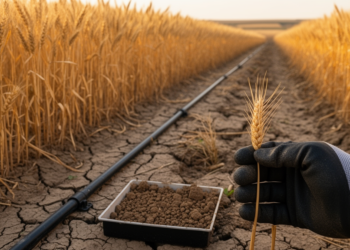
Microbes and Deficit Irrigation Keep Pharmaceuticals Out of Durum Wheat Grain
A controlled pot experiment shows durum wheat retains wastewater-borne pharmaceuticals in its roots and keeps grain concentrations below detection limits, ...
A controlled pot experiment shows durum wheat retains wastewater-borne pharmaceuticals in its roots and keeps grain concentrations below detection limits, ...

A new Frontiers in Microbiology Research Topic reveals how legume intercropping and rotation reshape soil microbial communities in system-specific ways ...
Researchers in Japan have discovered that endangered glasswort thrives in soils with unique chemistry and a dominant root bacterium that ...
A metagenomic study of the medicinal weed Argemone mexicana in Assam reveals that Ascomycota dominates its fungal microbiome and that ...
A large-scale genomic survey of Zostera japonica seagrass beds in China reveals that microbial communities follow latitudinal gradients and microhabitat-specific ...
A field study in a twenty-year-unmanaged wild tea plantation in Hainan, China, shows that natural habitat heterogeneity, from open sites ...
A common-field experiment in Inner Mongolia shows that eight crops grown in identical saline-alkaline soil develop dramatically different rhizosphere microbial ...
A Brazilian field study mapped entomopathogenic nematodes across five tropical crops and found their occurrence linked to soil potassium and ...
A new study shows that iron plaque on rice roots first preserves soil organic carbon but later fuels iron-reducing bacteria ...
A new review synthesizes how plants communicate through volatile chemicals, root exudates, RNA signals, and fungal networks, and what this ...

Embark on a thrilling journey of discovery with Scienmag.com—your ultimate source for cutting-edge breakthroughs. Immerse yourself in a world where curiosity knows no limits and tomorrow’s possibilities become today’s reality!