


Cellulose-Based Catalysts Drive Solvent-Free Coumarin Synthesis With High Conversions
Chemically modified cellulose catalysts facilitate solvent-free Knoevenagel reactions to generate coumarins while lowering environmental waste metrics.
Chemically modified cellulose catalysts facilitate solvent-free Knoevenagel reactions to generate coumarins while lowering environmental waste metrics.

A calcination-controlled dual-atom cobalt catalyst achieves complete conversion of lignin-derived vanillin into guaiacol through electronic synergy and lowered reaction barriers.

A study demonstrates that ruthenium supported on tungstated zirconia catalytically depolymerizes biomass bio-oil into long-chain alkanes with high selectivity.

A study of calcium-modified alkali-activated metakaolin reveals that replacing up to 15 percent of metakaolin with calcium hydroxide significantly accelerates ...

A recent review highlights the potential of carbon dioxide as a sustainable soft oxidant and reaction promoter in metal-catalyzed industrial ...

A comprehensive review examines how photothermal catalysis combines solar light absorption and localized heating to overcome thermodynamic and kinetic barriers ...

A comprehensive review examines how base-catalyzed halogen dance reactions enable precise functionalization at the inert beta positions of thiophene rings.

Chemists developed a cyanide-free alkyne hydrocyanation protocol using nickel catalysis, carbon dioxide, and ammonia, switching between stereoisomers via alkali fluoride ...

A new conceptual framework defines impactful learning as a third stage beyond rote and meaningful learning, proposing that organic chemistry ...
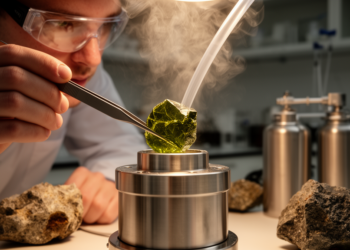
A new Nature Communications study shows that nonbridging surface oxygens, modulated by calcium versus magnesium cations, govern why some olivines ...


Embark on a thrilling journey of discovery with Scienmag.com—your ultimate source for cutting-edge breakthroughs. Immerse yourself in a world where curiosity knows no limits and tomorrow’s possibilities become today’s reality!