


Soil Amplification Factors Decrease Under Higher Ground Accelerations in Concrete Buildings
Numerical finite element simulations reveal that soil amplification factors decrease by 5 to 20 percent as peak ground accelerations increase, ...
Numerical finite element simulations reveal that soil amplification factors decrease by 5 to 20 percent as peak ground accelerations increase, ...

Researchers developed machine learning surrogate models that accurately predict seismic resilience indices for a reinforced concrete hospital in northern Iran.

A comparative seismic risk assessment shows that hillside buildings following natural ground slopes suffer the greatest earthquake vulnerability while stepped ...

A refined continuum medium theory accurately captures progressive stiffness degradation in tall coupled shear walls while accelerating computational speeds by ...

A nonlinear static analysis shows that column orientations and story levels alter the lateral stiffness and seismic performance of reinforced ...
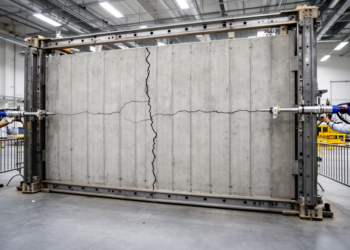
A hybrid experimental and numerical study shows that precast concrete frames with nib connections remain largely safe in moderate earthquakes ...
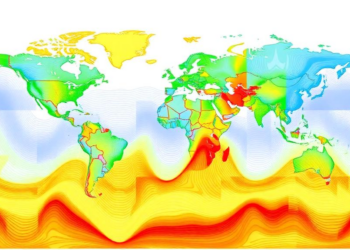
A new quasi-adaptive pushover framework called IOPER uses hysteretic energy dissipation to redistribute seismic forces between analysis iterations, matching dynamic ...

Researchers at the University of Salerno have developed a hybrid deep learning model that predicts the seismic capacity of existing ...

Researchers have validated a simplified preliminary seismic design procedure for low- to medium-rise reinforced concrete buildings that meets modern performance ...


Embark on a thrilling journey of discovery with Scienmag.com—your ultimate source for cutting-edge breakthroughs. Immerse yourself in a world where curiosity knows no limits and tomorrow’s possibilities become today’s reality!