

AI Forces Medicine to Rethink What Disease, Labels, and Evidence Mean
A new commentary argues that the greatest challenges facing clinical AI are philosophical, involving how medicine defines disease, draws diagnostic ...
A new commentary argues that the greatest challenges facing clinical AI are philosophical, involving how medicine defines disease, draws diagnostic ...
Kyoto University researchers used adenine base editing to correct the TFG mutation behind HMSN-P, delaying disease onset and extending survival ...
Researchers developed separate blood protein risk scores for men and women with hypertension that significantly improve ten-year prediction of heart ...

A new systematic review reveals how artificial intelligence, generative models, and quantum computing are converging to transform drug discovery and ...

A new method called SPLENDID models genetic ancestry as a continuum rather than discrete labels, significantly improving polygenic risk score ...
A new perspective argues that Alzheimer's disease should be understood through the same multidimensional, risk-based lens that transformed atherosclerosis, with ...
Two landmark New England Journal of Medicine studies show the pan-RAS inhibitor daraxonrasib nearly doubles survival in previously treated metastatic ...

A new perspective argues that cardiovascular discovery should begin with integrated human multi-omics data rather than animal models, reversing the ...
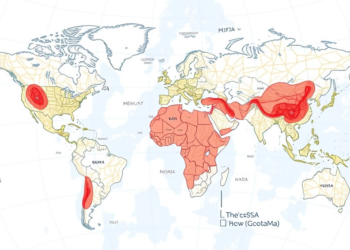
A single-cell atlas of 341 multiple myeloma patients identifies five malignant transcriptional archetypes and an orthogonal proliferative program, enabling improved ...

The 2025 Chinese guidelines consolidate two decades of evidence into an updated roadmap for diagnosing, preventing and treating colorectal cancer ...


Embark on a thrilling journey of discovery with Scienmag.com—your ultimate source for cutting-edge breakthroughs. Immerse yourself in a world where curiosity knows no limits and tomorrow’s possibilities become today’s reality!