

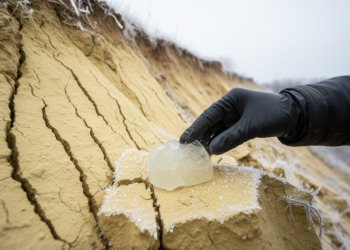
Hydrogel turns freeze–thaw damage into strength gains for loess slopes
Laboratory triaxial tests show that 3 percent polymer hydrogel raised the shear strength of Yili loess by 82.5 percent after ...
Laboratory triaxial tests show that 3 percent polymer hydrogel raised the shear strength of Yili loess by 82.5 percent after ...
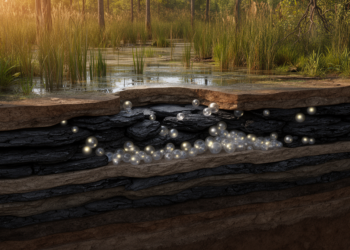
A study of 58 coal samples from the Baode Block links ancient swamp environments to pore structure and methane adsorption–desorption ...
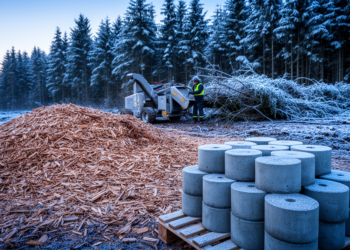
A new review separates wood ash, biochar, and wood fiber into distinct material classes for low-carbon concrete, warning that laboratory ...
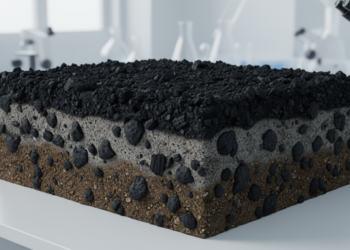
A laboratory study of coastal cement soil reports that 6 percent bamboo biochar raised unconfined compressive strength by up to ...
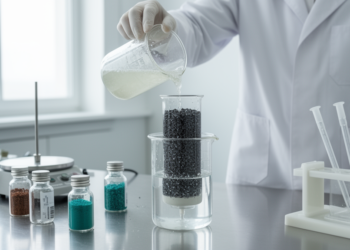
A bimetallic iron-manganese metal-organic framework with a 1:5 precursor ratio achieved the highest reported tetracycline hydrochloride adsorption capacity in the ...
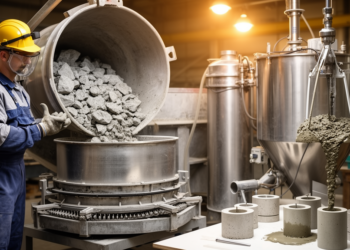
Researchers transformed tunnel excavation muck into fine-particle high-density concrete, showing that a coupled vacuum and vibration mixing process boosts compressive ...
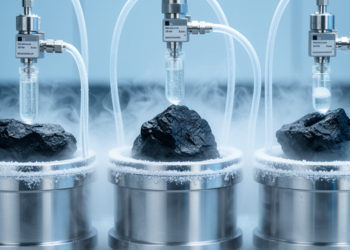
A laboratory study found that liquid-nitrogen cold soaking reduced methane adsorption and swelling deformation across three coal ranks while shifting ...
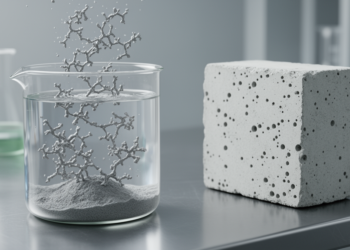
A new study links the fractal geometry of pore structures in activated red mud cementitious materials to both compressive strength ...
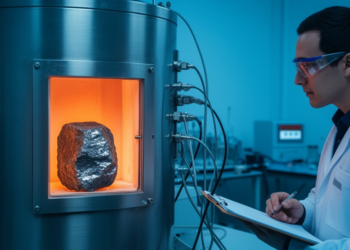
A study of the Longmaxi Formation in southern China shows that organic matter graphitization above an equivalent vitrinite reflectance of ...
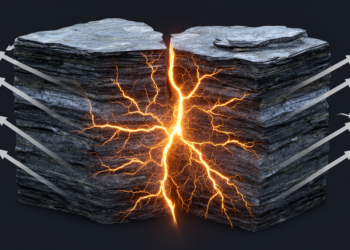
A study of the Longmaxi Formation in the Yongchuan area of the Sichuan Basin shows that varying intensities of tectonic ...


Embark on a thrilling journey of discovery with Scienmag.com—your ultimate source for cutting-edge breakthroughs. Immerse yourself in a world where curiosity knows no limits and tomorrow’s possibilities become today’s reality!