

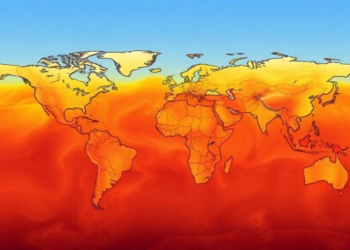
Deep-Sea Isotopes and Climate Models Reveal a Surprisingly Hot Miocene Warm Period
A new model-data synthesis of benthic foraminiferal oxygen isotopes indicates the Miocene Climatic Optimum was about 7.5 degrees Celsius warmer ...
A new model-data synthesis of benthic foraminiferal oxygen isotopes indicates the Miocene Climatic Optimum was about 7.5 degrees Celsius warmer ...

A 221-year oxygen isotope record from the endangered giant rhododendron shows southwestern China has been drying since 1900, with climate ...
New reconstructions of deep-water temperature and salinity show that the deep Atlantic cooled and Antarctic-sourced waters became saltier across the ...
New speleothem records and isotope-enabled climate simulations reveal that oceanic and continental moisture sources cancel each other over the Korean ...
A new study reconstructs ocean surface density during the Last Glacial Maximum from foraminiferal shells and finds that climate models ...
The first continuous grain-size profiles through two Tibetan ice cores show that ice crystal size tracks temperature and can retain ...
A University of Michigan study of Galápagos coral records shows that El Niño events over the past 40 years are ...
New isotopic dating confirms that ice cores from Tibet's Guliya ice cap preserve climate records extending more than 100,000 years ...
Clumped isotope thermometry reveals that the deep Pacific and Atlantic cooled on different schedules, and with reversed temperature gradients, during ...

Embark on a thrilling journey of discovery with Scienmag.com—your ultimate source for cutting-edge breakthroughs. Immerse yourself in a world where curiosity knows no limits and tomorrow’s possibilities become today’s reality!