


Trap Recombination Hits Organic and Perovskite Solar Cells in Opposite Ways
A drift–diffusion modeling study finds that trap-assisted SRH recombination mainly cuts the short-circuit current of organic solar cells while mostly ...
A drift–diffusion modeling study finds that trap-assisted SRH recombination mainly cuts the short-circuit current of organic solar cells while mostly ...

A single-step pre-treatment with bio-based green solvents raises PEDOT:PSS conductivity from 0.41 to 823.5 S/cm, enabling acid-free ITO-free organic solar ...

Researchers at Chiba University identified a thermodynamic boundary for photocurrent generation in organic solar cells and found that more rigid ...
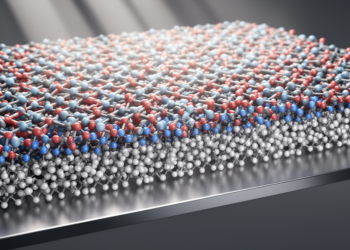
A methanol-assisted deposition process controlled cathode-interlayer molecular orientation and enabled a binary organic solar cell with certified 20.65% efficiency and ...

Researchers have introduced solid-state emissive guest acceptors that open thermally accessible radiative pathways, suppressing non-radiative voltage losses and enabling certified ...
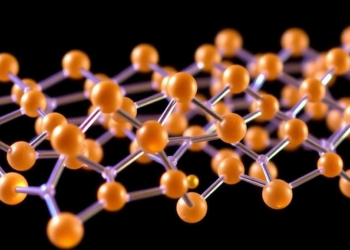
Quantum chemical simulations identify a dinitro-substituted naphthalene chromophore with a record-low energy gap and exciton binding energy as a leading ...

New triazine-benzothiazole azo dyes synthesized and screened with DFT show narrow band gaps, balanced charge transport and hyperpolarizabilities several times ...

In the rapidly evolving realm of organic photovoltaics, the pursuit of stable, high-performance materials continues to be a formidable challenge. ...

In a groundbreaking study, an international consortium of researchers has successfully charted the phase diagrams of organic solar cells which ...


Embark on a thrilling journey of discovery with Scienmag.com—your ultimate source for cutting-edge breakthroughs. Immerse yourself in a world where curiosity knows no limits and tomorrow’s possibilities become today’s reality!