


Pacific and Atlantic Tropical Cyclones Took Opposite Paths During Medieval Warm Period
During the Medieval Warm Period, tropical cyclones shifted poleward in the Pacific but equatorward in the Atlantic, driven by differing ...
During the Medieval Warm Period, tropical cyclones shifted poleward in the Pacific but equatorward in the Atlantic, driven by differing ...

Gulf Stream variability modulates the Kuroshio Extension through an atmospheric pathway, contributing significantly to recent North Pacific warming.

A twenty-year analysis on Corvo Island shows that North Atlantic tropical cyclone activity reliably predicts autumn vagrancy patterns of migratory ...

A new AI-generated dataset maps North Atlantic mixed-layer depth and stratification every three hours from 2011 to 2023, with lower ...
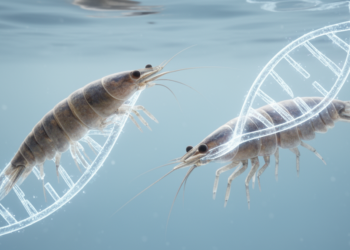
An integrative genetic and morphological study of the amphipod genus Liljeborgia supports two cryptic species within L. ossiani in the ...

A model study finds that a 60 percent weakening of the Atlantic overturning circulation raises Northern Hemisphere aerosol loads by ...

New model simulations from the University of St Andrews show that cooling confined to the far northern latitudes, mimicking growing ...
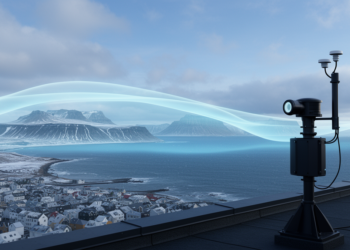
A six-year reanalysis study shows that Reykjavik’s ozone measurements track regional patterns across much of the northeastern North Atlantic, with ...
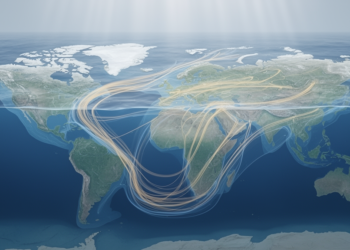
An analysis of 15 CMIP6 climate models finds that projected AMOC weakening begins in the subpolar North Atlantic and spreads ...

A surface-ocean isotope archive reveals seasonal signals in the subpolar and equatorial Atlantic, but finds that regional differences generally outweigh ...


Embark on a thrilling journey of discovery with Scienmag.com—your ultimate source for cutting-edge breakthroughs. Immerse yourself in a world where curiosity knows no limits and tomorrow’s possibilities become today’s reality!