


Ultrasound and Light Guide Gene Editing to Selected Sites in Mouse Brains
A light-sensitive Cas12f editor and ultrasound-triggered nanoparticles enabled researchers to control gene disruption at a selected location in mouse brains.
A light-sensitive Cas12f editor and ultrasound-triggered nanoparticles enabled researchers to control gene disruption at a selected location in mouse brains.
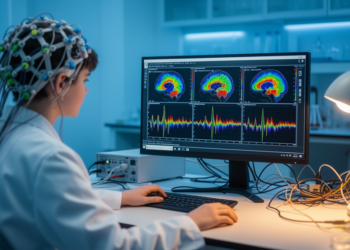
A new convolutional variational deep embedding model learns a generative latent manifold of EEG microstate topographies, offering soft cluster assignments ...
An international fMRI analysis of 2,175 people across 40 studies found that prefrontal cortex activity during cognitive reappraisal does not ...
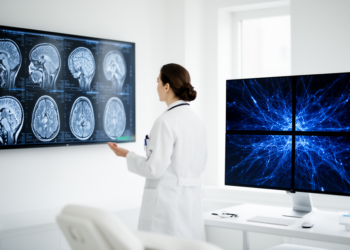
A lightweight dual-branch AI framework called NeuroCST classified Alzheimer's disease stages from MRI scans with 98.42 percent accuracy while using ...
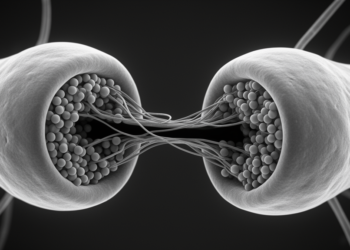
A reanalysis of a public electron microscopy dataset found that umbelliferone increased postsynaptic density length and width compared with scopolamine ...
A new three-photon imaging system called TrUDI achieves cellular-resolution recordings of neuronal population activity at depths of up to about ...
A systematic comparison shows four neuroscience simulation tools produce consistent calcium reaction–diffusion results, while astrocyte branchlet geometry strongly shapes signaling.
A new Nature Neuroscience study shows that SIK3 phosphorylates GluN1 at a single site to control the recruitment of NMDA ...
A new mouse tool reveals that CD51-positive astrocytes are a functionally distinct subpopulation that promotes cortical synapse formation, hippocampal circuit ...
A rat study combining fMRI, optogenetics, and connectivity modeling shows that high-frequency thalamic activation is preserved locally but fails to ...


Embark on a thrilling journey of discovery with Scienmag.com—your ultimate source for cutting-edge breakthroughs. Immerse yourself in a world where curiosity knows no limits and tomorrow’s possibilities become today’s reality!